
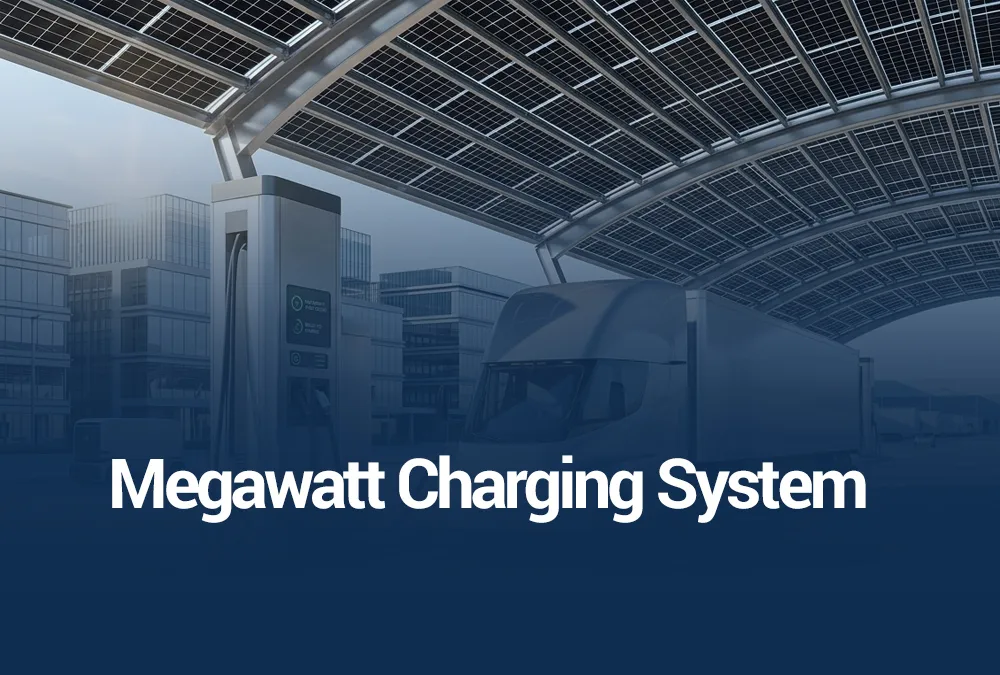
Buyer Insights: “Will Megawatt Charging Blow Up Our Site Demand Charges?”
That is the single most common fear fleet operations managers bring to our engineering desk. When you plug two Class 8 electric rigs into a high power EV charging system simultaneously, pulling over 2,000 Amps, the local grid connection experiences massive instantaneous spikes. If you connect directly to utility lines without buffer controls, your monthly peak demand tariffs will destroy your total cost of ownership (TCO) targets. But you don’t actually have to pay those punitive utility penalties. Integrating modular stationary storage alongside a dedicated energy management platform lets you cap grid draw safely while feeding megawatt-scale power straight into the vehicle.
What Is a Megawatt Charging System (MCS)?
Definition of Megawatt Charging System
The Megawatt Charging System (MCS) is an international standard engineered specifically for heavy-duty electric vehicle charging applications, including long-haul electric trucks, transit buses, and off-highway commercial machinery. Standardized under global frameworks including CharIN recommendations, IEC TS 63379, and SAE J3271, an MCS charger manufacturer builds hardware capable of delivering up to 1,250 Volts DC and up to 3,000 Amps of continuous current. This translates directly to peak power outputs scaling from 1.0 MW to an astounding 3.75 MW.
- MW-Level Power Delivery: Eliminates multi-hour idle times by transferring hundreds of kilowatt-hours in under thirty minutes.
- High Current Capacity: Operates safely at up to 3,000 A using active liquid cooling systems throughout the power cabinet, cable, and vehicle inlet.
- Automated & Secure Protocol: Utilizes ISO 15118-20 for encrypted, automated Plug & Charge interactions and real-time bi-directional telemetry.
- Designed for Commercial Transport: Built tough to endure thousands of heavy physical connection cycles in rugged fleet yards, logistics parks, and highway charging hubs.
How MCS Differs From Traditional EV Charging Systems
To visualize why a dedicated Megawatt Charging System is necessary, look at the stark contrast in power delivery capabilities across different charging tiers:
| Charging Standard | Power Range | Max Voltage / Current | Primary Target Use Case | Direct Fleet Operator Benefit |
|---|---|---|---|---|
| AC Charging (Level 2) | 3.7 kW – 22 kW | 240V / 480V, Up to 80A | Passenger cars, overnight workplace depot parking | Lowest capital cost per plug; perfect for small battery vans resting 8+ hours overnight. |
| DC Fast Charging (CCS2 / NACS) | 50 kW – 350 kW | 1000V, Up to 500A | Passenger EVs, regional delivery medium-duty trucks | Standardized public infrastructure; ideal for mid-day top-ups on lighter 100-200 kWh battery packs. |
| Megawatt Charging System (MCS) | 1.0 MW – 3.75 MW+ | 1250V – 1500V, Up to 3000A | Heavy duty electric vehicle charging, Class 8 long-haul rigs | Full 20% to 80% charge during mandated 30-minute driver rest breaks, keeping long-haul routes fully viable. |
Why Megawatt Charging Was Developed
Class 8 heavy duty vehicles carry battery packs spanning 400 kWh to well over 1,000 kWh. If you plug a 600 kWh battery electric truck into a conventional 150 kW DC fast charger, the vehicle remains stationary for roughly four hours. In commercial freight, a resting truck is a money-losing truck. Regulators across Europe (under the AFIR Regulation EU 2023/1804) and North America have mandated strict rest windows—such as mandatory 45-minute breaks after every 4.5 hours of driving. The MCS charging system for heavy duty vehicles was developed specifically to match these legal driving breaks, transferring massive energy volumes without disrupting logistics schedules.
Why Is Megawatt Charging System Important for Heavy-Duty Electric Vehicles?
Meeting the High Energy Demand of Electric Trucks
Heavy commercial vehicles consume between 1.1 kWh to 2.2 kWh per mile depending on payload weight, grade topography, and ambient weather. Heavy duty electric vehicle charging requires moving immense kilowatt-hours into the vehicle quickly. Deploying a specialized megawatt EV charging station solution ensures that your power conversion electronics can output continuous high-voltage energy without thermal throttling or voltage dropouts halfway through a session.
Reduce Fleet Downtime and Improve Operational Efficiency
Logistics operators measure success on asset utilization rates. When you install an MCS charging system for heavy duty vehicles inside your transit hubs or distribution yards, vehicle downtime drops by 75% to 85% compared to legacy high-power DC fast charging setups. Fleet managers can assign tighter delivery windows, schedule multi-shift operations, and maximize the daily revenue generated by every electric chassis on the road.
Supporting the Future of Electric Long-Haul Transportation
According to the International Energy Agency (IEA) Global EV Outlook reports, sales of heavy electric trucks grew significantly into 2025 and 2026, driven by aggressive decarbonization mandates. Without a reliable megawatt charging infrastructure for fleets along primary freight corridors, long-haul freight cannot transition away from diesel. Implementing MCS opens up regional highway routes that were previously impossible for battery-electric heavy transport.
Why Do Electric Fleets Need High-Power Charging Systems?
Faster Charging for Commercial Vehicle Operations
Commercial fleets operate on strict departure schedules. A fleet EV charging solution must ensure that vehicles pull up to the dock, charge, and get back on the road without queuing up behind other waiting tractors. Ultra-fast megawatt energy transfer turns long charging stops into simple mid-route pit stops.
Optimizing Vehicle Utilization
Capital expenses for heavy-duty electric trucks are higher upfront than legacy internal combustion engine (ICE) vehicles. To achieve a rapid return on investment (ROI), electric rigs must cover high annual mileage. An ultra fast EV charger deploying MW-level output allows a single truck to run two or three consecutive driver shifts per day, amortizing vehicle acquisition costs faster.
Supporting Large-Scale Fleet Electrification
Managing five electric trucks in a localized depot is easy; managing 100 Class 8 tractors across multiple logistics centers requires structured high power EV charging technology. A unified Megawatt Charging System allows fleet directors to standardize connector ports, simplify operator training, and streamline automated back-office billing systems across regional depot networks.
How Does a Megawatt Charging System Work?
Power Conversion and Energy Delivery Process
High-power energy conversion follows a tightly controlled multi-stage electrical path designed to protect both site infrastructure and onboard vehicle batteries:
│
▼
Step-Down Transformer & Protection Switchgear
│
▼
Active Front End (AFE) Rectifier & DC-DC Power Modules
│
▼
Liquid-Cooled MCS Power Cabinet & Dispenser
│
▼
Liquid-Cooled Cable & Ergonomic MCS Connector Port
│
▼
Heavy-Duty Vehicle Battery Management System (BMS)
Key Components of an MCS Charging System
- High-Power Rectifier Cabinets: Modular silicon carbide (SiC) power electronics that convert medium-voltage AC grid power into stabilized DC power at up to 98% efficiency.
- Liquid-Cooled Dispenser Cables: Flexible, lightweight cable runs circulating dielectric glycol coolant directly around internal copper conductors to prevent thermal buildup at 3,000 Amps.
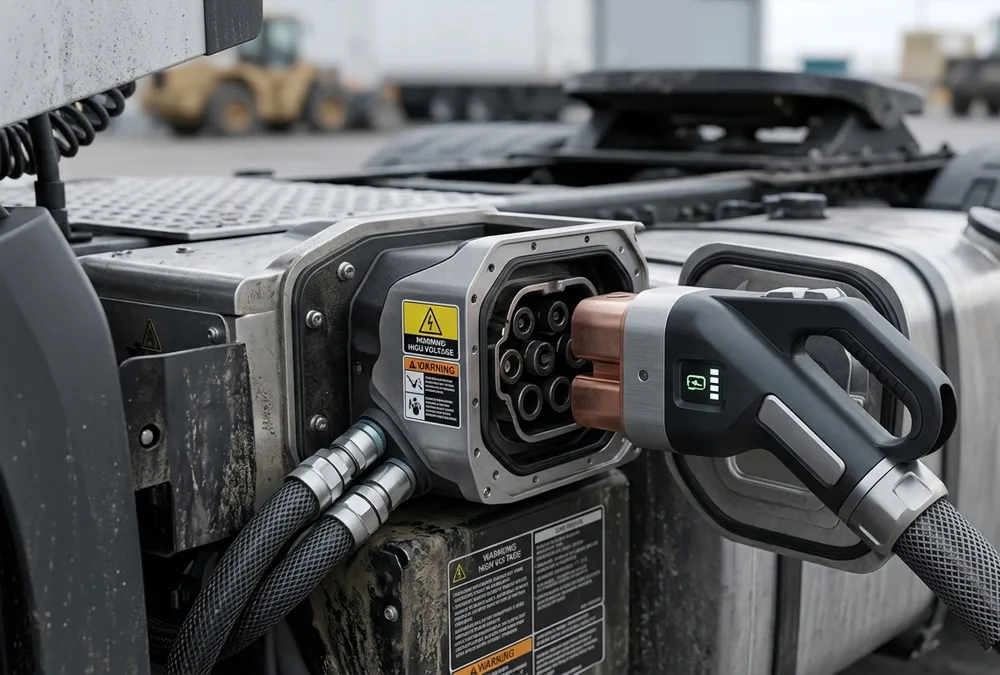
- Standardized Connector Interface: A single-port triangular plug layout (IEC TS 63379) designed for one-handed operation, integrated physical interlocks, and automated touch-safe shielding.
- Energy Management System (EMS): On-site intelligent controller balancing vehicle power demand with local solar PV generation, battery energy storage systems (BESS), and real-time utility grid constraints.
Megawatt Charging System vs CCS: Do We Need Both Standards?
Will MCS Replace CCS2?
In short: no. The Megawatt Charging System is not built to replace standard CCS2 or NACS connectors for passenger vehicles or light commercial delivery vans. CCS connectors hit technical thermal limits around 500 Amps continuous output. Trying to push 1.5 Megawatts through a standard CCS plug would cause severe overheating or require an unmanageably thick, heavy cable that drivers could not handle.
Why CCS and MCS Will Coexist
Commercial logistics hubs will deploy dual-infrastructure environments for years to come. CCS2 chargers remain the most cost-effective option for light-duty service vans and overnight depot charging. MCS charging infrastructure for fleets will sit right alongside CCS chargers, serving high-utilization long-haul tractors that require ultra-fast mid-shift replenishment.
Is MCS Compatible With CCS Connectors?
Because MCS uses a distinct pin layout, geometric form factor, and higher voltage isolation rating, you cannot directly plug an MCS connector into a CCS inlet. However, modern commercial charging dispensers are built as dual-dispenser units, housing both a liquid-cooled MCS cable and a standard CCS2 cable attached to a shared internal power matrix.
How Fast Is Megawatt Charging and How Long Does MCS Charging Take?
What Is the Charging Speed of MCS?
A fully configured Megawatt Charging System delivers power rates between 1,000 kW (1.0 MW) and 3,500 kW (3.5 MW). At peak 3.0 MW delivery, the system transfers an incredible 50 kWh of usable energy into the vehicle pack every single minute.
How Long Does It Take to Charge an Electric Truck?
Real-world charging speeds depend on the vehicle’s state of charge (SoC), internal battery temperature, chemistry limits, and charging curve management:
| Battery Capacity | Charger Type & Output | 20% to 80% Charge Time | Operational Advantage for Fleet Planning |
|---|---|---|---|
| 500 kWh Class 8 Truck | 150 kW Conventional DC Charger | ~120 Minutes (2.0 Hours) | Requires long depot stops; restricted to single-shift operations. |
| 500 kWh Class 8 Truck | 350 kW Ultra-Fast Charger | ~52 Minutes | Suitable for regional routes; still slightly exceeds standard 30-minute rest windows. |
| 500 kWh Class 8 Truck | 1.2 MW Megawatt Charging System | ~18 to 23 Minutes | Perfect alignment with driver rest breaks; enables seamless 24/7 continuous long-haul relay routes. |
How Liquid Cooling Improves High-Power Charging
Pushing thousands of Amps generates significant electrical resistance heat ($I^2R$ losses). Advanced MCS systems feature closed-loop liquid cooling loops embedded inside the copper cabling, connector pins, and terminal contact points. Chilled liquid circulating continuously keeps internal cable temperatures safely below $60^\circ\text{C}$, preventing cable insulation degradation and assuring operator safety.
Which Vehicles Use Megawatt Charging Systems?
Electric Long-Haul Trucks
Heavy electric trucks operating across regional freight corridors represent the primary target for MCS deployment.Rigs pulling heavy intermodal containers need fast energy replenishment to maintain scheduled delivery windows.
Heavy Commercial Vehicles
Beyond long-haul tractors, regional distribution haulers, municipal refuse trucks, and heavy construction mixing vehicles equipped with large battery banks benefit immensely from mid-day MCS fast charging.
Electric Buses With Large Battery Capacity
High-capacity articulated transit buses and intercity coaches running continuous airport routes utilize MCS terminal charging to top off batteries during 10-minute passenger layovers.
Industrial and Specialized Electric Vehicles
Maritime port yard tractors, heavy mining haul trucks, and airport ground support equipment (GSE) rely on robust MCS infrastructure to sustain multi-shift industrial duties without returning to distant depots.
How Can MCS Charging Systems Integrate With Fleet Operations?
Fleet Charging Management Platform
Hardware is only half the battle. Integrating telematics software allows fleet managers to monitor individual vehicle states of charge, automate bay reservations, and assign specific power allocation tiers based on real-time vehicle dispatch priorities.
Smart Charging and Load Management
Smart load balancing dynamically distributes available site capacity across connected stalls. If four trucks dock simultaneously, intelligent algorithms throttle output across stations to keep total site draw below contract utility limits.
Charging Data and Energy Optimization
Centralized dashboards log session kWh consumption, track carbon offset compliance, and analyze utility time-of-use (TOU) rate structures, ensuring chargers pull maximum energy during off-peak rate periods.
What Software Supports Megawatt Charging Systems?
Charging Point Management System (CPMS)
A modern CPMS running OCPP 2.0.1 or higher provides remote station diagnostics, firmware updates, session monitoring, and real-time fault identification across your charging network.
Fleet Charging Management Platform
Dedicated fleet telematics tools coordinate route planning with charger availability, ensuring drivers never arrive at an occupied or de-rated charging bay.
Energy Management and Load Balancing Tools
Local EMS software acts as the site brain, orchestrating real-time power flows between grid connections, on-site solar arrays, local battery storage, and active MCS chargers.
What Grid Upgrades Are Required for Megawatt Charging Systems?
High-Capacity Grid Connection
Installing a multi-megawatt EV charging station solution requires serious grid interconnection planning. Connecting four 1.2 MW MCS dispensers creates potential site demand peaks exceeding 5.0 Megawatts.
Dedicated Transformers and Switchgear
Logistics depots must install dedicated medium-voltage step-down transformers, primary breaker switchgear, isolation transformers, and surge protection networks to isolate high-current switching noise from local municipal distribution grids.
On-Site Substations for Large Charging Hubs
For major highway freight hubs housing 10 or more MCS stalls, site developers build dedicated on-site medium-voltage substations connected directly to 35 kV utility transmission lines.
Battery Storage and Energy Management Solutions (BESS)
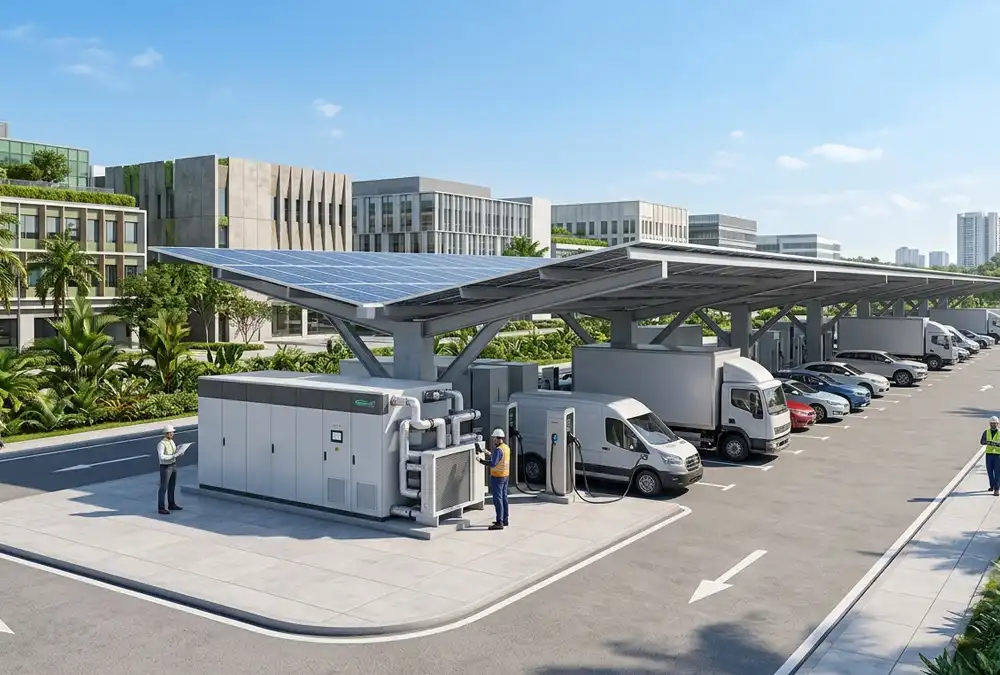
Utility grid upgrades often take 18 to 36 months to approve and build. Integrating an industrial Battery Energy Storage System (BESS) provides an immediate solution. By pairing a Megawatt Charging System with modular stationary batteries, the BESS charges continuously from a small grid pipe during low-demand periods and discharges massive current during peak MCS vehicle charging sessions.
Technical Glossary: Battery Storage Technologies & Chemistries
Lithium Iron Phosphate (LFP / LiFePO4): The standard chemistry for stationary commercial BESS installations. LFP offers superior thermal stability, zero risk of thermal runaway under severe thermal abuse, and exceptional cycle life exceeding 6,000+ depth-of-discharge cycles.
Sodium-Ion (Na-Ion) Alternative: Emerging chemistry replacing lithium with abundant sodium salts. Offers superior performance in extreme cold (-20°C) environments without active heating, making it an attractive lower-cost alternative for harsh winter logistics hubs.
| Industrial BESS Capacity | Battery Chemistry & Cooling | Recommended Fleet Project Scope | Key Benefit & User Selection Value |
|---|---|---|---|
| 100 kWh Outdoor Cabinet | LFP Chemistry / Smart HVAC Air Cooling | Small commercial depots & regional delivery hubs | Compact footprint; smooths out smaller peak spikes from 150kW-350kW fast chargers without utility panel upgrades. |
| 261 kWh All-in-One BESS | LFP Chemistry / Intelligent Liquid Cooling | Medium fleet yards & transit bus depots | Liquid cooling keeps cell temperature variation under 2°C, extending pack operational lifespan by up to 20% while buffering high-power sessions. |
| 418 kWh High-Density BESS | High-Density LFP / Advanced Liquid Cooling | Large freight terminals & heavy logistics parks | Delivers high continuous discharge power; supports back-to-back megawatt charging bursts while cutting demand charges by up to 40%. |
| 1 MWh Containerized BESS | Utility-Grade LFP / Containerized Liquid Cooling | Highway megawatt charging hubs & port terminals | Modular container design scaling to 10MWh+; unlocks wholesale energy arbitrage and VPP revenues while backing up multi-megawatt MCS arrays. |
Where Will Megawatt Charging Stations Be Installed?
Highway Charging Hubs
Under European AFIR mandates and North American corridor programs, public highway rest areas along major logistics corridors are erecting dedicated heavy-vehicle megawatt plazas every 60 to 120 kilometers.
Logistics Centers and Distribution Facilities
E-commerce fulfillment nodes and regional warehousing parks install MCS hardware right at the loading docks, allowing tractors to recharge while freight is loaded or unloaded.
Ports and Industrial Areas
Busy container ports and industrial manufacturing zones deploy megawatt charging infrastructure for fleets to service heavy drayage trucks moving goods between docks and rail yards.
Fleet Depots and Transportation Terminals
Central municipal transit yards and private freight fleet staging grounds utilize central MCS installations to manage fast turnaround for intercity buses and heavy logistics rigs.
The Future of Megawatt Charging and Electric Transportation
Accelerating Zero-Emission Commercial Transportation
The deployment of standardized Megawatt Charging Systems acts as the ultimate catalyst for heavy-vehicle decarbonization. As standard adoption expands globally, electric long-haul trucking becomes directly competitive with diesel on operational economics.
Integration With Renewable Energy and Battery Storage
Future charging sites are self-contained clean energy hubs. Pairing commercial solar canopy arrays with a solar powered truck charging station and local BESS storage creates a zero-emission energy ecosystem independent of utility coal or gas plants.
Building the Next Generation Charging Infrastructure
Emerging industry advancements focus on automated robotic charging arms, automated cable management systems, and dynamic grid-forming inverter controls, ensuring megawatt power transfer remains safe and effortless for drivers.
Why Choose AnengJI for High-Power EV Charging Solutions?
Advanced DC Fast Charging and Power Module Technology
AnengJI manufactures industry-leading liquid-cooled DC fast chargers and high-efficiency power cabinets engineered for maximum reliability under extreme commercial duty cycles.
Customized Charging Solutions for Commercial Fleets
Our engineering consultants design site layouts tailored specifically to your fleet operational profiles, vehicle counts, duty cycles, and available grid capacity.
Integrated Energy Solutions With BESS and EMS
We deliver complete turnkey microgrid packages—combining high-power EV chargers, modular BESS storage units (100kWh to 1MWh+), solar power integration, and smart EMS control platforms.
Professional Project Support From Planning to Deployment
From initial utility grid assessments and civil engineering design through hardware delivery, installation supervision, and 24/7 technical maintenance, AnengJI ensures seamless project execution across the full life cycle.
Frequently Asked Questions About Megawatt Charging Systems
What is a Megawatt Charging System?
A Megawatt Charging System (MCS) is an international standardized charging interface engineered specifically for heavy electric trucks, buses, and commercial vehicles, capable of delivering up to 3.75 MW of power at 3,000 Amps.
How powerful is an MCS charger?
An MCS charger delivers output power scaling from 1,000 kW (1.0 MW) up to 3,500 kW (3.5 MW), which is up to 10 times faster than standard 350 kW DC fast chargers.
Is MCS replacing CCS2?
No, MCS is designed specifically for heavy-duty commercial vehicles requiring ultra-fast turnaround, while CCS2 remains the global standard for light-duty commercial vans and passenger cars.
Can MCS charge electric trucks?
Yes, Class 8 long-haul electric trucks with large battery packs are the primary target application for MCS infrastructure.
How long does MCS charging take?
An MCS charger can charge a heavy 500 kWh truck battery from 20% to 80% state of charge in approximately 20 to 30 minutes.
What infrastructure is required for MCS?
MCS requires medium-voltage power grid connections, specialized step-down transformers, liquid-cooled cabling, dedicated EMS controls, and often on-site BESS storage to mitigate grid demand charges.
Build Your Future-Proof Megawatt Charging Infrastructure Today
AnengJI provides advanced high-power EV charging solutions designed specifically for electric trucks, commercial fleets, and high-throughput transportation terminals.
Related Article
 https://anengjipower.com/wp-content/uploads/2026/06/epc-vs-turnkey-solar-project-bess.webp
675
1000
Charging Station Engineer
https://anengjipower.com/wp-content/uploads/2025/09/anengji-dc-fast-charging-station-manufacturer-and-supplier-logo-white-1.png
Charging Station Engineer2026-06-22 07:16:042026-06-24 07:13:17What Is the Difference Between EPC and Turnkey Contract Models in Energy Projects?
https://anengjipower.com/wp-content/uploads/2026/06/epc-vs-turnkey-solar-project-bess.webp
675
1000
Charging Station Engineer
https://anengjipower.com/wp-content/uploads/2025/09/anengji-dc-fast-charging-station-manufacturer-and-supplier-logo-white-1.png
Charging Station Engineer2026-06-22 07:16:042026-06-24 07:13:17What Is the Difference Between EPC and Turnkey Contract Models in Energy Projects? https://anengjipower.com/wp-content/uploads/2026/06/anengji-commercial-solar-plus-storage-benefits-site.webp
675
1000
Charging Station Engineer
https://anengjipower.com/wp-content/uploads/2025/09/anengji-dc-fast-charging-station-manufacturer-and-supplier-logo-white-1.png
Charging Station Engineer2026-06-20 14:34:102026-06-20 14:37:43What Are the Top Benefits of Solar Battery Storage in Factories?
https://anengjipower.com/wp-content/uploads/2026/06/anengji-commercial-solar-plus-storage-benefits-site.webp
675
1000
Charging Station Engineer
https://anengjipower.com/wp-content/uploads/2025/09/anengji-dc-fast-charging-station-manufacturer-and-supplier-logo-white-1.png
Charging Station Engineer2026-06-20 14:34:102026-06-20 14:37:43What Are the Top Benefits of Solar Battery Storage in Factories?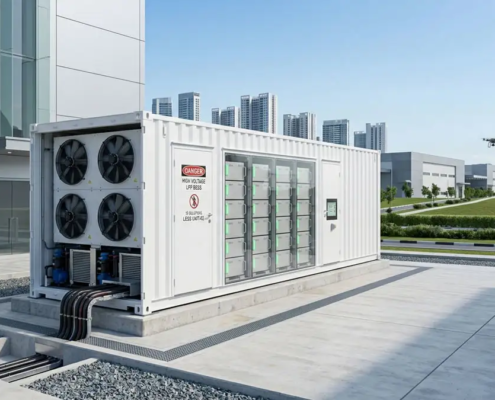 https://anengjipower.com/wp-content/uploads/2026/06/modular-commercial-solar-battery-storage-cabinet.webp
675
1000
Charging Station Engineer
https://anengjipower.com/wp-content/uploads/2025/09/anengji-dc-fast-charging-station-manufacturer-and-supplier-logo-white-1.png
Charging Station Engineer2026-06-18 09:16:522026-07-03 03:05:13What Is Solar Battery Storage? Complete C&I Engineering Guide
https://anengjipower.com/wp-content/uploads/2026/06/modular-commercial-solar-battery-storage-cabinet.webp
675
1000
Charging Station Engineer
https://anengjipower.com/wp-content/uploads/2025/09/anengji-dc-fast-charging-station-manufacturer-and-supplier-logo-white-1.png
Charging Station Engineer2026-06-18 09:16:522026-07-03 03:05:13What Is Solar Battery Storage? Complete C&I Engineering Guide


Leave a Reply
Want to join the discussion?Feel free to contribute!