
Introduction
Keeping a factory profitable today is an absolute battlefield. Between erratic supply chains and volatile raw material prices, plant managers are facing a deeper, more structural threat: spiraling electricity costs. Relying blindly on the utility grid used to be standard practice, but that era is over. Installing an industrial bess is no longer an experimental sustainability hobby for giant corporations; it has quickly transformed into a core survival strategy for mid-sized and large production facilities alike.
Rising Energy Costs Are Reshaping Industrial Operations
Look at the utility bills hitting heavy industry lately—it is brutal. Global industrial electricity rates have climbed to historic highs, and temporary subsidies cannot mask the long-term trend. In Europe, extreme energy price spikes forced multiple manufacturing lines to halt production entirely over the past few years. When energy costs swing by thirty or forty percent in a single season, setting accurate operational budgets becomes practically impossible. For high-overhead industries, doing nothing about energy exposure is a fast track to losing market competitiveness.
Industrial Battery Energy Storage Systems Are Growing Rapidly Worldwide
The numbers tell a massive story here. According to the International Energy Agency (IEA) Grid-Scale Storage Report, global battery deployments grew exponentially over the last year. BloombergNEF updates from early 2026 project that commercial and industrial energy storage capacity will quadruple before the decade ends. This massive capital wave is driving hardware costs down, making behind the meter battery storage highly attractive to companies that previously viewed localized energy infrastructure as too expensive.
Why Manufacturers Are Investing in Industrial BESS
Why are factory owners suddenly pulling the trigger on these capital projects? It comes down to four fundamental operational pressures. First, they need to slash their monthly electricity bills immediately. Second, they cannot tolerate even a micro-second of power grid instability that ruins automated production batches. Third, they want to maximize the self-consumption of their expensive on-site solar arrays. Finally, meeting strict corporate ESG and carbon reduction mandates is no longer optional if you want to keep major international buyers happy.
Featured Snippet – What Is an Industrial BESS?
Industrial BESS Definition
An Industrial Battery Energy Storage System (BESS) is a high-capacity, integrated electrochemical solution designed specifically for factories, industrial parks, and heavy commercial facilities. It captures electricity during low-cost periods—or directly from on-site renewable energy systems—and strategically discharges that stored power when utility rates peak, during grid outages, or when facility electricity demand spikes dangerously high.
What Are the Main Benefits of an Industrial BESS?
- Peak Shaving: Cutting expensive electrical demand spikes instantly.
- Load Shifting: Storing cheap midnight power to use during expensive daylight hours.
- Backup Power: Providing immediate energy resilience during sudden grid blackouts.
- Solar Energy Optimization: Eliminating the waste of excess mid-day solar generation.
- Demand Charge Reduction: Minimizing the steep capacity fees utilities charge factories.
- Carbon Footprint Reduction: Dropping operational emissions by displacing fossil-fuel power.
Where Are Industrial BESS Systems Commonly Used?
These heavy-duty commercial bess system setups are found across a wide variety of power-hungry settings. They are deployed at large manufacturing plants, sprawling industrial parks, automated fulfillment warehouses, data centers, remote mining facilities, and utility-scale renewable energy co-location projects.
What Is an Industrial Battery Energy Storage System (BESS)?
To understand why this technology is so effective, we have to look past the marketing buzzwords and examine how an industrial battery energy storage system actually handles high-voltage power on a daily basis.
How an Industrial BESS Works
The operational cycle runs on a highly intelligent three-stage process managed by automated control loops. During the charging phase, the system draws power either from your factory’s industrial solar plus storage array at noon or from the utility grid during low-rate night hours. The system then holds this energy safely inside the electrochemical cells during the storage phase. Finally, during the discharging phase, the system feeds power back into the factory’s main switchboard. The brain behind this scheduling is the Energy Management System (EMS), which uses predictive algorithms to predict your plant’s load behavior and execute the most profitable dispatch sequence.
Key Components of an Industrial Energy Storage System
An industrial energy storage system is not just a giant box of batteries; it is a complex, balanced ecosystem of six core technologies:
- Battery Pack: Multiple strings of cells wired together to provide the raw DC voltage and capacity.
- Battery Management System (BMS): The digital guard dog that monitors voltage, temperature, and cell balancing in real-time to prevent cell degradation.
- Power Conversion System (PCS): The heavy-duty bi-directional inverter that converts grid AC power to battery DC power during charging, and flips it back to AC during discharge.
- Energy Management System (EMS): The software brain that interfaces with factory meters, solar inverters, and utility market prices to optimize financial returns.
- Transformer and Switchgear: Hardware that steps up the system voltage to match your plant’s distribution system safely.
- Fire Protection System: Multi-tiered safety layers designed to isolate and extinguish thermal incidents before they spread.
Main System Classifications and Specifications
When reviewing technical specifications, focus on three primary metrics. The Power Rating, measured in kilowatts (kW) or megawatts (MW), tells you how much electrical load the system can support instantly. The Energy Capacity, measured in kilowatt-hours (kWh) or megawatt-hours (MWh), determines how long that power can be sustained. This relationship is defined by the C-Rate; for instance, a 1MW/2MWh system has a 0.5C rating, meaning it can discharge its full energy capacity over two hours. Systems are generally classified into 1-hour, 2-hour, or 4-hour configurations, with anything past 4 hours moving into long-duration energy storage territory.
Why Invest in an Industrial BESS for Energy Cost Reduction and Reliability?
Every dollar you spend on capital equipment needs to prove its worth. Investing in industrial battery storage provides double-sided protection: it secures your physical operations while drastically cleaning up your operational balance sheet.
Operational Benefits and Power Quality Improvement
Many factories suffer from poor power quality without even realizing it. Heavy industrial machinery—like large electric motors, injection molding lines, or arc welders—causes brief voltage sags and frequency fluctuations when cycling on. These power anomalies can trigger micro-stops in sensitive automated assembly lines, causing expensive scrap material and hours of unexpected downtime. An active BESS provides real-time voltage stabilization and frequency support, smoothing out power fluctuations right at your main distribution board.
Financial Benefits of Industrial Battery Storage
The financial return is driven by targeted utility cost reduction. Most industrial power bills are split into two main parts: the energy consumption fee (total kWh used) and the demand charge (based on the single highest 15-minute power spike of the month). Demand charges can easily make up over forty percent of a commercial bill. By utilizing peak shaving battery storage, the system discharges power to cover those brief internal load spikes, keeping your official utility billing curve completely flat and saving thousands of dollars every month.
| Financial Optimization Strategy | How It Works | Primary Economic Benefit |
|---|---|---|
| Demand Charge Reduction | Discharges during high factory load spikes to lower recorded peak demand. | Slashes monthly capacity fees by 20% to 50%. |
| Energy Arbitrage | Charges during low-cost off-peak hours; discharges during peak pricing windows. | Reduces the average cost per kilowatt-hour consumed. |
| Renewable Maximization | Stores excess mid-day solar energy for use during evening operations. | Prevents cheap solar power from being wasted or exported at poor feed-in rates. |
ESG Progress and Sustainability Advancements
If your business sells components or materials to major international brands, you are likely being graded on your Scope 1 and Scope 2 emissions. Relying on the standard grid at night means your factory runs on whatever fossil-fuel plants are online. Combining your rooftop panels with industrial solar battery storage allows you to run a true twenty-four-hour clean energy operation, helping you hit corporate sustainability targets and win premium supplier contracts.
Core Industrial BESS Applications and Behind-the-Meter Energy Services
Understanding where a factory energy storage system places its power outputs reveals how deeply it alters everyday energy costs.
Peak Shaving and Load Shifting
This is where the financial ROI of an industrial battery energy storage system is truly built. Load shifting acts like an economic time-machine for electricity. If your factory runs a heavy evening shift when power rates are triple the midnight rate, you use the battery to buy cheap night power and burn it when the sun goes down. Combined with automated peak shaving that stops random motor startups from triggering utility demand penalties, these two applications provide a steady, highly predictable stream of monthly operational savings.
Emergency Backup Power and Grid Resilience
When the main utility grid goes dark due to severe weather or grid strain, a standard grid-tied solar system shuts down automatically to protect utility workers. A BESS with advanced microgrid capabilities can form its own local grid, decoupling your facility instantly through an islanding switch. This provides near-instant backup power, keeping critical assembly processes, refrigeration loops, and control systems running smoothly during extended blackouts.
Co-location with Renewable Energy Assets
Solar arrays are fantastic, but they are inherently intermittent. Clouds roll in, and generation drops in seconds. By co-locating industrial bess solutions with your existing solar setup, you smooth out those rapid generation drops. The battery steps in to fill the generation gap instantly, turning erratic green energy into a stable, highly dependable on-site asset.
Industrial Microgrids and Energy Independence
For operations located in remote regions, such as mining sites or isolated agricultural processing plants, constructing a dedicated microgrid battery storage system is the only reliable way to eliminate expensive diesel generator fuel costs. The battery coordinates generation between your solar arrays, wind turbines, and backup generators, maintaining perfect electrical balance without needing an expensive utility connection.
EV Charging Infrastructure Support
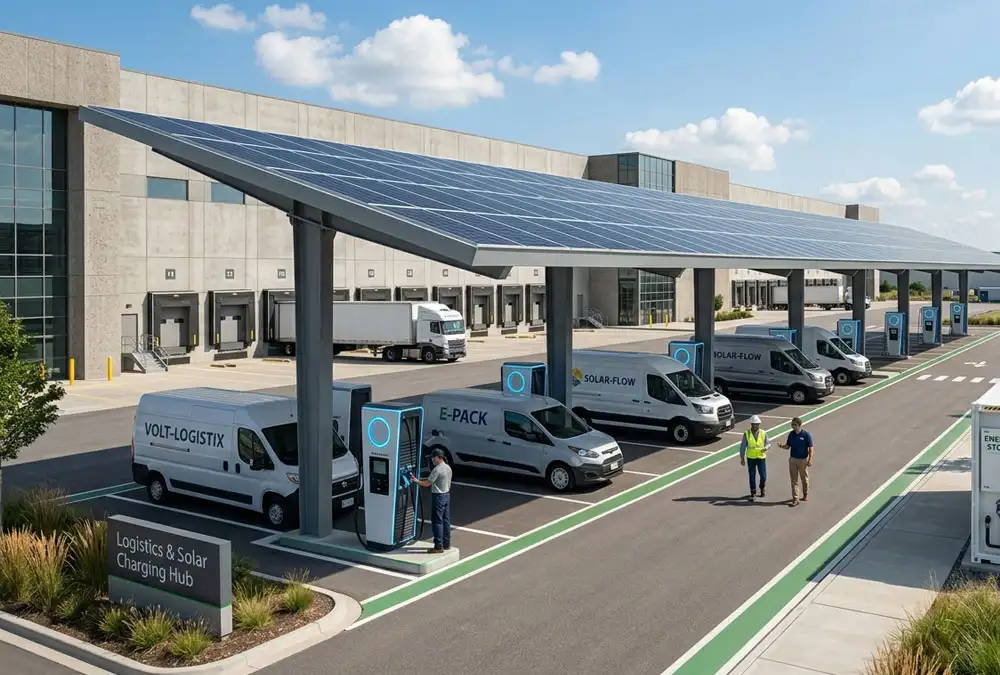
Are you planning to electrify your company’s logistics fleet? Installing multiple high-power DC fast chargers can easily double your facility’s peak electrical load overnight. If three delivery trucks plug in at the same time, your demand charges will skyrocket. Integrating a battery system into your charging hub allows you to buffer that intense power draw, pulling energy from the batteries instead of overloading the utility grid.
Industrial BESS Product Types and Configurations
Every industrial site has different physical space constraints and electrical layouts, which determines the physical design of your storage hardware.
Containerized Battery Energy Storage Systems
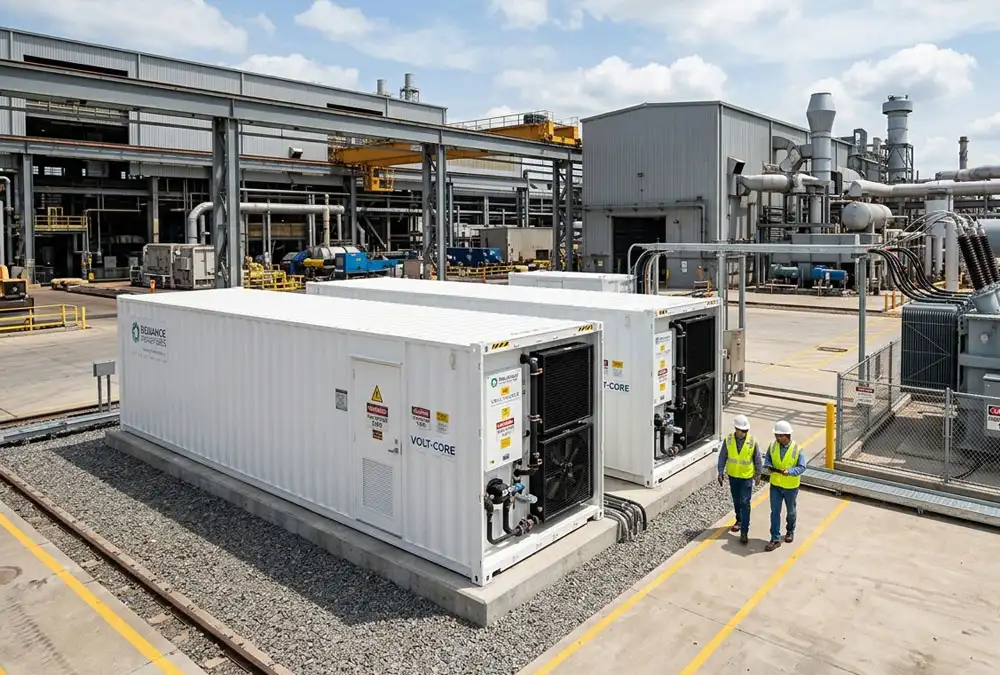
For large-scale manufacturing plants and expansive industrial parks requiring megawatt-level power, heavy-duty containerized systems are the standard solution. These systems house the battery racks, cooling loops, fire suppression systems, and bi-directional inverters inside rugged, weatherproof 20-foot or 40-foot shipping containers designed for simple outdoor installation on concrete foundations.
All-in-One Battery Cabinets
If your facility is an urban warehouse or a mid-sized commercial building with limited yard space, look for compact, all-in-one battery cabinets. These space-saving units feature a small footprint and can be placed directly against exterior walls, packaging the battery cells, pre-wired internal cooling, and integrated PCS inverter into a single sleek enclosure.
Modular Industrial Battery Storage Systems
Smart energy planning requires thinking about future business growth. If your factory plans to add a new production line or expand its rooftop solar array in two years, you do not want to buy an oversized system today. A modular industrial battery storage system allows you to install a base system now, and easily slide extra battery blocks into the existing racks as your power demands grow.
Battery Chemistries Explained
The type of battery chemistry you select dictates the lifetime, safety, and operational performance of your investment:
- Lithium Iron Phosphate (LFP): The undisputed king of the modern industrial energy storage market. LFP chemistry offers outstanding thermal stability, zero risk of explosive runaway during normal operations, and easily delivers over 6,000 full charge-discharge cycles before dropping in capacity.
- Lithium Nickel Manganese Cobalt (NMC): Offers slightly higher energy density, meaning more power can fit into a smaller physical space. However, NMC requires significantly more complex fire suppression and cooling systems due to its lower thermal tolerance, making it less popular for stationary industrial sites.
- Flow Batteries (e.g., Vanadium Redox): A technology that stores chemical energy in large external liquid electrolyte tanks. They suffer zero degradation over decades of continuous use, making them an excellent long-duration alternative, though their large physical footprint and lower efficiency limit them to specialized utility-scale projects.
- Sodium-Ion Batteries: An exciting, emerging low-cost alternative that completely eliminates the need for lithium. While sodium-ion offers great safety and handles extreme temperatures well, its lower energy density means it requires more physical cabinet space on-site.
Industrial BESS Safety and Cooling Technologies
Industrial operations can be harsh, dust-filled, and hot. Protecting your electrochemical investment requires top-tier thermal management and proactive fire protection hardware.
Why Battery Safety Is Critical in Industrial Applications
When you pack megawatts of electrical energy into a compact container next to a busy production floor, safety cannot be an afterthought. Poor thermal management leads to rapid cell degradation and raises the risk of localized electrical faults. High-quality systems isolate cells into separate compartments, preventing a single failure from turning into a major facility incident.
Thermal Management Technologies
Batteries are like humans—they perform best when kept at a stable room temperature between 20°C and 25°C. Older systems relied heavily on basic air cooling, using industrial air conditioning units to blow cold air through the cabinets. This can create uneven hot spots inside dense battery racks. Modern, high-performance systems use advanced liquid cooling loops, circulating a specialized glycol mixture directly past the cell casings. Liquid cooling provides incredibly uniform temperature control, reduces internal auxiliary power consumption, and extends the operational life of the battery packs by up to twenty percent.
Fire Prevention Systems
A reliable industrial bess solutions build uses a layered, smart approach to fire mitigation. First, highly sensitive off-gas detection sensors scan the air constantly for trace chemical outgassings that happen hours before a cell overheats. Second, continuous automated thermal monitoring flags unusual temperature trends instantly. Finally, if an incident occurs, dedicated clean-agent gas fire suppression systems flood the enclosed cabinet to suffocate the hazard without ruining the surrounding electronics.
Key Safety Standards and Certifications
Never buy an uncertified system just to save a few dollars upfront. Ensure your hardware provider shows official compliance with major international standards. Look for **UL 9540** (which certifies the complete energy storage system safety), **UL 1973** (for the raw battery packs), and **NFPA 855** (the standard for installing stationary energy storage systems safely). These certifications are essential for securing local civil permits and keeping your commercial property insurance valid.
Evaluating Industrial BESS Costs, Sizing, and Investment Returns
Let’s look at the financial realities. Building an efficient battery asset requires looking past the raw equipment price tag and analyzing total project economics.
Estimating Industrial BESS Costs
When calculating your total industrial battery storage system cost, remember that the battery cells themselves are only about half the total expense. You must factor in the bi-directional inverters, the intelligent EMS software licenses, the high-voltage transformers, local civil engineering work, concrete pad construction, utility impact studies, and final grid connection labor. Turnkey commercial setups generally range from $350 to $550 per kilowatt-hour installed, depending heavily on site complexity and required grid upgrades.
Industrial BESS Sizing Methodology
An oversized battery sits idle and wastes capital, while an undersized system fails to completely shave your peak demand charges. Proper sizing requires an expert review of your plant’s raw interval load data—ideally 15-minute resolution data collected over a full year. Engineers map this load data against your local utility tariff structures and your on-site solar generation curves to find the exact sweet spot for power and capacity matching.
Space Requirements and Installation Considerations
An outdoor containerized BESS needs a flat concrete foundation placed away from direct high-traffic hazard zones. You must maintain clear access paths for maintenance technicians and emergency vehicles. Additionally, keeping the system located close to your main factory electrical room minimizes expensive high-voltage AC cabling runs.
Calculating Industrial BESS ROI and Payback Period
The simple return on investment is calculated using this clear economic formula:
$$\text{ROI} = \frac{\text{Annual Demand Savings} + \text{Annual Arbitrage Gains} – \text{Annual O\&M Costs}}{\text{Total Installed Project Capital Cost}}$$
In regions with high demand charges, like California, New York, or parts of Western Europe, a well-sized factory energy storage system typically hits full payback in 4 to 6 years. With an operational lifespan of 15 years, the system delivers nearly a decade of pure financial profit directly to your bottom line.
How Industrial BESS Integrates with Solar PV, EMS, and Factory Infrastructure
A battery shouldn’t operate as an isolated electrical island. It must communicate constantly with your entire facility to maximize your financial savings.
Solar + Storage Integration
True energy optimization happens when your solar inverters and battery system share a direct digital communications link. When your rooftop array generates more power than the factory floor can consume, the smart system routes that excess energy into the battery banks within milliseconds, rather than letting it bleed out onto the utility grid for poor financial compensation.
EMS-Driven Energy Optimization
The modern EMS uses live internet connections to monitor day-ahead weather forecasts and real-time utility electricity prices. If the software spots a forecasted cloudy day ahead, it adjusts its schedule, charging the batteries to maximum capacity using cheap night power to ensure your factory stays fully protected through the coming day.
Smart Factory Energy Management
Top-tier industrial energy storage solutions integrate directly with your existing building management systems using industrial protocols like Modbus TCP or BACnet. This allows the battery to communicate directly with your largest electrical loads. If the battery is near full discharge during a peak demand window, the system can send a signal to subtly back off non-essential HVAC systems, keeping your energy profile perfectly balanced.
How to Choose the Right Industrial BESS Solution
Purchasing an industrial storage asset is a multi-decade commitment. Following a structured decision framework protects your company from buying mismatched hardware.
Capacity and Power Requirements
Always prioritize your primary operational goal. If you are building a system strictly for peak demand charge reduction, you want a high-power system that can discharge intensely for short periods. If you are building for energy arbitrage or long-term backup resilience, focus on maximizing total energy capacity instead.
Battery Technology Selection
For ninety-five percent of industrial installations, choosing standard Lithium Iron Phosphate (LFP) cabinets provides the safest balance of long cycle life, high efficiency, and strong safety certifications. Reserve alternative chemistries like flow batteries for niche long-duration utility applications.
Safety Requirements
Insist on reviewing full, unredacted testing reports for UL 9540 and UL 9540A before making a down payment. A quality supplier will easily provide this documentation, giving your local fire marshal and building inspectors complete peace of mind during the local permit approval process.
EPC and Turnkey Delivery Options
Consider how much internal engineering time you can dedicate to the project build. If your company lacks an in-house power systems team, look for a full turnkey installation partner. A turnkey provider handles everything—from initial site design to final grid connection—protecting you from expensive construction integration errors.
Why Choose AnengJi Power for Industrial BESS Projects
Building high-performance, long-lasting industrial energy assets requires a partner with deep electrical manufacturing and project engineering expertise.
Complete BESS Engineering Expertise
AnengJi Power designs and builds heavy-duty energy storage systems engineered specifically to handle tough, real-world industrial environments. Our systems are built from the ground up to handle high electrical loads while maintaining maximum safety and performance.
Integrated BMS, PCS, and EMS Solutions
We don’t just assemble parts from random third-party suppliers. AnengJi Power delivers completely integrated solutions where the internal safety electronics, the bi-directional inverters, and the smart control software are engineered together, creating an incredibly reliable energy storage system.
Custom Industrial Energy Storage Design
Every factory layout is unique. Our engineering team builds custom configurations—from compact indoor battery cabinets to multi-megawatt outdoor container systems—ensuring your system fits your exact physical footprint and electrical requirements perfectly.
Solar + Storage + EV Charging Integration
We excel at building complex, integrated power hubs. If your business wants to combine rooftop solar, large-scale battery storage, and high-power fleet EV fast chargers, AnengJi Power delivers a unified system that operates seamlessly under one smart control platform.
To view our complete line of industrial hardware or to schedule a professional load analysis for your facility, visit anengjipower.com and let our application engineers help you build a highly profitable on-site energy strategy.
Frequently Asked Questions About Industrial BESS
What is the typical lifespan of an industrial battery system?
A quality industrial LFP battery system operates reliably for 12 to 15 years under normal daily cycling. The system is considered at its end-of-life when its total energy capacity drops to eighty percent of its original day-one rating.
How does a BESS integrate with existing factory electrical infrastructure?
The system connects directly to your facility’s main low-voltage or medium-voltage AC switchboard through a dedicated circuit breaker. This allows power to flow bi-directionally, charging from or discharging directly into your existing building network.
What are the differences between Front-of-the-Meter and Behind-the-Meter systems?
Behind-the-meter systems are installed directly on your property past your facility’s main utility meter, designed to cut your private business bills. Front-of-the-meter systems connect directly to the open utility grid, operated by power companies to stabilize the public network.
How much does an industrial BESS cost?
Full commercial installations generally range between $350 and $550 per kilowatt-hour. This estimate includes the raw battery enclosures, high-power bi-directional inverters, site civil works, and final high-voltage utility connection labor.
What is the average payback period for industrial battery storage?
In regions with high utility demand fees, most well-sized industrial systems hit full financial payback within 4 to 6 years, providing pure operational savings for the remainder of the hardware’s life.
Can industrial BESS work with rooftop solar systems?
Absolutely. Integrating a battery with your rooftop solar allows you to capture cheap, excess daytime generation and save it for high-cost evening shifts, maximizing the total value of your clean energy investment.
Conclusion
Key Takeaways for Industrial Energy Users
Deploying a modern industrial battery system is a powerful way to take complete control of your facility’s energy future. It slashes your monthly utility demand charges, protects your assembly lines from expensive grid blackouts, and unlocks the full economic value of your on-site solar generation, giving your business a massive competitive advantage.
Start Building a Smarter Industrial Energy Strategy
Stop letting volatile utility rates dictate your factory’s monthly profitability. Taking a proactive approach to your facility’s energy footprint secures your long-term operational costs and builds an incredibly resilient production environment. Reach out to a certified industrial energy specialist today to analyze your plant’s load data and start building a smarter, highly profitable on-site energy strategy.
 https://anengjipower.com/wp-content/uploads/2026/06/epc-vs-turnkey-solar-project-bess.webp
675
1000
Charging Station Engineer
https://anengjipower.com/wp-content/uploads/2025/09/anengji-dc-fast-charging-station-manufacturer-and-supplier-logo-white-1.png
Charging Station Engineer2026-06-22 07:16:042026-06-24 07:13:17What Is the Difference Between EPC and Turnkey Contract Models in Energy Projects?
https://anengjipower.com/wp-content/uploads/2026/06/epc-vs-turnkey-solar-project-bess.webp
675
1000
Charging Station Engineer
https://anengjipower.com/wp-content/uploads/2025/09/anengji-dc-fast-charging-station-manufacturer-and-supplier-logo-white-1.png
Charging Station Engineer2026-06-22 07:16:042026-06-24 07:13:17What Is the Difference Between EPC and Turnkey Contract Models in Energy Projects? https://anengjipower.com/wp-content/uploads/2026/06/anengji-commercial-solar-plus-storage-benefits-site.webp
675
1000
Charging Station Engineer
https://anengjipower.com/wp-content/uploads/2025/09/anengji-dc-fast-charging-station-manufacturer-and-supplier-logo-white-1.png
Charging Station Engineer2026-06-20 14:34:102026-06-20 14:37:43What Are the Top Benefits of Solar Battery Storage in Factories?
https://anengjipower.com/wp-content/uploads/2026/06/anengji-commercial-solar-plus-storage-benefits-site.webp
675
1000
Charging Station Engineer
https://anengjipower.com/wp-content/uploads/2025/09/anengji-dc-fast-charging-station-manufacturer-and-supplier-logo-white-1.png
Charging Station Engineer2026-06-20 14:34:102026-06-20 14:37:43What Are the Top Benefits of Solar Battery Storage in Factories?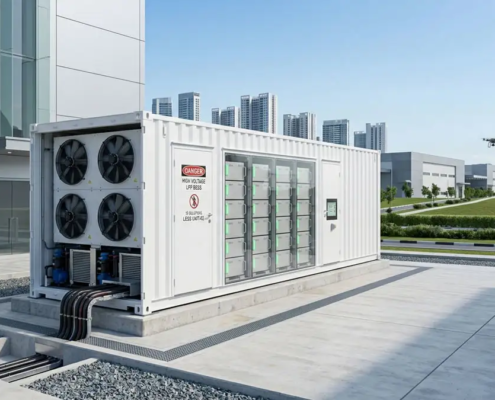 https://anengjipower.com/wp-content/uploads/2026/06/modular-commercial-solar-battery-storage-cabinet.webp
675
1000
Charging Station Engineer
https://anengjipower.com/wp-content/uploads/2025/09/anengji-dc-fast-charging-station-manufacturer-and-supplier-logo-white-1.png
Charging Station Engineer2026-06-18 09:16:522026-07-03 03:05:13What Is Solar Battery Storage? Complete C&I Engineering Guide
https://anengjipower.com/wp-content/uploads/2026/06/modular-commercial-solar-battery-storage-cabinet.webp
675
1000
Charging Station Engineer
https://anengjipower.com/wp-content/uploads/2025/09/anengji-dc-fast-charging-station-manufacturer-and-supplier-logo-white-1.png
Charging Station Engineer2026-06-18 09:16:522026-07-03 03:05:13What Is Solar Battery Storage? Complete C&I Engineering Guide


Leave a Reply
Want to join the discussion?Feel free to contribute!