
Introduction
As the global transition toward decarbonization accelerates in 2026, commercial and industrial (C&I) enterprises face unprecedented volatile electricity tariffs, strict carbon compliance targets, and the operational necessity of integrating clean power assets. When engineering a resilient corporate power strategy, choosing the appropriate scale for a Battery Energy Storage System (BESS) represents a critical financial and operational milestone. Making an accurate 1MW vs 2MW Battery Storage System Cost Comparison is fundamental to unlocking optimized capital expenditures and maximizing long-term power system reliability. Navigating between a 1MW and a 2MW BESS framework requires an granular understanding of your facility’s precise load profiles, specific grid constraints, and distinct multi-axis economic motivations.
Why Compare 1MW vs 2MW Battery Storage Systems?
Growing Demand for Commercial and Industrial Battery Storage
According to the BloombergNEF (BNEF) 2026 Global Energy Storage Outlook, the commercial battery storage system market sector is experiencing an unprecedented compound annual growth rate (CAGR) exceeding 28%. Industrial facilities, large distribution networks, and massive corporate campuses are actively deploying utility scale battery storage and distributed assets to protect operational continuity, minimize historical grid dependency, and stabilize microgrid systems against localized blackouts.
Rising Electricity Costs and Peak Demand Charges
Modern utility tariff structures rely heavily on peak demand charges—penalties derived from a facility’s single highest interval of power consumption within a billing cycle. In many industrial corridors, these charges account for up to 40-50% of the aggregate monthly power expenditure. Implementing structured peak shaving battery storage systems allows companies to store low-cost energy during off-peak windows and discharge it during peak intervals, permanently flattening the facility’s demand profile and saving thousands of dollars monthly.
The Impact of Solar Integration and EV Charging Expansion
The global push for onsite solar battery storage systems, combined with the exponential deployment of corporate fleet electrification, has introduced severe load volatility into traditional facilities. Commercial buildings introducing mega-watt level solar arrays frequently encounter severe intermittency issues. Simultaneously, integrating high-power multi-gun DC fast-charging networks can instantly surge a facility’s peak load beyond its rated transformer capability. A properly engineered BESS resolves this by providing instantaneous structural buffering.
Why Proper BESS Sizing Directly Affects ROI
Undersizing an energy asset leads to early battery degradation due to continuous high depth-of-discharge (DoD) cycles and fails to effectively eliminate peak demand spikes. Conversely, oversizing an asset results in stranded capital expenditure, creating an elongated payback horizon that undermines project economics. Precise battery storage capacity planning guarantees that your asset works at peak efficiency, striking the optimal balance between initial capital deployment and realized energy arbitrage returns.
What Is a Battery Energy Storage System (BESS)?
A BESS is an integrated electro-chemical system designed to capture energy from various sources (such as power grids or renewable generation arrays), store it within specialized battery cells, and intelligently discharge it via advanced Power Conversion Systems (PCS) at specific times to optimize energy utilization, stabilize voltages, or provide critical backup power.
Understanding Battery Storage Power (MW) and Energy Capacity (MWh)
A frequent point of confusion for procurement managers is the structural distinction between the instantaneous discharge rate and the aggregate energy capacity of a commercial battery storage system. Understanding this physical configuration is essential when conducting a robust engineering evaluation.
The Difference Between MW and MWh
The rating in Megawatts (MW) represents the system’s maximum instantaneous power output—how much electrical energy the BESS can deliver or absorb at any single microsecond. The rating in Megawatt-hours (MWh) indicates the system’s total energy storage capacity—how long the system can sustain a specific rate of electrical discharge. For instance, a 1MW system rated at 2MWh can discharge its maximum power of 1MW continuously for exactly two hours before depleting its usable capacity.
Common Battery Storage Configurations
BESS configurations are tailored around specific energy-to-power (E/P) ratios, designed precisely for either high-power response applications or long-duration energy shift mandates:
- 1MW / 1MWh (1C Rating): Optimized for high-power, fast-response scenarios such as frequency regulation, voltage support, and short-duration peak shaving.
- 1MW / 2MWh (0.5C Rating): A classic commercial configuration offering balanced performance for peak shaving and moderate backup support.
- 2MW / 4MWh (0.5C Rating): A heavy-duty configuration built for deep industrial peak shifting, large-scale solar smoothing, and supporting massive multi-megawatt facility loads.
- 2MW / 8MWh (0.25C Rating): Designed specifically for long-duration microgrid autonomy, extensive energy arbitrage, and continuous multi-hour backup power architectures.
How Battery Storage Systems Work
During low-demand hours or high-generation solar periods, alternating current (AC) power flows from the grid or solar inverter into the BESS Power Conversion System (PCS), where it is converted into direct current (DC) power to charge the battery cells. The Energy Management System (EMS) monitors cell parameters continuously. When a peak demand spike is identified or a grid failure occurs, the PCS rapidly reverses this conversion process, routing stabilized AC electricity back to the facility’s main distribution panels in under 16 milliseconds.
1MW vs 2MW Battery Storage Systems: Key Differences
Power Output Comparison
The primary engineering delta centers on instantaneous work capacity. A 1MW BESS can effectively offset up to 1,000 kW of instantaneous demand from heavy machinery or charging hubs. A 2MW system doubles this performance capability, offsetting 2,000 kW of load. This makes the larger configuration a necessity for facilities operating high-tonnage electric arc furnaces, automated stamping lines, or large utility-scale grid interconnects.
Energy Capacity Comparison
While power defines the threshold of demand reduction, energy capacity controls the operational duration. A 2MW BESS typically scales with a larger MWh footprint (e.g., 4MWh or 8MWh), allowing an enterprise to maintain deep peak-shaving operations over extended multi-hour operational shifts, whereas a 1MW system may deplete its energy reserves prematurely if a peak event spans across an entire afternoon.
Footprint and Installation Requirements
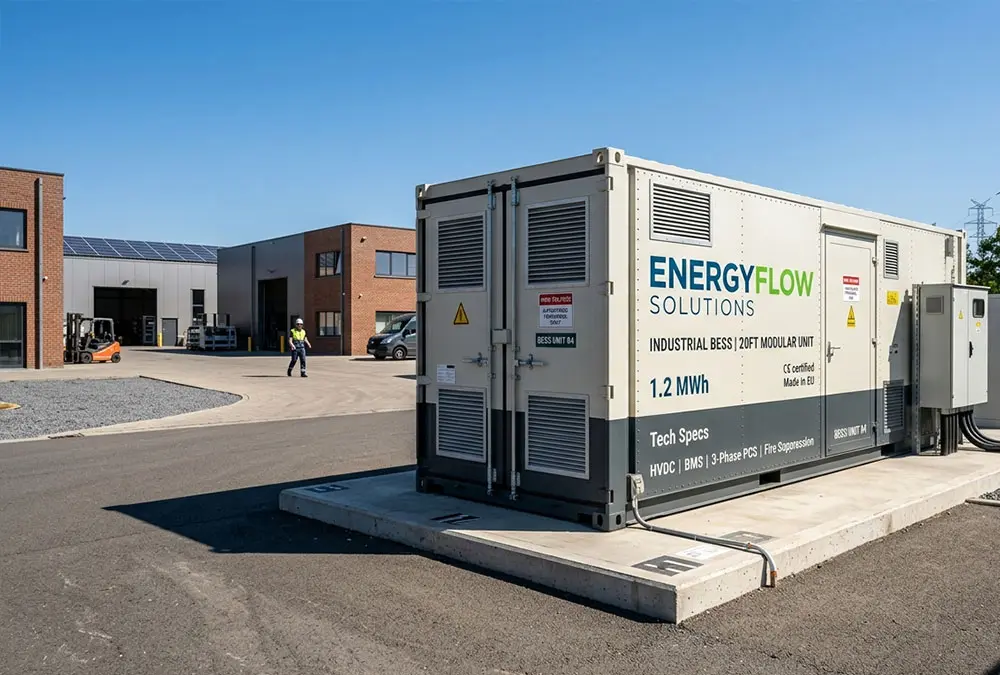
A 1MW BESS is typically housed within a standard, compact 20-foot modular ISO container, requiring minimal civil engineering, pad preparation, and localized physical footprint. A 2MW BESS, depending on whether it utilizes ultra-high-density liquid cooling, may require a larger 40-foot container or multiple decentralized 20-foot enclosures, requiring extensive spatial layout mapping, structural concrete reinforcement, and expanded safety clearance perimeters.
Scalability and Future Expansion
Modern BESS architectures prioritize a modular topology. While a 1MW system can often be retrofitted with additional battery racks if the internal container has spare bays, upgrading its core power rating requires replacing the entire PCS and modifying grid interconnection agreements. A 2MW BESS framework provides built-in infrastructural headroom, facilitating smooth integration of future factory expansion or fleet electrification without demanding a complete redesign of the facility’s electrical substation.
Typical Investment Cost Differences
While a 2MW BESS provides twice the capability of a 1MW system, its initial capital outlay does not scale linearly. Thanks to significant economies of scale achieved in structural steel housing, localized balance of plant (BOP) engineering, and collective procurement of multi-megawatt string inverters, the cost per kilowatt-hour drops noticeably as the size of the installation scales upward.
Performance Comparison Table
The following structural matrix outlines the technical and operational differences between the two primary commercial classes of battery energy storage sizing:
| Feature | 1MW BESS (Typical 2MWh Profile) | 2MW BESS (Typical 4MWh Profile) |
|---|---|---|
| Power Output | 1,000 kW (Lower Instantaneous Capability) | 2,000 kW (Higher Instantaneous Capability) |
| Energy Capacity | Highly Flexible (1MWh to 2MWh standard) | Highly Flexible (2MWh to 8MWh standard) |
| Capital Cost | Lower initial asset investment | Higher initial asset investment |
| Site Requirements | Smaller footprint (Standard 20ft Container) | Larger footprint (40ft Container or Dual Enclosures) |
| Peak Shaving Capability | Moderate (Ideal for single-shift peak profiles) | Strong (Suited for continuous multi-shift factories) |
| EV Charging Support | Good (Supports up to 4-6 DC Fast Chargers) | Excellent (Supports high-density fast charging hubs) |
| Grid Services Potential | Moderate (Limited by capacity thresholds) | High (Enables active participation in virtual power plants) |
Battery Storage Sizing: When Is a 1MW BESS the Better Choice?
Small to Medium Manufacturing Facilities
For mid-sized manufacturing hubs operating a standard single or double-shift schedule where the absolute peak demand does not exceed 1.5MW, a 1MW battery storage system provides exceptional load management. It effectively manages the morning start-up current of localized CNC machinery, keeping utility costs low without over-allocating capital budget.
Commercial Buildings and Shopping Centers
Large retail developments, mixed-use corporate towers, and regional shopping malls typically display highly predictable load curves driven largely by HVAC cooling cycles and structural lighting systems. A 1MW BESS pairs perfectly with these load profiles, effectively shaving the mid-afternoon cooling peaks and providing excellent backup power for critical localized systems like elevators and security infrastructure.
Solar Self-Consumption Projects
When a business deploys a commercial rooftop solar array between 500kWp and 1.2MWp, a 1MW/2MWh BESS acts as an ideal buffer. It captures excess generation during peak sunlight hours to prevent forced solar clipping, releasing that clean energy during evening hours when commercial tariffs spike sharply.
Small EV Charging Stations
For workplace environments or private commercial parking areas deploying a limited bank of 4 to 6 DC fast chargers (60kW to 120kW variants), a 1MW system provides a robust electrical buffer. It prevents the local distribution grid transformer from overheating during high-traffic lunch hours, delaying the need for expensive infrastructure additions.
Businesses with Limited Grid Capacity
If an enterprise is locked into a rigid utility interconnection agreement that restricts maximum current draw, a 1MW BESS functions as a dependable virtual substation. It injects vital extra current locally whenever the facility’s energy requirements approach the utility’s legal threshold, avoiding steep contract violation fines.
Typical Load Profiles Suitable for a 1MW Battery Storage System
Battery Storage Sizing: When Is a 2MW BESS the Better Choice?
Large Industrial Manufacturing Plants
Continuous-process industrial complexes—such as chemical production lines, automotive assembly facilities, and heavy metallurgical plants—operate large machinery 24/7. Their immense baseline and unpredictable peak demands require the robust, heavy-duty deployment capability that only a 2MW BESS can deliver over multi-hour operational windows.
Industrial Parks and Multi-Tenant Facilities
For master-planned industrial parks where a single centralized distribution utility sub-station distributes power to multiple tenants, load profiles are aggregated and unpredictable. A 2MW or multi-MW energy storage planning framework allows the property manager to smooth the entire park’s demand, capturing immense value through collective peak shaving and shared demand response savings.
High-Power EV Charging Hubs
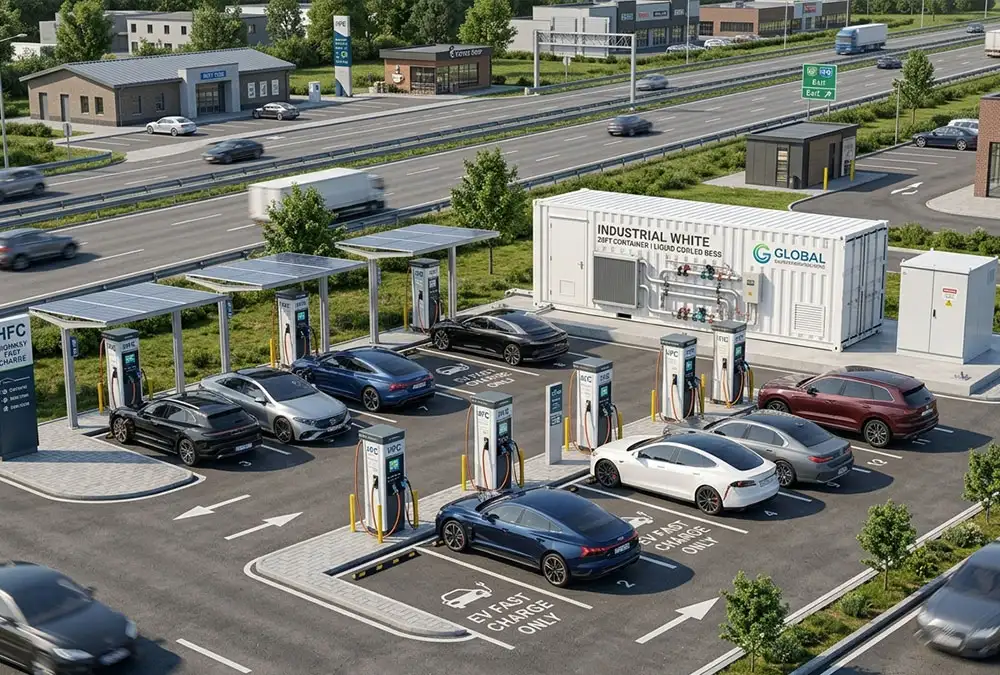
Modern highway charging plazas and public transit bus depots require serious electrical power. Operating several ultra-fast 350kW liquid-cooled charging units simultaneously creates instantaneous load spikes of multiple Megawatts. A 2MW BESS is absolutely mandatory in these high-traffic hubs to prevent total localized grid collapse and maintain consistent charging speeds across all active stalls.
Large Solar + Storage Projects
Utility-adjacent or large-scale front-of-the-meter solar tracking fields exceeding 3MWp require a 2MW BESS for high-capacity smoothing, ramp-rate optimization, and deep energy shifting. This configuration allows operators to completely defer daytime generation and sell clean energy into the wholesale market during highly lucrative peak night windows.
Utility and Grid Support Applications
For independent power producers looking to participate in advanced ancillary services—including fast frequency response (FFR), spinning reserves, or reactive power support—a 2MW system represents the baseline entry threshold. Most transmission system operators (TSOs) require multi-megawatt commitment capabilities before allowing an asset into their lucrative balancing markets.
Typical Load Profiles Suitable for a 2MW Battery Storage System
Facilities displaying massive baseline usage patterns (above 1.5MW) with sustained high-demand plateaus lasting 4 to 6 hours require a 2MW/4MWh or 2MW/8MWh system. This setup ensures the system can deliver deep, continuous support without running out of energy halfway through a shift.
1MW vs 2MW Battery Storage Cost Comparison
When executing a thorough financial analysis for your organization, evaluating raw equipment costs alone is insufficient. Procurement teams must focus on the total 1MW vs 2MW Battery Storage System Cost Comparison, which factors in initial capital expenditure, balance of plant engineering, and lifetime operational costs. Recent data from the International Energy Agency (IEA) 2025/2026 clean energy technology reports confirms that while absolute project budget totals increase for larger systems, the unit cost evaluated per kilowatt-hour drops significantly as a direct result of manufacturing and engineering efficiencies.
Average Cost of a 1MW Battery Storage System
As of 2026, a fully integrated turnkey 1MW/2MWh LFP commercial battery storage system typically requires a total capital investment ranging from $450,000 to $650,000 USD, depending on localized site complexities, fire suppression engineering requirements, and grid interconnection modifications.
Average Cost of a 2MW Battery Storage System
Conversely, a turnkey 2MW/4MWh system generally commands an investment between $800,000 and $1,100,000 USD. While the capital outlay is higher, the total capacity delivered is doubled, showing a clear reduction in unit pricing and accelerating the overall BESS project budget efficiency.
Equipment Cost Breakdown
To provide full transparency, the underlying capital expenditure of a modern BESS container is distributed across several key electro-chemical and mechanical subsystems:
Battery Cells and Battery Modules
The core electro-chemical cells comprise the largest expense, representing approximately 45-55% of the aggregate system cost. The wholesale pricing of these components is directly influenced by international raw material indexes for lithium iron phosphate chemistry.
PCS (Power Conversion System)
The bi-directional inverters responsible for AC/DC transformation represent roughly 15-20% of the equipment budget. Larger multi-megawatt central inverters used in 2MW configurations deliver superior cost efficiencies over the multiple smaller string units often paired with 1MW systems.
Battery Management System (BMS)
The multi-level hardware and firmware architecture tasked with monitoring cell-level voltage, state-of-charge (SoC), and thermal dynamics accounts for about 5-8% of the hardware investment.
Energy Management System (EMS)
The cloud-linked, AI-optimized software intelligence layer that executes real-time market trading algorithms and controls peak-shaving dispatch routines typically represents 3-5% of project costs.
Cooling Systems
Thermal management infrastructure—whether using advanced liquid-cooling or traditional forced-air setups—accounts for 6-10% of the total equipment footprint cost.
Fire Protection Systems
Advanced multi-stage safety configurations including specialized gas detection, structural containment barriers, and certified aerosol fire suppression add approximately 4-7% to the total hardware cost.
Container and Enclosure Costs
The weatherized, NEMA 4X or IP55/IP66 structural steel enclosures designed to isolate the system components from harsh environmental factors represent the remaining 5% of the capital cost.
Why Larger Battery Storage Systems Often Reduce Cost per kWh
This economic variance is driven by inherent balance-of-plant (BOP) cost compression. A 2MW system requires only a single integrated civil engineering assessment, one main grid connection point, a single site mobilizations fee, and a highly streamlined legal permitting process. Consequently, evaluating the 1MW vs 2MW Battery Storage System Cost Comparison clearly shows that a 2MW asset can reduce your real per-kWh hardware deployment cost by as much as 12-15% compared to a standalone 1MW system.
Battery Energy Storage ROI: Which System Generates Better Returns?
Maximizing financial returns requires aligning your system’s capabilities with local utility incentive programs and specific structural energy goals. Conducting a granular 1MW vs 2MW BESS ROI Analysis involves assessing multiple revenue and savings channels simultaneously.
Peak Shaving and Demand Charge Reduction
If a facility’s load profile shows short, sharp spikes, a 1MW system can deliver an excellent return on investment by eliminating those narrow peaks. However, if your manufacturing floor runs continuous, heavy machinery shifts, a 1MW system might exhaust its energy capacity too quickly. In contrast, a 2MW/4MWh system provides the deeper energy reserves needed to keep demand charges low across extended, multi-hour peak windows.
Energy Arbitrage Opportunities
Energy arbitrage involves charging the BESS during low-cost, off-peak hours and discharging it when electricity prices peak. This strategy is highly lucrative in regions with strict Time-of-Use (ToU) utility pricing. A 2MW/4MWh system moves double the volume of energy daily compared to a 1MW system, enabling high-volume energy shifting that significantly increases monthly utility savings.
Solar Energy Utilization Optimization
For enterprises operating massive rooftop solar arrays, a larger BESS ensures zero clean energy is wasted. Instead of exporting excess generation to the grid at unfavorable net-metering rates, a 2MW system captures the full solar surplus, storing it to power high-tariff evening operations and maximizing the value of your renewable investment.
Demand Response Programs
Many regional grid operators offer lucrative financial incentives to businesses that can rapidly drop their power draw during grid emergencies. Participating in these programs with a 2MW BESS allows your facility to maximize payouts, as grid operators offer premium capacity payments for larger, multi-megawatt curtailment commitments.
Backup Power and Business Continuity Benefits
For high-tech data centers or continuous manufacturing facilities, even a brief 10-minute power outage can result in catastrophic product loss and millions in damages. While a 1MW BESS provides short-term emergency backup for critical control rooms, a 2MW system offers the comprehensive capacity needed to keep entire production lines running smoothly through extended grid failures.
ROI Comparison Between 1MW and 2MW Systems
In jurisdictions with high peak demand charges and active demand response markets, a comprehensive 1MW vs 2MW BESS ROI Analysis frequently reveals that while the initial investment for a 2MW asset is higher, its multi-channel revenue generation often results in a shorter payback period (typically 4.2 to 5.5 years) compared to a smaller 1MW asset (which often averages 5.8 to 7 years).
Commercial and Industrial Battery Storage Applications
Manufacturing Facilities
Modern factories are ideal environments for multi-megawatt commercial battery storage systems due to their heavy machinery and complex energy demands.
Reducing Peak Demand Charges
Heavy machinery operations, such as starting up large industrial compressors or running heavy-duty automated welding systems, create massive, intermittent power spikes. A BESS absorbs these rapid surges internally, protecting the facility from costly peak demand charges.
Supporting Critical Production Lines
In advanced industries like semiconductor fabrication or high-precision plastics molding, even a minor voltage sag can ruin an entire production batch. A BESS provides instantaneous voltage smoothing, ensuring a clean, stable power supply across the entire factory floor.
EV Charging Infrastructure
The accelerating transition to electric fleets requires a major rethink of site electrical infrastructure.
Supporting DC Fast Charging Stations
Deploying a 2MW Battery Storage System for EV Charging Stations allows operators to install multiple ultra-fast DC charging stalls without overwhelming local grid infrastructure. The BESS delivers the massive, instantaneous current required by high-power EVs, recharging its own cells smoothly during low-traffic periods.
Avoiding Costly Grid Upgrades
Upgrading a facility’s main grid transformer to support heavy EV fast charging can take over 12-18 months and cost hundreds of thousands of dollars in utility fees. Integrating a modular BESS bypasses this bottleneck entirely, allowing operators to deploy high-speed charging hubs immediately on limited local grid connections.
Solar Battery Storage Systems
Pairing commercial solar arrays with a dedicated BESS maximizes the economic value of renewable energy assets.
Maximizing Self-Consumption
A BESS stores excess daytime solar generation directly onsite, allowing businesses to use 100% of the clean energy they generate rather than selling it back to the utility at low export rates.
Reducing Grid Dependence
By pairing a high-capacity solar array with a 2MW BESS, industrial facilities can run almost entirely on clean, self-generated power during peak summer months, protecting the business from volatile utility markets.
Data Centers and Critical Infrastructure
For modern data centers, power reliability is non-negotiable. Large-scale BESS solutions are rapidly replacing traditional, high-maintenance diesel generators as the primary line of defense against power disruptions. A BESS provides seamless, emissions-free backup power that keeps servers online instantly during grid outages, helping facilities meet strict corporate sustainability goals.
Microgrids and Remote Energy Systems
For remote mining operations, agricultural hubs, or isolated island communities, relying on imported diesel fuel is expensive and logistically challenging. Integrating a 1MW or 2MW BESS with local solar or wind assets enables stable, self-sustaining microgrid operations, drastically reducing fuel consumption and operational costs.
Battery Storage Components That Impact System Performance
Battery Technology Selection
The electro-chemical composition used within a BESS determines its operational lifespan, thermal safety profile, and long-term financial performance.
Technical Comparison: LFP vs NMC Chemistry
- Lithium Iron Phosphate (LFP / LiFePO4): Features a robust crystalline structure that offers exceptional thermal safety (virtually eliminating thermal runaway risks) and an outstanding operational lifespan of 6,000 to 8,000 cycles at 80% Depth of Discharge (DoD). This makes it the absolute industry standard for stationary commercial storage applications in 2026.
- Nickel Manganese Cobalt (NMC): Offers higher energy density but has a shorter operational lifespan (typically 2,000 to 3,000 cycles) and requires more complex thermal management due to a lower thermal runaway threshold. It is primarily used in space-constrained mobile applications.
Alternative Tech: Sodium-Ion & Flow Batteries
- Sodium-Ion (Na-Ion): An emerging alternative utilizing abundant sodium raw materials. While highly cost-effective and safe in extreme temperatures, its current energy density is lower than LFP, making it suitable primarily for large installations where space is not limited.
- Vanadium Redox Flow Batteries (VRFB): Utilizes liquid chemical electrolytes stored in large external tanks. They offer near-infinite cycle life without degradation, but require a massive physical footprint and involve high initial manufacturing costs, making them ideal mainly for multi-hour utility-scale projects.
Battery Management System (BMS)
The BMS serves as the primary safety and monitoring layer for the battery cells. It continuously tracks voltage, temperature, and current across every cell series, balancing charge levels to prevent overcharging and ensure uniform cell aging across the entire system container.
Power Conversion System (PCS)
The PCS houses the bidirectional intelligent inverters that bridge the gap between the DC battery modules and the facility’s AC grid. Modern, high-efficiency PCS units utilize advanced silicon carbide (SiC) semiconductors to achieve energy conversion efficiencies exceeding 98.8%.
Energy Management System (EMS)
The EMS acts as the system’s software brain. It analyzes real-time facility load data, solar generation forecasts, and utility spot-market pricing to automatically dispatch power at the most profitable moments, maximizing peak-shaving and arbitrage returns.
Fire Protection and Safety Systems
Industrial safety requires a robust, multi-layered fire protection architecture. Modern BESS enclosures incorporate early-stage off-gas sensors (such as gas detection systems) to identify cell venting long before temperatures rise, automatically triggering specialized aerosol fire suppression systems to isolate and neutralize thermal risks immediately.
Liquid Cooling vs Air Cooling Battery Storage
Traditional air-cooling setups rely on heavy HVAC air circulation, which can lead to uneven internal temperatures and accelerated cell degradation in hot climates. In contrast, advanced liquid-cooling technology routes specialized thermal fluids directly through every battery module. This delivers precise temperature control within a narrow ±2°C range, reducing internal energy consumption by up to 30% and extending the operational life of the battery cells by several years.
Battery Storage Capacity Planning and Sizing Considerations
Selecting the ideal system size requires a comprehensive engineering review of your facility’s energy profile. A standardized approach prevents costly miscalculations during project deployment.
- Evaluating Facility Energy Consumption: Gather at least 12 to 24 months of high-resolution, 15-minute interval utility data to map your baseline energy trends accurately across different seasons.
- Understanding Peak Demand Profiles: Analyze whether your facility’s peak spikes are short and intense (ideal for a 1MW system) or sustained over several hours (requiring a 2MW or larger system).
- Determining Required Backup Duration: Calculate the minimum electrical load required to maintain critical business operations during a grid outage, and define exactly how many hours of autonomy your business needs.
- Planning for Future Load Growth: Account for upcoming factory expansions or production line upgrades to ensure your initial BESS installation offers sufficient structural scalability.
- Considering EV Charging Expansion: Factor in long-term fleet electrification plans; choosing a 2MW Battery Storage System for EV Charging Stations provides the robust capacity needed to support future ultra-fast charging networks smoothly.
- Integrating Renewable Energy Sources: Evaluate the total generation capacity of your existing or planned solar arrays to ensure your BESS is sized correctly to capture and smooth daytime generation peaks.
1MW vs 2MW Battery Storage for EV Charging Stations
How Battery Storage Supports Fast EV Charging
When an EV connects to a high-power DC fast charger, it draws massive electrical current instantly. If multiple vehicles charge simultaneously, these rapid load surges can trigger severe voltage drops on the local utility line and incur expensive peak demand penalties for the station operator.
1MW BESS for Small and Medium Charging Sites
A 1MW BESS is an excellent solution for fleet operators or commercial offices running 4 to 6 DC fast chargers. It effectively manages localized charging spikes, ensuring stable power delivery without requiring expensive utility substation upgrades.
2MW BESS for High-Traffic Charging Hubs
For busy highway travel plazas, public transit bus depots, or large commercial logistics hubs, deploying a 2MW Battery Storage System for EV Charging Stations is essential. This high-capacity system can easily support large arrays of ultra-fast 150kW or 350kW chargers, delivering consistent, high-speed charging even during peak travel periods.
Battery Storage Benefits for Charging Network Operators
- Lower Electricity Costs: Charge the BESS during low-cost, off-peak night hours and use that stored energy to power daytime charging operations, significantly reducing retail energy costs.
- Reduced Demand Charges: Permanently eliminate expensive peak demand penalties by using the BESS to buffer rapid, high-current charging surges internally.
- Improved Charging Reliability: Protect your charging infrastructure against localized grid brownouts, ensuring your station remains fully operational when customers need it most.
- Faster Charger Deployment: Install high-speed charging hubs immediately on limited local grid connections, avoiding long, costly utility infrastructure approval delays.
1MW vs 2MW Battery Storage for Solar Energy Storage Projects
To maximize the financial return of commercial solar investments, selecting a BESS with the right energy-to-power ratio is critical. Evaluating 1MW and 2MW Battery Storage for Solar Projects helps operators select the optimal configuration for their generation profile.
Improving Solar Self-Consumption
Large commercial solar arrays often produce more electricity during peak midday sunlight than a facility can immediately consume. A BESS captures this excess generation directly, preventing wasteful solar clipping and saving that clean power for high-tariff evening operations.
Managing Solar Intermittency
Passing cloud cover can cause sudden, massive drops in solar output, destabilizing localized factory microgrids. A BESS responds instantly to these fluctuations, injecting or absorbing power within milliseconds to maintain a stable, uniform energy supply.
Storing Excess Solar Energy
In regions with unfavorable net-metering policies, exporting clean energy back to the utility is financially unviable. A high-capacity 2MW BESS allows industrial facilities to store their full solar surplus onsite, maximizing renewable utilization and accelerating project payback.
Choosing the Right Battery Size for Solar Projects
As a general engineering rule, a 1MW BESS pairs effectively with commercial solar arrays up to 1.5MWp for daily smoothing. For larger industrial or utility-scale solar installations exceeding 3MWp, a 2MW system framework is required to manage high-volume energy shifting and optimize long-term project economics.
How to Choose Between a 1MW and a 2MW Battery Storage System
Selecting the optimal system configuration requires a structured, multi-step engineering evaluation tailored to your business’s unique operational needs.
Assess Your Facility’s Energy Demand
Review your historical utility billing data to identify your precise peak demand thresholds and baseline consumption patterns. If your peak demand spikes rarely exceed 1.2MW, a 1MW system will deliver exceptional results. If your facility consistently draws over 1.5MW, a 2MW system is necessary to handle the load safely.
Define Project Objectives
Clearly prioritize your primary energy goals to select the optimal capacity configuration:
- Peak Shaving: Focus on cutting expensive demand charges during peak operational hours.
- Backup Power: Secure full facility autonomy to keep production lines running through extended grid failures.
- Energy Arbitrage: Shift large energy volumes daily to capitalize on volatile Time-of-Use tariff spreads.
- EV Charging Support: Provide a high-capacity electrical buffer to handle rapid, high-current fast charging surges.
Analyze Total Cost of Ownership (TCO)
When comparing project options, look beyond the initial equipment purchase price. A comprehensive 1MW vs 2MW Battery Storage System Cost Comparison should always factor in balance-of-plant expenses, while executing a secondary 1MW vs 2MW Battery Storage System Cost Comparison to verify all regional civil engineering discounts, structural civil engineering costs, localized permitting fees, and expected long-term cell replacement schedules.
Evaluate ROI and Payback Period
Model your expected annual utility savings and potential demand response revenue against your initial capital investment. Larger 2MW systems frequently unlock greater savings and shorter payback periods by enabling high-volume energy shifting and deeper participation in lucrative utility balancing markets.
Select a Scalable and Modular Solution
To future-proof your energy investment, choose a modular BESS architecture that allows you to expand your capacity easily. This ensures you can scale your system’s energy capacity smoothly as your business grows, or as you add more EV fast chargers and solar assets down the road.
AnengJi Power Industrial BESS Portfolio Product Recommendations
For businesses navigating complex energy transitions, AnengJi Power offers world-class, turnkey commercial and industrial energy storage solutions tailored to your exact operational requirements:
- AnengJi ECO-E211LS (1MW / 1.5MWh to 2.1MWh Turnkey Container): An exceptionally compact, liquid-cooled LFP system housed in a standard 20-foot container. Optimized for mid-sized manufacturing plants, commercial shopping centers, and workplace EV charging networks seeking high-efficiency peak shaving and reliable backup power.
- AnengJi ECO-E422LS (2MW / 3.0MWh to 4.2MWh Heavy-Duty Container): A high-capacity, ultra-high-density liquid-cooled storage solution designed for heavy industrial complexes, large-scale solar farms, and high-traffic public DC fast-charging plazas demanding maximum energy arbitrage performance and structural microgrid resilience.
Why Choose AnengJi Power Battery Storage Solutions?
Flexible 1MW to Multi-MW Energy Storage Systems
AnengJi Power specializes in engineering modular, high-performance energy storage platforms that scale seamlessly from 1MW configurations up to massive multi-megawatt utility installations, ensuring a perfect fit for your facility’s unique load profile.
Advanced LFP Battery Technology
Our entire commercial portfolio is built exclusively on premium Lithium Iron Phosphate (LFP) chemistry, delivering maximum thermal stability, unmatched physical safety, and an industry-leading operational lifespan exceeding 8,000 continuous charge cycles.
Intelligent BMS and EMS Integration
AnengJi Power systems feature a proprietary, multi-level Battery Management System seamlessly integrated with an AI-driven Energy Management System. This advanced software suite optimizes performance in real time, executing high-yield market trading and precision peak shaving automatically.
High-Efficiency Liquid Cooling Technology
Our innovative liquid-cooling systems route specialized thermal fluids directly through every battery module, keeping internal temperatures within a precise ±1.5°C range. This advanced design reduces auxiliary power consumption by 30% and significantly extends cell life compared to traditional air-cooled enclosures.
Comprehensive Fire Protection Design
Safety is built into every layer of AnengJi Power enclosures through a rigorous, multi-tiered fire protection architecture:
- Smoke and Gas Detection: Advanced sensors monitor internal environments 24/7, detecting cell off-gassing long before temperatures begin to rise.
- Temperature Monitoring: Continuous thermal tracking identifies localized hot spots instantly, allowing the system to isolate affected modules automatically.
- Aerosol Fire Suppression: Certified, multi-stage fire suppression systems deploy instantly to neutralize thermal risks, ensuring total asset protection.
Modular Expansion Capability
AnengJi Power solutions utilize a flexible, modular design philosophy. This allows businesses to scale their energy capacity or upgrade their system’s power output easily as operational demands grow, protecting your initial capital investment long into the future.
Global Certifications and Overseas Support
Our products are fully certified under rigorous international engineering standards, including UL9540A, CE, and IEC. Backed by an experienced global engineering network, AnengJi Power provides comprehensive, end-to-end technical support, overseas site commissioning, and dedicated maintenance services worldwide.
Future Trends in Utility-Scale and Commercial Battery Storage
Larger Battery Storage Deployments
As grid infrastructure faces increasing strain worldwide, businesses are deploying larger, multi-megawatt energy storage assets to secure operational independence and protect against volatile energy markets.
Growth of Solar + Storage Projects
The integration of solar generation with high-capacity battery storage has become the gold standard for modern commercial energy projects, turning intermittent renewable assets into dependable, dispatchable power sources 24/7.
Expansion of EV Charging Infrastructure
The rapid growth of commercial electric fleets is driving heavy demand for high-capacity battery storage buffers, allowing operators to deploy ultra-fast charging networks quickly without overloading local grid transformers.
AI-Driven Energy Management Systems
Future BESS platforms will rely heavily on advanced AI and machine learning to analyze utility spot markets, weather patterns, and facility load variations simultaneously, optimizing dispatch schedules automatically to secure maximum financial returns.
Falling Battery Costs and Improved ROI
Driven by ongoing manufacturing innovations and scaled production, wholesale BESS equipment costs continue to fall. This shifting financial landscape makes commercial energy storage solutions increasingly accessible, offering faster payback periods and exceptional long-term returns for enterprises worldwide.
Quick Comparison Summary: 1MW vs 2MW Battery Storage Systems
Choose a 1MW Battery Storage System If:
- Your facility’s maximum peak demand spikes consistently stay below 1.2MW.
- You operate a mid-sized factory, automated commercial development, or regional corporate campus.
- You want to minimize your initial capital expenditure while securing excellent peak-shaving performance.
- Your long-term electrical load growth and fleet electrification plans are moderate.
Choose a 2MW Battery Storage System If:
- Your facility’s regular operational peak loads consistently exceed 1.5MW.
- You run a heavy industrial manufacturing plant, continuous chemical processing line, or large multi-tenant industrial park.
- Your facility supports a high-density network of ultra-fast DC charging stalls or large solar tracking arrays.
- You want to maximize your financial returns through high-volume energy arbitrage and active participation in lucrative utility demand response markets.
FAQ About 1MW vs 2MW Battery Storage Systems
What is the difference between a 1MW and 2MW battery storage system?
The primary difference lies in their instantaneous power output. A 1MW system can deliver or absorb up to 1,000 kW of power at any single moment, while a 2MW system doubles that performance to 2,000 kW, making it ideal for heavier industrial loads and high-capacity fast charging hubs.
How much does a 1MW battery storage system cost?
A comprehensive 1MW vs 2MW Battery Storage System Cost Comparison shows that a turnkey 1MW/2MWh system typically requires an investment between $450,000 and $650,000 USD, depending on specific site conditions and utility interconnection requirements.
How much does a 2MW battery storage system cost?
A turnkey 2MW/4MWh system generally commands an initial investment between $800,000 and $1,100,000 USD. However, thanks to manufacturing economies of scale, the larger system delivers a significantly lower cost per kilowatt-hour deployed.
Which battery storage size offers the best ROI?
Sizing your system correctly is the key to maximizing returns. A detailed 1MW vs 2MW BESS ROI Analysis shows that for large, high-demand industrial facilities, a 2MW system often delivers a shorter payback period by enabling deep, high-volume energy shifting and active participation in premium grid service programs.
Is a 1MW battery storage system enough for a factory?
A 1MW system is an excellent choice for small-to-medium manufacturing plants operating single or double shifts with predictable peak demand. However, large, continuous heavy industrial operations with complex machinery loads typically require a 2MW or larger system.
How many EV chargers can a 1MW BESS support?
A 1MW BESS can easily buffer a standard workplace array of 4 to 6 DC fast chargers (60kW to 120kW units), preventing peak grid surges during high-traffic charging periods.
How many EV chargers can a 2MW BESS support?
A high-capacity 2MW BESS can comfortably support a large public charging plaza or commercial fleet depot running multiple ultra-fast 150kW or 350kW liquid-cooled charging stalls simultaneously.
What battery capacity is recommended for solar energy storage?
The ideal capacity depends on your total generation profile. Generally, a 1MW BESS pairs effectively with commercial solar installations up to 1.5MWp. For large industrial or utility-scale arrays exceeding 3MWp, a 2MW system framework is recommended to optimize energy shifting and project economics.
Can a battery storage system be expanded later?
Yes. Choosing a highly modular BESS architecture allows you to expand your system’s energy capacity easily by adding more battery modules as your business grows, protecting your initial capital investment.
What is the lifespan of a commercial battery storage system?
Premium commercial BESS solutions utilizing advanced Lithium Iron Phosphate (LFP) chemistry deliver an operational lifespan of 15 to 20 years, supporting 6,000 to 8,000 continuous charge cycles before dropping to 80% of their original capacity.
 https://anengjipower.com/wp-content/uploads/2026/10/AnengjiPowr-AC-Coupled-Battery-Storage-at-a-CI-Solar-Site.webp
675
1000
Charging Station Engineer
https://anengjipower.com/wp-content/uploads/2025/09/anengji-dc-fast-charging-station-manufacturer-and-supplier-logo-white-1.png
Charging Station Engineer2026-10-16 03:03:192026-10-16 03:03:49What Is AC-Coupled Battery Storage? C&I BESS Guide
https://anengjipower.com/wp-content/uploads/2026/10/AnengjiPowr-AC-Coupled-Battery-Storage-at-a-CI-Solar-Site.webp
675
1000
Charging Station Engineer
https://anengjipower.com/wp-content/uploads/2025/09/anengji-dc-fast-charging-station-manufacturer-and-supplier-logo-white-1.png
Charging Station Engineer2026-10-16 03:03:192026-10-16 03:03:49What Is AC-Coupled Battery Storage? C&I BESS Guide https://anengjipower.com/wp-content/uploads/2026/10/AnengjiPower-What-Is-Peak-Shaving-at-an-Industrial-Site.webp
675
1000
Charging Station Engineer
https://anengjipower.com/wp-content/uploads/2025/09/anengji-dc-fast-charging-station-manufacturer-and-supplier-logo-white-1.png
Charging Station Engineer2026-10-15 06:49:012026-10-15 06:50:23What Is Peak Shaving? How Battery Energy Storage Reduces C&I Peaks
https://anengjipower.com/wp-content/uploads/2026/10/AnengjiPower-What-Is-Peak-Shaving-at-an-Industrial-Site.webp
675
1000
Charging Station Engineer
https://anengjipower.com/wp-content/uploads/2025/09/anengji-dc-fast-charging-station-manufacturer-and-supplier-logo-white-1.png
Charging Station Engineer2026-10-15 06:49:012026-10-15 06:50:23What Is Peak Shaving? How Battery Energy Storage Reduces C&I Peaks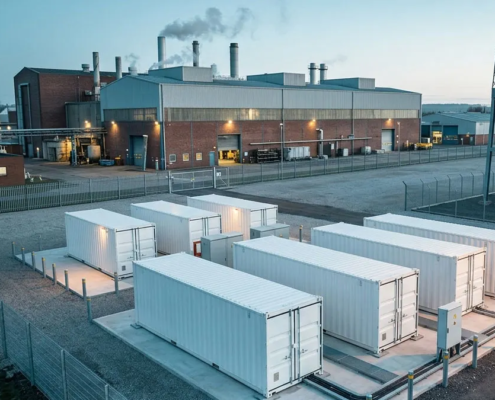 https://anengjipower.com/wp-content/uploads/2026/10/anengjipower-Peak-Shaving-vs-Load-Shifting-at-an-Industrial-Site.webp
675
1000
Charging Station Engineer
https://anengjipower.com/wp-content/uploads/2025/09/anengji-dc-fast-charging-station-manufacturer-and-supplier-logo-white-1.png
Charging Station Engineer2026-10-14 07:47:372026-10-14 07:48:01Peak Shaving vs Load Shifting: C&I Energy Storage Decision Guide
https://anengjipower.com/wp-content/uploads/2026/10/anengjipower-Peak-Shaving-vs-Load-Shifting-at-an-Industrial-Site.webp
675
1000
Charging Station Engineer
https://anengjipower.com/wp-content/uploads/2025/09/anengji-dc-fast-charging-station-manufacturer-and-supplier-logo-white-1.png
Charging Station Engineer2026-10-14 07:47:372026-10-14 07:48:01Peak Shaving vs Load Shifting: C&I Energy Storage Decision Guide


Leave a Reply
Want to join the discussion?Feel free to contribute!