
Meta Description: What is a Solar EPC Company? Discover how the turnkey engineering, procurement, and construction process works, project costs, long-term ROI, and how to select a tier-1 solar EPC company.
Introduction: Why Choosing the Right Solar EPC Company Matters
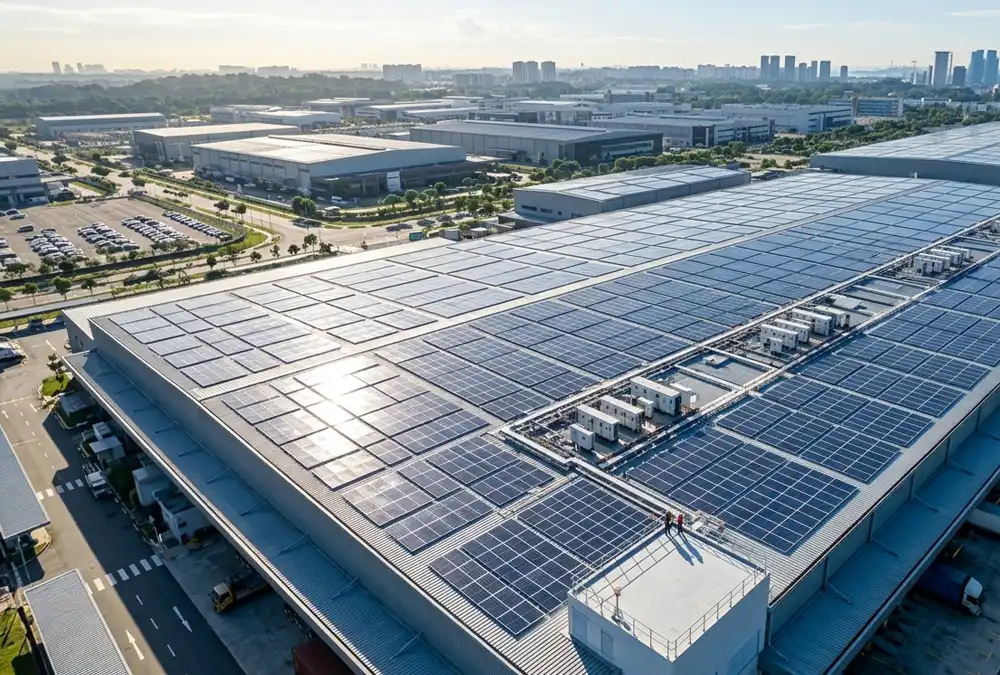
When developing a commercial, industrial, or utility-scale solar asset, navigating the complex landscape of hardware engineering, grid compliance, and field logistics can be a daunting challenge. Whether you are modeling a distributed rooftop array for a manufacturing facility, a 1–5MW net-metered ground mount, or a massive utility-scale project, you will frequently encounter the term Solar EPC Company. The Engineering, Procurement, and Construction (EPC) delivery framework has become the global benchmark for renewable energy execution. Partnering with a highly qualified solar EPC company ensures that what is conceptualized during financial modeling perfectly translates into a high-performance, high-yield operational reality. A professional solar EPC company does not simply function as a general contractor; they serve as your primary technology integrator and financial de-risking partner, directly influencing your Levelized Cost of Energy (LCOE) and long-term asset profitability.
For institutional investors, corporate energy directors, and independent power producers (IPPs), the core challenge of solar deployment rarely lies in the individual purchase of photovoltaic components. Instead, the ultimate challenge is ensuring the entire asset can be delivered on schedule, remain strictly within capital expenditure (CapEx) budgets, satisfy stringent local utility grid-connection requirements, hit projected annual energy yields, and minimize operational risk across its 25-to-30-year lifespan. This comprehensive masterclass delivers an industry-expert analysis of the structural roles, engineering workflows, commercial cost drivers, and asset risk-mitigation strategies associated with professional solar EPC services.
What Is a Solar EPC Company?
Solar EPC Company Definition
A solar EPC company is a specialized utility and industrial contractor contractually responsible for providing the complete lifecycle delivery of a solar energy project. Under a unified, single-point-of-responsibility contract, the EPC provider manages the project from initial engineering design through component sourcing to physical site deployment and final utility handoff. The core model is built on three distinct pillars:
- Engineering: Multi-disciplinary architectural and electrical design, including structural load calculations, computational PVsyst simulations, shading analysis, medium-to-high voltage protection relay coordination, and grid-connection simulation modeling.
- Procurement: End-to-end supply chain management, tier-1 vendor qualification, contract negotiation, and logistics coordination for all balance-of-system (BOS) equipment and core generation hardware.
- Construction: Complete field execution, covering civil earthworks, foundation pile driving, mechanical assembly of racking or tracking systems, high-voltage electrical distribution wiring, substation construction, and final grid synchronization.
What Does a Solar EPC Contractor Do?
A professional solar EPC contractor acts as the central hub of execution. Their operational scope extends far beyond basic construction, encapsulating deep technical diligence such as front-end engineering design (FEED), geotechnical and hydrological site assessments, regulatory zoning and environmental permitting approvals, factory acceptance testing (FAT) oversight, site acceptance testing (SAT), and comprehensive long-term operations and maintenance (O&M) coordination.
Who Typically Hires a Solar EPC Company?
Any commercial enterprise or entity executing a high-capacity solar asset utilizes a professional solar EPC company. Typical clients include:
- Commercial & Industrial (C&I) Enterprises: Manufacturing plants, heavy industrial foundries, cold-storage logistics parks, and hyperscale data centers seeking to hedge against volatile retail power tariffs.
- Institutional Investors & IPPs: Renewable energy funds, infrastructure investment trusts, and Independent Power Producers developing multi-megawatt portfolios to sell wholesale power via Power Purchase Agreements (PPAs).
- Public Utilities & Government Agencies: Municipal power authorities and state-owned grid operators expanding utility-scale generation assets to meet national decarbonization mandates.
Why Solar EPC Services Are Critical for Project Success
Reducing Technical Complexity
Large-scale solar assets are intricate high-voltage power generation facilities. A typical industrial installation involves thousands of individual modules, complex multi-string string inverter networks, communication networks, and localized sub-distribution panels. Most asset owners lack the in-house engineering depth to manage these technical variables. Utilizing professional solar EPC services effectively bridges this gap by deploying dedicated, multi-disciplinary engineering teams to manage every interface.
Improving Project Execution Efficiency
In a fragmented project delivery model, an owner must independently manage separate design firms, equipment distributors, and local installation crews. This separation frequently causes major project delays, design gaps, and finger-pointing when components do not align in the field. A unified solar EPC company consolidates these tasks under one roof, using tightly synchronized project timelines to keep civil, mechanical, and electrical crews working in parallel.
Protecting Investment Returns
The financial viability of a commercial solar investment depends entirely on the plant’s long-term Performance Ratio (PR). A premier turnkey solar EPC company for commercial projects backs their execution with hard financial guarantees. They provide legally binding performance metrics, guaranteed commercial operation dates (COD), and systemic cost caps that insulate investors from budget overruns and unexpected technical failures.
Supporting Solar + Battery Storage Projects
As grid penetration from intermittent renewables increases, modern energy networks demand advanced flexibility. This shifting dynamic requires an experienced solar EPC company with battery storage solutions capability. Modern EPC providers must possess advanced expertise in Power Conversion System (PCS) integration, complex Energy Management System (EMS) control loop design, specialized BESS fire suppression compliance, and multi-node grid control strategies to enable seamless peak-shaving and energy arbitrage.
Solar EPC Engineering, Procurement, and Construction Explained
Engineering – Solar Engineering Design
The foundation of long-term asset yield is rigorous solar engineering design. This phase begins with complete site assessments, featuring topographic drone mapping, structural roof loading verifications, and localized shading analysis. Engineers feed this empirical data into specialized computational software like PVsyst to model performance, optimize DC-to-AC overloading ratios, determine ideal string layouts, and design robust medium-voltage grid interconnection interfaces.
Procurement – Solar Equipment Sourcing
The procurement arm leverages its global supply chain network to manage hardware sourcing. This includes securing manufacturing slots for premium Tier-1 solar modules, evaluating intelligent string or central inverters, and choosing heavy-duty fixed-tilt or single-axis tracking structures. They also source vital balance-of-system (BOS) components, including outdoor-rated, zero-halogen cables, medium-voltage step-up transformers, combiner boxes, and SCADA weather monitoring arrays.
Construction – Solar Power Plant Construction
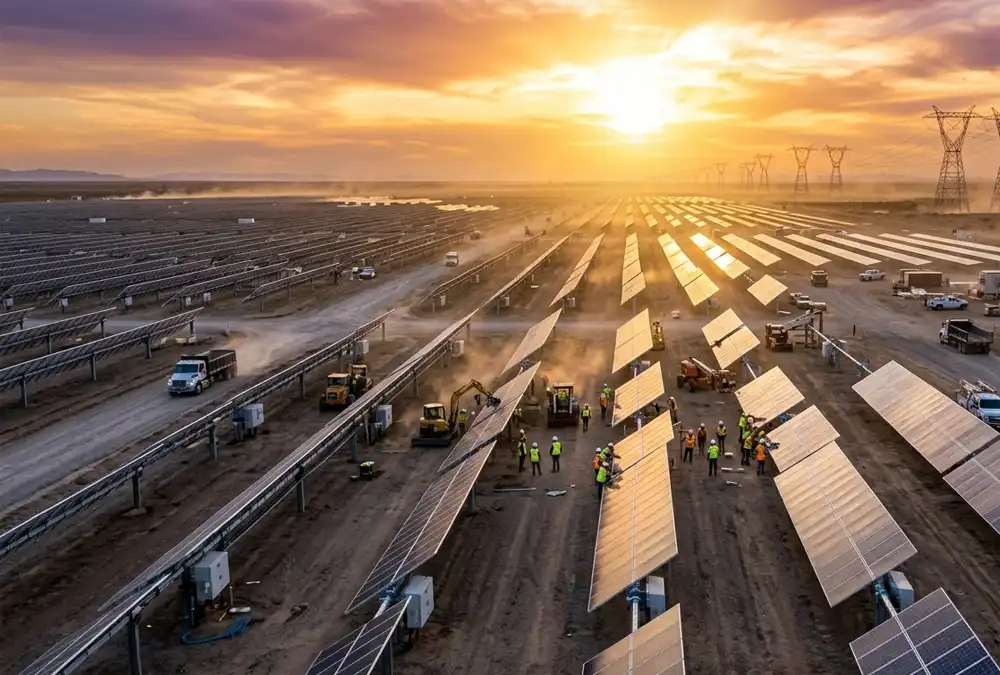
During the **solar power plant construction** phase, the project moves from blueprint to reality. The EPC firm mobilizes field crews to execute civil earthworks and pile-driving operations. Mechanical installation crews follow to erect structural racking and secure the PV modules, while high-voltage electrical teams install the inverters, execute complex cable terminations, construct the substation facility, and manage final utility grid integration.
Solar EPC Company Roles and Responsibilities
A premier solar energy company operating under an EPC contract carries a broad range of responsibilities throughout the project lifecycle:
- Project Planning and Development: Interfacing with local municipal authorities to clear environmental impact reports, secure zoning variances, and complete structural safety reviews.
- Permitting and Regulatory Compliance: Managing the complex technical application pipeline required by regional transmission operators (RTOs) to secure official grid interconnection agreements.
- Supply Chain Management: Directing end-to-end logistics, factory quality control inspections, port clearances, and secure onsite equipment storage.
- Construction Management: Providing full-time, onsite project management, safety oversight, and quality control inspectors to ensure compliance with all civil and electrical codes.
- Testing and Commissioning: Leading rigorous electrical testing protocols, including string I-V curve tracing, insulation resistance tests, and infrared thermal imaging.
- Operations and Maintenance Coordination: Preparing comprehensive as-built documentation, technical asset handbooks, and organizing initial remote tracking setups for the O&M transition.
Solar EPC Process Step by Step
Step 1 – Inquiry and Project Evaluation
The process begins with an in-depth analysis of the client’s historical energy consumption patterns, structural asset availability, and long-term corporate decarbonization goals to establish primary sizing baselines.
Step 2 – Feasibility Study
Engineers run comprehensive irradiance simulations and site diligence to generate precise annual generation forecasts, calculate accurate payback periods, and deliver a detailed financial model to investors.
Step 3 – Engineering Design
The technical team develops complete electrical single-line diagrams, three-dimensional physical layout designs, structural racking schematics, and detailed high-voltage grid connection plans.
Step 4 – Procurement
Leveraging deep vendor networks, the procurement team acquires all tier-1 electrical components and balances construction schedules with global equipment manufacturing timelines.
Step 5 – Construction and Installation
Civil crews prepare the site, mechanical teams assemble the arrays, and specialized electricians execute all high-voltage terminations, bringing the physical facility to full completion.
Step 6 – Testing and Commissioning
The system undergoes comprehensive safety testing and efficiency verifications, executing performance ratio evaluations before securing official authorization to energize from the regional utility.
Step 7 – Handover and Final Payment
The fully operational, grid-connected asset is officially handed over to the client, along with all as-built schematics, equipment warranties, and digital monitoring systems as the final milestone payment is cleared.
Solar EPC Contract Models: EPC vs EPCM and Other Structures
When structuring a large-scale project, asset owners can choose between several distinct contract frameworks depending on their internal technical capabilities and risk tolerance:
Traditional EPC Contract
The full-wrap EPC model is a lump-sum, turnkey contract. The solar EPC contractor takes on virtually all design, procurement, and execution risks under a fixed-price structure, making it the preferred approach for institutional investors and commercial bank financing.
EPCM Contract (Engineering, Procurement, and Construction Management)
Under an EPCM framework, the provider acts strictly as a professional consultant and construction manager. The asset owner signs individual contracts directly with equipment manufacturers and construction sub-contractors. While this allows for greater flexibility, it dramatically increases the management burden and technical risk for the owner.
Design-Build Model
This model blends conceptual design and physical construction under a single contract, but gives the owner greater flexibility to modify equipment specifications and procurement choices mid-project compared to a rigid traditional EPC framework.
Owner-Supplied Equipment Model
Often used by large-scale developers, the owner directly procures the high-value core equipment—such as the solar panels and central inverters—to leverage their global purchasing power, while hiring a specialized photovoltaic EPC contractor to handle the engineering, balance-of-system sourcing, and construction phases.
Comparison Table – EPC vs EPCM Contract Structures
| Project Metric | Traditional Turnkey EPC | EPCM Framework |
|---|---|---|
| Risk Allocation | Borne almost entirely by the EPC Contractor | Borne primarily by the Project Owner |
| Price Certainty | High (Fixed Lump-Sum Price) | Variable (Based on actual sub-contracts) |
| Management Complexity | Low for Owner (Single Point of Contact) | High for Owner (Manages multi-vendor interfaces) |
| Financing Suitability | Ideal for non-recourse project finance banks | Suited for experienced utility developers with balance-sheet financing |
Solar EPC Pricing and Cost Drivers
The total capital expenditure of a utility or industrial solar installation is governed by multiple commercial variables:
- Engineering Costs: Comprehensive site studies, structural certifications, and electrical single-line drawings typically represent 4% to 7% of total project costs.
- Equipment Sourcing Costs: High-value hardware components—including solar modules, inverters, trackers, and distribution panels—represent the largest share of capital investment, averaging 60% to 75% of the total project budget.
- Construction Costs: Civil mobilization, heavy machinery rentals, structural pile driving, and specialized high-voltage electrical labor make up 15% to 22% of the project budget.
- Grid Connection Costs: Upgrading local utility substations, adding protection relays, and running long-distance medium-voltage transmission lines can introduce significant cost variables depending on the proximity of local utility lines.
- Energy Storage Integration Costs: Adding utility-grade Battery Energy Storage Systems (BESS) introduces additional equipment costs, including specialized chemical battery cells, high-performance bidirectional Power Conversion Systems (PCS), automated Energy Management Systems (EMS), and advanced thermal management and fire suppression systems.
Solar EPC Quality Control, Standards, and Testing Requirements
To ensure system safety and guarantee an asset’s 30-year operational lifespan, industrial solar construction must follow rigid international quality frameworks:
- International Engineering Standards: Comprehensive compliance with IEC 61215 for crystalline silicon modules, IEC 62109 for inverter safety, and IEEE 1547 for interconnecting distributed resources with electric power systems.
- Factory Acceptance Testing (FAT): Stringent quality audits conducted directly at manufacturing facilities to verify the performance and structural integrity of core components like transformers, inverters, and battery racks before they are shipped to the project site.
- Site Acceptance Testing (SAT): Comprehensive onsite testing of physical equipment post-installation to confirm that no internal damage occurred during shipping and that all sub-systems operate safely under full load conditions.
- Performance Ratio (PR) Testing: A rigorous technical evaluation that compares a plant’s actual energy output against its theoretical maximum based on real-time solar irradiance, proving the system’s real-world efficiency before final project handover.
- Grid Compliance Verification: Comprehensive testing of active/reactive power controls, voltage ride-through capabilities, and anti-islanding safety systems to satisfy rigid local utility grid regulations.
Solar EPC Performance Guarantees and Warranties
To secure bank financing and protect long-term investments, top-tier EPC contracts feature comprehensive performance guarantees and warranties:
- Energy Yield Guarantees: A legally binding commitment from the EPC provider guaranteeing that the completed plant will deliver a minimum specified kilowatt-hour (kWh) output during its initial years of operation, backed by financial compensation if it underperforms.
- System Availability Guarantees: A guarantee ensuring the plant’s electrical distribution network remains fully operational and capable of exporting power a minimum percentage of the time—typically 98% or higher—outside of routine scheduled maintenance windows.
- Performance Ratio (PR): A core metric used to assess the plant’s overall design quality, measuring the ratio of actual energy production to the theoretical maximum, independent of varying solar irradiance levels.
- Equipment Warranties: The aggregation and management of complex manufacturer warranties, typically including 12–15 year structural and 25–30 year linear output warranties for panels, 5–10 year warranties for inverters, and 5–10 year performance warranties for integrated energy storage systems.
Solar EPC Risks and Risk Mitigation Strategies
Developing a multi-megawatt generation facility introduces significant structural, financial, and regulatory risks. A professional EPC contract uses targeted strategies to manage and mitigate these risks:
- Design Risks: Inaccurate shading analysis or flawed electrical stringing can permanently lower a plant’s generation capacity. EPC firms mitigate this by deploying expert in-house engineering teams and using multi-layered software validation before breaking ground.
- Supply Chain Risks: Shipping delays, customs bottlenecks, or sudden component price volatility can derail project schedules. Tier-1 contractors manage this risk by using advanced multi-vendor sourcing strategies, maintaining global logistics partnerships, and locking in high-volume component orders early.
- Construction Delays: Inclement weather, labor strikes, or challenging soil conditions can stall field operations. Turnkey contracts use legally binding Liquidated Damages (LD) clauses, charging contractors fixed financial penalties for every day the project goes past its scheduled commercial operation date.
- Grid Connection Risks: Unexpected utility infrastructure upgrades or shifting regulatory requirements can delay grid synchronization. Experienced EPC firms address this early by maintaining close working relationships with local utility engineers and initiating interconnection studies during the initial development phase.
- Performance Shortfalls: If a completed system fails to meet its projected output due to poor installation quality, it can undermine the project’s financial returns. This risk is managed through contractually mandated performance retainage fees—withholding a portion of the final project payment until the plant successfully completes extensive field efficiency testing.
Industrial Energy Storage Technology Integration
For modern industrial operations, deploying solar panels alone is often insufficient due to grid intermittency and peak demand spikes. Integrating an industrial-grade **photovoltaic EPC contractor** who can seamlessly deploy advanced Battery Energy Storage Systems (BESS) is essential. Below, we break down the primary cell technologies and alternative energy storage solutions used today.
Battery Cell Technology Breakdown
- Lithium Iron Phosphate (LFP): This is the undisputed standard for modern industrial and utility-scale energy storage. Unlike consumer electronics that use NMC (Nickel Manganese Cobalt) chemistries, LFP offers superior thermal stability, making thermal runaway risks nearly non-existent. LFP batteries support deep discharge cycles (up to 6,000–8,000 cycles at 80% Depth of Discharge) and contain zero cobalt, avoiding ethical supply chain issues.
- Sodium-Ion (Na-Ion): An emerging technology that replaces lithium with abundant sodium. Sodium-ion batteries perform exceptionally well in extreme cold environments and carry a lower risk of raw material supply bottlenecks. However, their lower energy density means they require a larger physical footprint for the same storage capacity compared to LFP.
Alternative Industrial Energy Storage Solutions
- Flow Batteries (e.g., Vanadium Redox): Unlike conventional solid-state batteries, flow batteries store energy in liquid electrolyte tanks. Their main advantage is an almost unlimited cycle life with zero capacity degradation over 20+ years. They are ideal for long-duration energy storage (LDES) requiring 6 to 12+ hours of discharge, though they have a lower round-trip efficiency and require more space for pumps and tanks.
- Flywheel Energy Storage: A mechanical storage solution that stores kinetic energy in a high-speed rotating vacuum rotor supported by magnetic bearings. Flywheels don’t store long-term energy, but they can absorb and discharge massive amounts of power instantly. This makes them perfect for industrial power quality stabilization, voltage sag mitigation, and short-term frequency regulation rather than multi-hour load shifting.
Featured Industrial BESS Product Recommendation
For industrial enterprises seeking to optimize their energy infrastructure, we highly recommend deploying the Anengji ECO-E233LS Liquid-Cooled Commercial Energy Storage System (500kW / 1165kWh) or the larger Anengji ECO-E261LP Inverter-Integrated Outdoor BESS Cabinet. These systems are specifically designed for demanding industrial environments, featuring advanced liquid-cooling systems that extend cell life, integrated intelligent string Battery Management Systems (BMS), and compact footprints. They are perfectly suited for factory peak-shaving, microgrid integration, and heavy-duty backup applications.
How to Choose the Right Solar EPC Company
Selecting your long-term technology partner is a critical step that directly impacts your project’s financial success. Use this structured approach to evaluate potential contractors:
Review Installed Capacity
Examine a candidate’s verified track record of operational, grid-connected projects. Prioritize an established **commercial solar EPC company** or **industrial solar EPC company** that has successfully delivered multiple operating megawatts (MW) in your specific asset class and geographic region.
Evaluate Technical Expertise
Ensure the contractor maintains comprehensive, in-house multi-disciplinary engineering teams rather than relying entirely on outsourced designers. They must demonstrate deep expertise across complex high-voltage substation design, automated SCADA system integration, and multi-node BESS controls.
Assess Financial Stability
Building a multi-megawatt solar asset requires significant upfront capital. Review the contractor’s audited financial statements, balance sheet health, and corporate credit lines to ensure they can secure project bonding, purchase tier-1 equipment in volume, and honor long-term performance guarantees.
Verify Certifications
Confirm the contractor’s engineering and field installation teams hold all necessary specialized certifications. They should possess current ISO 9001 quality management credentials, OSHA safety certifications, and certified high-voltage electrical licenses required by local regulatory authorities.
Check O&M Capabilities
A contractor that exits immediately after finishing the build introduces long-term operational risks. Choose a **utility scale solar EPC company** that offers full-service, long-term Operations and Maintenance (O&M) capabilities. They should feature dedicated 24/7 remote monitoring control centers, comprehensive preventative maintenance programs, and localized spare-parts warehouses to minimize future asset downtime.
Solar EPC Company Selection Checklist
- □ Does the company possess a verified track record of delivering operating projects over 10+ MW?
- □ Does the provider maintain dedicated, in-house high-voltage electrical and structural engineering teams?
- □ Are they a certified **solar EPC company with battery storage solutions** capability and proven EMS integration experience?
- □ Can the contractor provide comprehensive bankability references and secure robust performance bonding?
- □ Do they offer a single-point-of-responsibility turnkey contract model backed by strict liquidated damages clauses?
- □ Does the firm feature a dedicated, long-term O&M division with 24/7 remote monitoring and clear service level agreements?
Solar Project Handover and O&M After Commissioning
The successful completion of a solar project’s construction phase marks the beginning of its long-term operational lifecycle. Managing this transition carefully is essential to maximize your investment returns:
- Project Documentation Transfer: The contractor must compile and hand over complete as-built architectural and electrical drawings, comprehensive site acceptance test records, manufacturer equipment component certificates, and official utility grid interconnection documents.
- Monitoring and Performance Tracking: Connecting the plant’s hardware to an intelligent, cloud-based SCADA system allows asset managers to monitor real-time string generation, track performance ratios, and quickly identify localized inverter faults.
- Preventive Maintenance: Implementing a regular schedule of physical inspections, including automated thermal drone scans to locate panel hot-spots, torque checks on mounting racks, transformer oil sampling, and cleanings to remove dust and debris.
- Asset Management Best Practices: Establishing structured financial reserves for future hardware replacement cycles—such as upgrading string inverters around year 10 to 15—and maintaining clear service level agreements with your O&M provider to maximize long-term energy production.
Featured Snippet – Quick Answers About Solar EPC Companies
What Is a Solar EPC Company?
A Solar EPC Company is responsible for the engineering, procurement, and construction of solar energy projects, providing complete project delivery from design and equipment sourcing to installation, commissioning, and maintenance.
What Are the Three Main Responsibilities of a Solar EPC Company?
The three core responsibilities are:
- Engineering: Full structural, civil, and high-voltage electrical design.
- Procurement: Sourcing Tier-1 hardware components and managing global logistics.
- Construction: Onsite civil works, mechanical equipment assembly, and final grid connection.
Together, they ensure a solar project is delivered safely, on budget, and according to performance expectations.
Why Is Choosing the Right Solar EPC Company Important?
The right Solar EPC partner helps reduce project risks, control costs, accelerate deployment, ensure compliance, and maximize long-term energy production and ROI.
Conclusion: Selecting the Right Solar EPC Partner for Long-Term Success
Investing in a commercial, industrial, or utility-scale solar facility is a high-stakes, capital-intensive decision that directly influences an enterprise’s operational efficiency and carbon reduction goals for decades. The choice of your solar EPC company is single-handedly the most critical factor determining whether an asset becomes a highly profitable power generator or a long-term operational liability. A premier EPC contractor provides far more than physical construction labor; they serve as a critical risk-management partner, using advanced technical design and global procurement networks to protect your capital investment.
As grid architectures evolve globally, the integration of advanced **turnkey solar solutions** alongside utility-scale battery energy storage systems is rapidly becoming the dominant industry standard. Navigating this shift requires a partner with deep, verified expertise across both solar engineering and advanced battery system integration. By selecting an experienced EPC firm that balances proven technical capabilities with solid financial stability and long-term O&M support, institutional investors and corporate energy directors can optimize system performance, maximize long-term energy yields, and secure excellent financial returns across their entire renewable energy portfolio.
 https://anengjipower.com/wp-content/uploads/2026/06/epc-vs-turnkey-solar-project-bess.webp
675
1000
Charging Station Engineer
https://anengjipower.com/wp-content/uploads/2025/09/anengji-dc-fast-charging-station-manufacturer-and-supplier-logo-white-1.png
Charging Station Engineer2026-06-22 07:16:042026-06-24 07:13:17What Is the Difference Between EPC and Turnkey Contract Models in Energy Projects?
https://anengjipower.com/wp-content/uploads/2026/06/epc-vs-turnkey-solar-project-bess.webp
675
1000
Charging Station Engineer
https://anengjipower.com/wp-content/uploads/2025/09/anengji-dc-fast-charging-station-manufacturer-and-supplier-logo-white-1.png
Charging Station Engineer2026-06-22 07:16:042026-06-24 07:13:17What Is the Difference Between EPC and Turnkey Contract Models in Energy Projects? https://anengjipower.com/wp-content/uploads/2026/06/anengji-commercial-solar-plus-storage-benefits-site.webp
675
1000
Charging Station Engineer
https://anengjipower.com/wp-content/uploads/2025/09/anengji-dc-fast-charging-station-manufacturer-and-supplier-logo-white-1.png
Charging Station Engineer2026-06-20 14:34:102026-06-20 14:37:43What Are the Top Benefits of Solar Battery Storage in Factories?
https://anengjipower.com/wp-content/uploads/2026/06/anengji-commercial-solar-plus-storage-benefits-site.webp
675
1000
Charging Station Engineer
https://anengjipower.com/wp-content/uploads/2025/09/anengji-dc-fast-charging-station-manufacturer-and-supplier-logo-white-1.png
Charging Station Engineer2026-06-20 14:34:102026-06-20 14:37:43What Are the Top Benefits of Solar Battery Storage in Factories?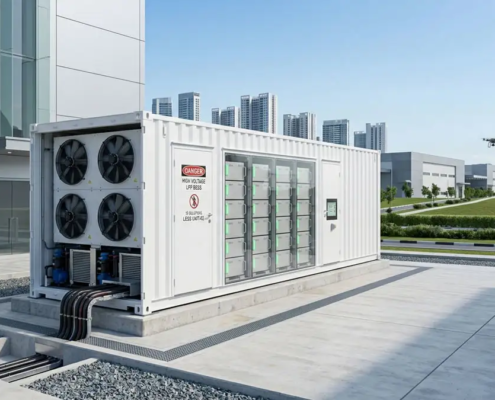 https://anengjipower.com/wp-content/uploads/2026/06/modular-commercial-solar-battery-storage-cabinet.webp
675
1000
Charging Station Engineer
https://anengjipower.com/wp-content/uploads/2025/09/anengji-dc-fast-charging-station-manufacturer-and-supplier-logo-white-1.png
Charging Station Engineer2026-06-18 09:16:522026-07-03 03:05:13What Is Solar Battery Storage? Complete C&I Engineering Guide
https://anengjipower.com/wp-content/uploads/2026/06/modular-commercial-solar-battery-storage-cabinet.webp
675
1000
Charging Station Engineer
https://anengjipower.com/wp-content/uploads/2025/09/anengji-dc-fast-charging-station-manufacturer-and-supplier-logo-white-1.png
Charging Station Engineer2026-06-18 09:16:522026-07-03 03:05:13What Is Solar Battery Storage? Complete C&I Engineering Guide


Leave a Reply
Want to join the discussion?Feel free to contribute!