
Introduction
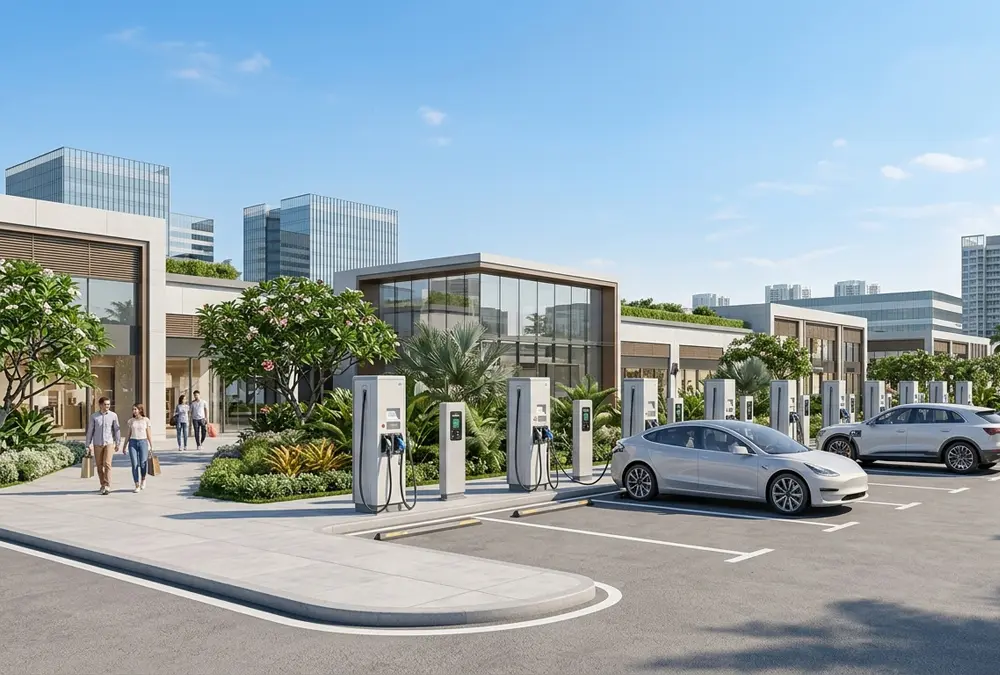
Plugging a fleet van or a customer’s vehicle into a reliable charger isn’t just a nice perk anymore; it’s becoming the backbone of modern commercial property management. Evaluating the full benefits of commercial ev charging stations requires looking far beyond simple hardware installation. It involves managing grid connection limits, handling sudden demand charges, and transforming parking spaces into active revenue generators. When site host owners get the engineering right, deploying commercial EV charging stations for businesses creates a direct edge over local competitors while protecting facilities from rising grid tariffs.
Real Buyer Perspective: “Will adding fast chargers force an expensive utility transformer upgrade?”
This single worry stops many property owners from moving forward. When multiple DC chargers fire up at once, local power draws spike fast. Local utilities often demand six-figure panel or step-down transformer upgrades before approving permits. But you don’t always need to pay those fees. Integrating localized battery storage or dynamic load control caps peak grid draws safely below utility penalty thresholds. This lets you add chargers without triggering massive grid reconstruction costs.
What Are the Benefits of Commercial EV Charging Stations for Businesses?
Attract More Customers and Increase Customer Engagement
EV drivers plan their errands around charging locations. When you install charging hardware, your location appears directly on mapping apps like PlugShare and Google Maps. This pulls high-spending EV drivers right to your doors.
- Shopping Centers: Drivers shop longer while waiting for their battery to fill up, driving up dwell-time monetization.
- Hotels and Resorts: Guests choose hotels that offer reliable overnight plug-in access over competitors.
- Restaurants: Rapid 30kW to 60kW chargers match typical dining times perfectly.
- Workplaces: Offering charging helps businesses attract top-tier professional talent and fulfill corporate perks.
Increase Revenue Opportunities Through EV Charging Services
Modern charging hardware creates multiple direct revenue streams for site owners through flexible monetization frameworks:
| Revenue Stream | Operational Mechanism | Typical Financial Margin | Direct Buyer Advantage & Choice Value |
|---|---|---|---|
| Charging Fees | Per-kWh markup or per-minute session fees | 15% – 35% over utility electricity rates | Generates immediate cash flow to offset equipment financing costs and CapEx investments. |
| Parking Revenue | Integrated idle fees after charging finishes | $0.50 – $2.00 per idle minute | Prevents stall hogging and ensures high daily vehicle turnover for maximum asset yield. |
| Membership Programs | Discounted charging rates for subscribers | Predictable monthly recurring revenue | Builds long-term customer loyalty and guarantees repeat site visits. |
| Advertising Display | Digital displays on chargers running DOOH ads | Variable ad placement fees | Turns charger housing into high-visibility digital advertising real estate. |
Financial Decision Framework: Direct Purchase vs. Charging-as-a-Service (CaaS)
Property managers evaluating CapEx and OpEx tradeoffs can choose between direct ownership or turnkey service contracts:
- Direct Purchase (Full CapEx): Property owner funds hardware and installation. You retain 100% of charging margins and tax credits, maximizing long-term IRR.
- Charging-as-a-Service (Zero CapEx): Third-party providers install, operate, and maintain the hardware. The site host receives a land lease payment or revenue split without upfront balance sheet exposure.
Improve Customer Experience and Convenience
Drivers want charging to fit into their daily schedules without extra hassle. Converting standard parking spaces into smart charging bays lets drivers top up while buying groceries or attending meetings. Convenient charging builds real brand loyalty.
Support Business Sustainability and ESG Goals
Installing charging stalls shows a clear commitment to environmental goals. Lowering indirect emissions helps property owners earn LEED certifications, fulfill Scope 3 carbon tracking requirements, and attract sustainability-focused tenants.
Environmental Benefits of Commercial EV Charging Stations: Reducing Carbon Emissions and Supporting Clean Energy
A complete assessment of the benefits of commercial ev charging stations highlights their pivotal role in decarbonizing commercial transport. Integrating green charging points converts asphalt lots into active nodes of clean power distribution.
Reduce Greenhouse Gas Emissions
Replacing gas-powered vehicle miles with electric driving cuts local carbon dioxide and tailpipe emissions immediately. Installing accessible chargers speeds up this transition across your local community while proving your site’s corporate commitment to decarbonization.
Create a Cleaner and Healthier Environment
Gasoline engine exhaust degrades air quality in congested urban lots and logistics hubs. Swapping combustion engines for electric vehicles reduces urban smog, nitrogen oxide levels, and ambient parking lot noise pollution.
Support Renewable Energy Integration
Combining solar panels, battery storage, and chargers creates a complete microgrid ecosystem. Solar carports capture clean power, while local battery systems cushion grid demand spikes during peak charging hours.
Technical Focus: Industrial BESS Chemistries & Alternatives Explained
Lithium Iron Phosphate (LFP / LiFePO4): The industry standard for commercial and industrial stationary storage. LFP provides high thermal stability, zero risk of thermal runaway under severe thermal abuse, and exceptional cycle life exceeding 6,000+ cycles at 80% depth of discharge.
NMC vs. Sodium-Ion Alternatives: Nickel Manganese Cobalt (NMC) delivers higher energy density in tight footprints but requires active liquid cooling safety systems. Emerging Sodium-Ion chemistries offer excellent cold-weather performance, but LFP remains the undisputed champion for commercial life-cycle value and safety profile.
| Industrial BESS Capacity | Cooling Architecture | Ideal Commercial Project Scope | Direct Buyer Advantage & Choice Value |
|---|---|---|---|
| 100kWh Cabinet | Smart Air Cooling HVAC | Small retail sites & boutique hotels | Compact size fits tight footprints while performing peak shaving to mitigate utility demand charges. |
| 261kWh Cabinet | Liquid Cooling Unit | Medium commercial plazas & workplaces | Liquid cooling keeps cell-to-cell temperatures uniform, extending battery pack lifespan by up to 20%. |
| 418kWh Cabinet | High-Efficiency Liquid Cooling | Commercial fleet depots & industrial parks | Buffers rapid back-to-back fast charging cycles without triggering mandatory grid transformer upgrades. |
| 1MWh Container | Containerized Liquid Cooling System | Highway charging hubs & transit centers | Provides megawatt-scale battery buffering and enables Virtual Power Plant (VPP) grid revenue generation. |
How Commercial EV Charging Stations Encourage EV Adoption
Public availability of reliable charging points is the single largest catalyst for electric vehicle market penetration. Understanding the direct advantages of EV charging stations for businesses extends to community-wide mobility acceleration.
Reduce Charging Anxiety for EV Drivers
Drivers hesitate to buy electric cars if they worry about running out of power or encountering broken plugs. Installing visible, well-maintained chargers in commercial lots gives drivers the confidence to make the permanent switch to electric vehicles.
Simplify the EV Charging Experience
Modern hardware makes charging as simple as tapping a credit card. ISO 15118 Plug-and-Charge technology, universal RFID access, and smart mobile apps eliminate friction for everyday drivers.
Build Consumer Confidence in Electric Mobility
Seeing robust commercial chargers everywhere—at supermarkets, office parks, and sports venues—proves that electric driving is practical. This visible expansion builds long-term consumer trust across local markets.
Importance of Commercial EV Charging Stations in the Growing EV Market
Meet the Increasing Demand for Electric Vehicles
Global EV adoption continues to compound annually. Independent empirical studies published in Nature Communications confirm that accessible workplace and destination chargers are vital for stabilizing regional grid loads while accelerating clean mobility adoption.
Build a Sustainable Transportation Ecosystem
Modern energy networks link four critical elements together: vehicles, charging hardware, solar PV generation, and stationary battery storage. Commercial site hosts serve as the vital hub connecting these clean energy streams.
Prepare Businesses for Future Mobility Trends
Building codes across major metropolitan areas increasingly mandate EV-ready parking infrastructure. Installing charging stations early protects your commercial real estate against future legislative penalties and retrofitting costs.
Commercial EV Charging Station Benefits for Different Business Applications
Different commercial sectors require specialized charging strategies to maximize asset utilization and customer satisfaction. Deploying tailored commercial EV charging solutions for companies unlocks sector-specific operational gains.
Benefits for Retail Stores and Shopping Centers
Retail shoppers tend to spend more money when their cars are plugged in. Installing Level 2 AC wallboxes for casual shoppers or 60kW DC chargers for quick-turnaround visits turns passive parking stalls into active revenue-generating assets.
Benefits for Hotels and Resorts
Overnight travelers prioritize hotels offering guaranteed EV plug-in options. Realizing the complete benefits of installing commercial EV charging stations includes securing higher room occupancy rates, charging premium night rates, and earning top guest ratings.
Benefits for Workplace and Business Parks
Workplace charging is a top-tier employee perk. Guidelines detailed in the U.S. DOT Community Benefits Toolkit highlight how corporate charging amenities improve employee retention while advancing Scope 3 decarbonization metrics.
Benefits for Fleet Operators
Commercial delivery, transit, and service fleets rely on rapid turnaround times. Dedicated fast charging depots combined with battery buffering dramatically lower total cost of ownership (TCO) compared to diesel fleets.
Benefits for Parking Operators
Parking garages face shifting commuter habits. Adding smart charging stations converts basic parking bays into high-value energy hubs that command premium hourly rates.
Challenges of Commercial EV Charging Stations Businesses Should Consider
High Initial Investment Cost
CapEx costs cover hardware procurement, underground trenching, heavy-duty copper conduits, transformer upgrades, and software integration. Smart phased rollouts keep initial capital outlays under control.
Installation and Maintenance Costs
Civil work through paved surfaces requires experienced engineering contractors. Factoring in routine maintenance, cable repairs, and CPMS software updates guarantees high uptime and steady long-term income.
Financial Challenges for Small Businesses
Independent commercial property owners may struggle with upfront capital demands. Revenue-sharing options, grant programs, and utility rebates help make deployment affordable.
EV Charging Station Challenges: Range Anxiety and Charging Time Issues
Range Anxiety Among EV Drivers
Drivers constantly worry about finding available, functional chargers. Expanding high-power charging infrastructure gives EV owners confidence on longer road trips.
Charging Time Compared With Traditional Fueling
Refueling a gasoline engine takes under five minutes. Electric vehicle charging ranges from 20 minutes on high-power DC chargers to several hours on Level 2 AC units. Matching charger power output to average customer dwell times optimizes turnover rates.
Impact of Charging Time on Travel Planning
EV drivers organize their travel days around convenient stopping points. Installing reliable commercial charging options turns your facility into a preferred travel stop.
Installation and Accessibility Challenges of Commercial EV Charging Stations
Professional Installation Requires Technical Expertise
Commercial installations involve electrical load calculations, short-circuit protection, isolation grounding, and strict inspection standards. Partnering with experienced electrical engineers prevents code violations and delays.
Electrical Infrastructure and Grid Capacity Limitations
Older commercial properties often lack spare transformer capacity. Integrating Dynamic Load Management (DLM) or local battery storage allows site hosts to deploy chargers without costly electrical service upgrades.
Accessibility and ADA Compliance Requirements
Commercial locations across North America must follow ADA accessibility guidelines. Ensuring accessible parking spaces, clear pathways, and manageable cable heights avoids costly retrofits and legal penalties.
How to Maximize the Benefits of Commercial EV Charging Stations
To capture the full economic benefits of commercial ev charging stations, property managers should implement integrated hardware and software architectures designed for long-term reliability.
Choose the Right Charging Equipment
Selecting hardware depends on typical customer stay durations. A mix of cost-effective Level 2 AC chargers for long stays and high-power DC fast chargers for quick stops optimizes both CapEx spending and site usage.
Use Smart Charging Management Systems
Cloud-based OCPP (Open Charge Point Protocol) software allows site hosts to monitor equipment, track usage, adjust dynamic pricing, and manage local power loads remotely. Smart management lowers operational costs while keeping equipment availability high.
Integrate Battery Storage and Renewable Energy
Combining solar panels, industrial energy storage (BESS), and fast chargers creates an efficient microgrid. Storing low-cost off-peak solar power to discharge during peak afternoon charging hours protects facilities from steep utility demand charges.
Work With an Experienced EV Charging Manufacturer
Partnering with a trusted manufacturer ensures access to certified hardware, modular power cabinets, custom branding options, and reliable long-term technical support.
Are Commercial EV Charging Stations Worth the Investment?
Long-Term Business Value of EV Charging Infrastructure
Adding commercial chargers increases customer dwell times, builds new revenue streams, and boosts commercial property valuations. It converts standard parking lots into modern infrastructure assets.
Financial Model: Sample ROI Calculation for a 120kW Dual-Port DC Fast Charger
Estimated Turnkey CapEx: $65,000 (Hardware, civil work, permits, grid connection).
Assumed Usage: 6 charging sessions per day at 35 kWh per session = 210 kWh daily volume.
Retail Margin: $0.20 net margin per kWh charged ($0.45 retail rate – $0.25 utility power cost) = $42.00 daily net power margin.
Simple Payback Period: Approximately 3.2 to 4.1 years (before accounting for tax credits, grant incentives, or secondary retail sales bumps).
Calculate EV Charging Station Return on Investment
Calculating accurate project payback means balancing hardware procurement and civil works costs against direct charging margins, added store sales, and available local utility rebates.
Why Early Investment Creates Competitive Advantages
Understanding why businesses need EV charging stations today helps property owners capture loyal customers early, meet local green building requirements, and stay ahead of regional competitors.
Why Choose AnengJI for Commercial EV Charging Solutions?
Complete Commercial EV Charging Product Portfolio
AnengJI manufactures durable Level 2 AC chargers (7kW-22kW), high-efficiency DC fast chargers (30kW-360kW), and liquid-cooled power cabinets built for heavy commercial use.
Customized Charging Solutions for Different Business Scenarios
Our engineering team designs tailored charging hardware and integrated energy storage systems for hotels, shopping malls, corporate campuses, fleet depots, and parking garages.
Smart Energy Integration With Solar and Battery Storage
We deliver fully integrated solar, battery storage (BESS), and EV charging solutions. Our microgrid management systems use dynamic load shifting to protect site power panels and minimize utility demand fees.
Professional Engineering Support From Planning to Deployment
From initial grid load evaluations and site design to hardware delivery and system commissioning, AnengJI provides complete engineering support every step of the way.
Frequently Asked Questions About Benefits of Commercial EV Charging Stations
What are the benefits of commercial EV charging stations?
They attract EV drivers, increase customer dwell times, generate new charging revenue, boost sustainability ratings, and future-proof commercial real estate assets.
Are commercial EV charging stations profitable?
Yes. Businesses earn money through markup charging fees, parking rates, and ad displays while increasing core store sales from visiting drivers.
How do EV charging stations help businesses?
They transform passive parking spots into customer perks that build brand loyalty, increase store foot traffic, and generate steady monthly income.
Do EV charging stations reduce carbon emissions?
Yes. Replacing gasoline-powered vehicle miles with electric driving cuts local greenhouse gas emissions and improves community air quality.
How much does a commercial EV charging station cost?
Level 2 AC chargers range from $600 to $2,500 per port. Fast DC chargers cost between $12,000 and $50,000+, depending on power output and civil site work.
What businesses benefit most from EV charging stations?
Hotels, shopping centers, office parks, fleet depots, restaurants, and commercial parking garages gain the highest return on investment.
Start Building Your Commercial EV Charging Solution Today
AnengJI helps businesses deploy reliable, scalable, and intelligent EV charging infrastructure tailored to their exact operational needs.
Related Article
 https://anengjipower.com/wp-content/uploads/2026/06/epc-vs-turnkey-solar-project-bess.webp
675
1000
Charging Station Engineer
https://anengjipower.com/wp-content/uploads/2025/09/anengji-dc-fast-charging-station-manufacturer-and-supplier-logo-white-1.png
Charging Station Engineer2026-06-22 07:16:042026-06-24 07:13:17What Is the Difference Between EPC and Turnkey Contract Models in Energy Projects?
https://anengjipower.com/wp-content/uploads/2026/06/epc-vs-turnkey-solar-project-bess.webp
675
1000
Charging Station Engineer
https://anengjipower.com/wp-content/uploads/2025/09/anengji-dc-fast-charging-station-manufacturer-and-supplier-logo-white-1.png
Charging Station Engineer2026-06-22 07:16:042026-06-24 07:13:17What Is the Difference Between EPC and Turnkey Contract Models in Energy Projects? https://anengjipower.com/wp-content/uploads/2026/06/anengji-commercial-solar-plus-storage-benefits-site.webp
675
1000
Charging Station Engineer
https://anengjipower.com/wp-content/uploads/2025/09/anengji-dc-fast-charging-station-manufacturer-and-supplier-logo-white-1.png
Charging Station Engineer2026-06-20 14:34:102026-06-20 14:37:43What Are the Top Benefits of Solar Battery Storage in Factories?
https://anengjipower.com/wp-content/uploads/2026/06/anengji-commercial-solar-plus-storage-benefits-site.webp
675
1000
Charging Station Engineer
https://anengjipower.com/wp-content/uploads/2025/09/anengji-dc-fast-charging-station-manufacturer-and-supplier-logo-white-1.png
Charging Station Engineer2026-06-20 14:34:102026-06-20 14:37:43What Are the Top Benefits of Solar Battery Storage in Factories? https://anengjipower.com/wp-content/uploads/2026/06/modular-commercial-solar-battery-storage-cabinet.webp
675
1000
Charging Station Engineer
https://anengjipower.com/wp-content/uploads/2025/09/anengji-dc-fast-charging-station-manufacturer-and-supplier-logo-white-1.png
Charging Station Engineer2026-06-18 09:16:522026-07-03 03:05:13What Is Solar Battery Storage? Complete C&I Engineering Guide
https://anengjipower.com/wp-content/uploads/2026/06/modular-commercial-solar-battery-storage-cabinet.webp
675
1000
Charging Station Engineer
https://anengjipower.com/wp-content/uploads/2025/09/anengji-dc-fast-charging-station-manufacturer-and-supplier-logo-white-1.png
Charging Station Engineer2026-06-18 09:16:522026-07-03 03:05:13What Is Solar Battery Storage? Complete C&I Engineering Guide


Leave a Reply
Want to join the discussion?Feel free to contribute!