
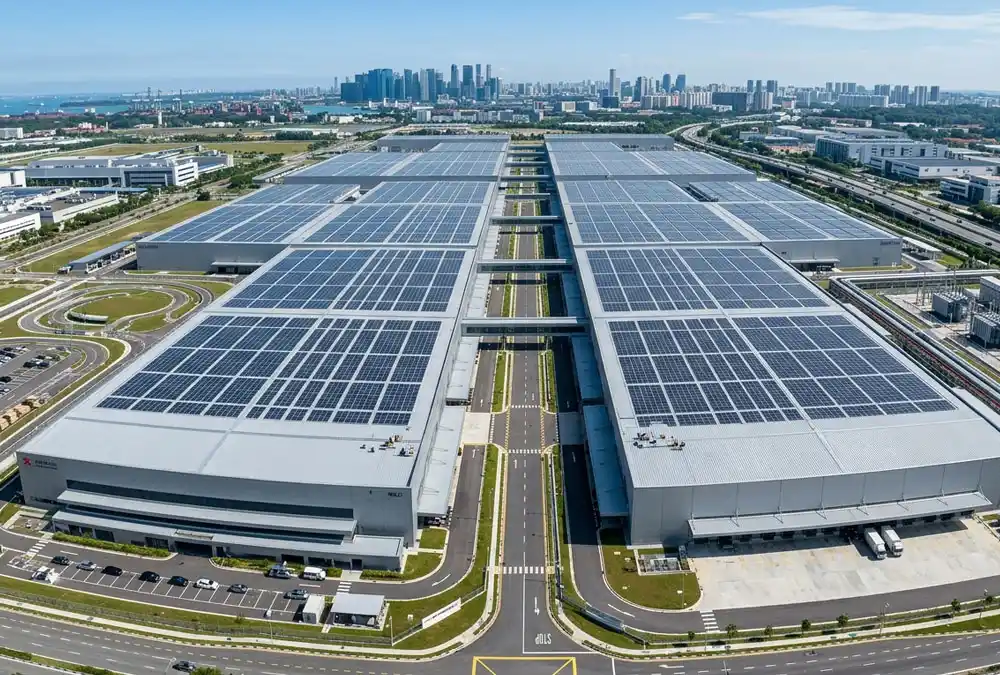
Introduction: Why Commercial and Industrial Solar Is Transforming Modern Businesses
Utility bills are climbing. Volatile fossil fuel markets mean budgeting for operational expenses has become a guessing game. At the same time, strict ESG mandates force companies to rethink their carbon footprint. Because of these challenges, investing in a reliable energy framework is no longer optional. For forward-thinking enterprises, deploying a robust
commercial and industrial solar
infrastructure is the fastest way to shield operations from unpredictable utility spikes. It turns empty roof space into a high-yielding financial asset.
From automated assembly plants to vast logistical hubs, shifting to on-site generation alters how businesses handle overhead. Yet, moving toward energy independence brings up critical practical questions. What exactly does a C&I deployment entail? Is your specific roof structure ready for the structural load? How do you calculate an accurate, uninflated ROI? Does your load profile require dedicated battery storage to avoid high demand charges? This comprehensive guide breaks down the core technical, financial, and logistical realities of modern corporate solar integration.
Featured Snippet – What Is Commercial and Industrial Solar?
What Is Commercial and Industrial Solar?
Commercial and Industrial Solar refers to solar energy systems designed to provide electricity for businesses, factories, warehouses, agricultural facilities, and other non-residential properties. These systems scale from tens of kilowatts to multiple megawatts, tailored to align with an enterprise’s operational load profile.
How Is C&I Solar Different from Residential Solar?
Scale and engineering complexity represent the primary differences. Residential systems are small and simple, while industrial projects demand advanced high-voltage engineering. Residential arrays feature standard roof mounts, whereas C&I installations require complex engineering surveys, structural reinforcement reviews, and custom ballasted or penetrative mounting setups.
The financial goals differ significantly as well. Homeowners look for long-term bill reduction, while corporate buyers require strict internal rate of return (IRR) metrics, complex tax depreciation schedules, and multi-year risk mitigation. Furthermore, grid-connection rules for businesses are much more rigid, demanding advanced telemetry, zero-export controls, or dedicated medium-voltage substation equipment.
Why Are Businesses Investing in C&I Solar?
The primary driver is immediate, predictable cost reduction. By generating clean electricity on-site, a factory can bypass high retail utility tariffs during peak operational shifts. Additionally, modern commercial and industrial solar solutions insulate corporations from grid instability and help them meet carbon-reduction targets. This structural upgrade protects the bottom line while boosting supply-chain compliance in competitive global markets.
What Is a Solar Energy System? Understanding the Foundations of C&I Solar
How Does a Solar System Work?
An industrial solar system converts sunlight into usable electricity through a coordinated electrical network. First, photovoltaic modules capture solar photons, exciting electrons to generate direct current (DC) power. Next, specialized inverters convert this DC electricity into synchronized alternating current (AC) power that matches the local facility’s grid frequency. This AC power flows through advanced distribution switchgear to feed active machinery, while an intelligent monitoring platform tracks real-time generation and system health.
Key Components of Commercial and Industrial Solar Systems
Achieving a 25-year operational lifespan requires premium hardware specified by an experienced commercial solar contractor. The foundation of any system relies on Tier-1 monocrystalline modules, often utilizing high-efficiency N-type TOPCon technology to maximize power density per square meter. These panels sit on robust, anodized aluminum or hot-dip galvanized steel mounting structures engineered to withstand extreme wind loads.
The core electrical conversion relies on intelligent string inverters or high-capacity central inverters equipped with multiple Maximum Power Point Tracking (MPPT) channels. These smart units optimize performance even during partial shading. Safety requires dedicated DC/AC overcurrent protection devices, surge protective arrays, and rapid shutdown systems, all tied into an automated SCADA monitoring platform for real-time asset tracking.
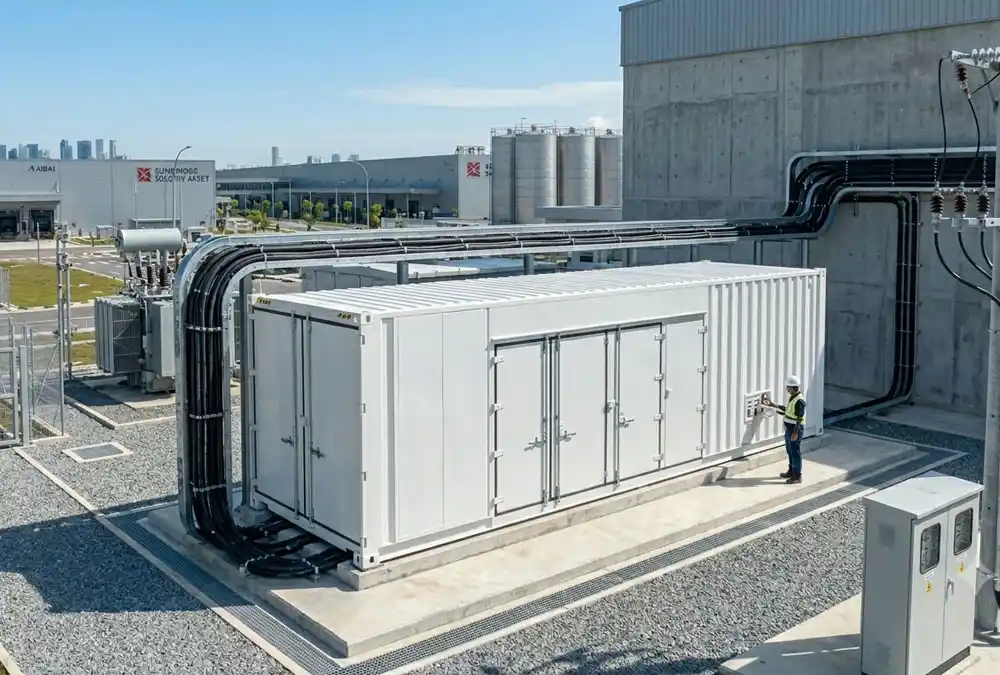
Can Solar Systems Be Combined with Battery Storage?
Integrating a Battery Energy Storage System (BESS) transforms a standard solar array into a dynamic microgrid. The system relies on an efficient Power Conversion System (PCS) for bidirectional energy flow, managed by an intelligent Energy Management System (EMS). This software coordinates with a localized Battery Management System (BMS) to handle cell balancing and safety.
For industrial facilities, a solar plus storage setup provides a powerful tool to execute peak shaving. The EMS detects when the factory’s power draw approaches a costly utility threshold, then instantly discharges the batteries to flatten the peak demand. This strategy eliminates heavy demand charges and keeps the building’s load profile stable without altering production schedules.
Commercial Solar Systems: Benefits for Businesses and Commercial Facilities
Lower Electricity Bills and Operating Costs
Deploying specialized
commercial solar solutions
allows businesses to permanently cut their reliance on expensive grid power. Instead of buying electricity at peak daytime retail rates, commercial facilities use their own clean, lower-cost energy. This immediate drop in utility expenses improves cash flow and stabilizes operating costs for decades.
Faster Return on Investment & Flexible Financing
Thanks to rising grid tariffs and more affordable hardware, commercial solar installation projects now offer much faster payback periods. Corporate buyers can choose from multiple flexible asset delivery methods to fit their balance sheet. Many select a turnkey EPC contract for outright ownership and maximum long-term returns.
Alternatively, risk-averse enterprises can choose a Power Purchase Agreement (PPA) or a solar lease. These zero-down financing models let businesses buy solar electricity at a discounted rate without any upfront CAPEX. Local commercial banks also offer specialized green financing options, making it simple to fund energy upgrades through low-interest corporate loans.
Tax Credits and Government Incentives
Government policies significantly improve the financial returns of modern commercial solar projects. In many jurisdictions, enterprises can claim substantial investment tax credits (ITC), direct grant subsidies, or accelerated asset depreciation schedules. These tax mechanisms let companies write off a large portion of their installation costs in the very first year, dramatically speeding up project payback.
Green Certifications and ESG Advantages
Modern consumers, international partners, and institutional investors expect corporations to meet high sustainability standards. Installing visible commercial rooftop solar arrays provides clear proof of a company’s environmental commitment. Achieving green building certifications improves brand equity and unlocks premium corporate partnership opportunities.
Energy Independence and Price Stability
Relying completely on traditional utility grids exposes an enterprise to unexpected rate hikes and power quality issues. On-site generation gives businesses long-term price stability. By locking in a predictable cost per kilowatt-hour for the next 25 years, corporate financial officers can plan long-term operating budgets without worrying about energy market volatility.
Industrial Solar Systems: Benefits for Manufacturing and Energy-Intensive Industries
Improved Energy Self-Sufficiency & Lower Production Overhead
Manufacturing facilities, cold-storage warehouses, and heavy industrial operations require massive amounts of daytime power. Deploying high-capacity
industrial solar systems
allows these energy-intensive plants to produce a significant portion of their own electricity. This structural upgrade lowers production overhead per unit, giving manufacturers a distinct cost advantage in competitive global markets.
Supporting Business Expansion and Continuous Production
When an industrial facility adds new production lines or installs high-power equipment, the local utility company often demands costly grid infrastructure upgrades. On-site industrial solar power systems help bypass these utility delays by meeting the extra power demand locally. This strategy speeds up facility expansion timelines and keeps production moving forward.
Grid outages cost manufacturers time and money. Integrating solar energy for industrial use with robust battery storage protects facilities from sudden power drops. If the main grid fails, the system transitions to island mode within milliseconds. This rapid response keeps automated assembly lines, robotic workstations, and critical control systems running without interruption.
Enhancing Global Competitiveness with Industrial Storage
Global supply chains now penalize manufacturers with high carbon footprints. Implementing industrial renewable energy solutions helps factories lower their carbon intensity, keeping them compliant with strict international procurement standards. Adding advanced industrial and commercial solar energy storage solutions for sale further improves efficiency by capturing excess daytime solar power and saving it for high-consumption evening shifts.
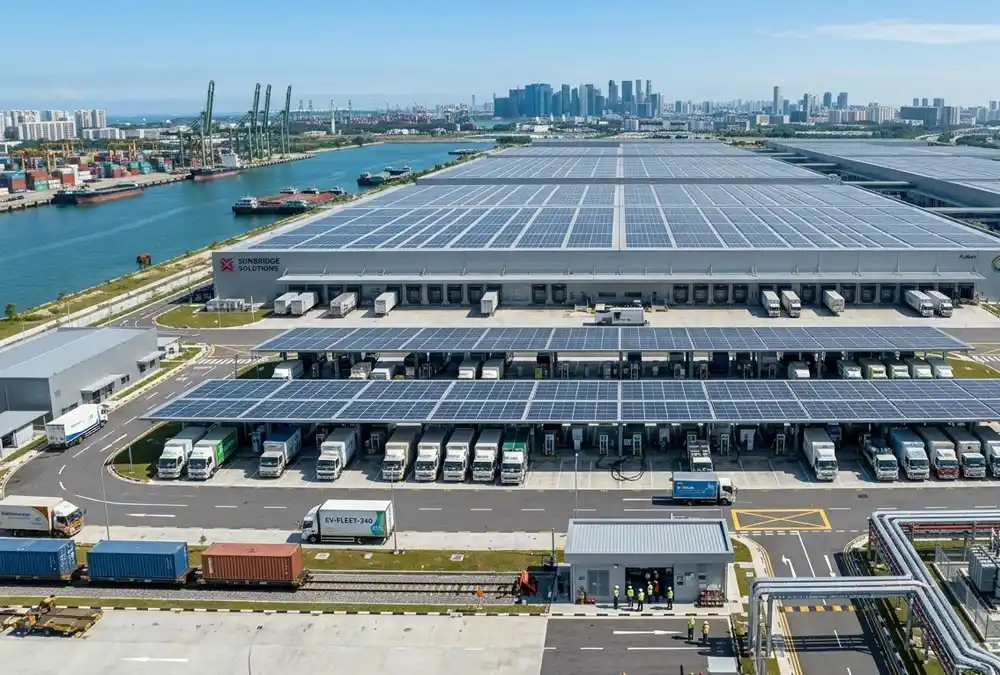
Commercial and Industrial Solar Installations: Applications, Costs, and Maintenance
Common C&I Solar Installation Applications
Commercial and industrial solar installations work across a wide variety of business environments. In manufacturing facilities, these large arrays turn energy-intensive plants into highly efficient, self-sufficient hubs. For massive logistics centers and warehouses, expansive flat roofs offer the perfect space for a high-output solar installation without changing daily ground operations.
Commercial complexes, shopping centers, and corporate offices use rooftop arrays and solar carports to power heavy HVAC loads during the day. In agriculture, solar installations run water pumps, automated feeding systems, and climate controls. Data centers also use these systems to secure clean, stable power for intensive cooling equipment around the clock.
Hybrid Energy Applications Beyond Solar
Modern energy management often requires building a unified microgrid. Combining commercial and industrial solar with battery storage creates a highly reliable energy asset. For facilities looking to support electric fleets, adding EV charging infrastructure lets them charge delivery trucks directly from on-site solar power, cutting transportation costs.
For remote industrial sites, integrating solar with existing diesel generators cuts fuel consumption by up to 40%. The hybrid system uses advanced microgrid controls to balance power sources dynamically. This automated management ensures maximum safety, grid stability, and fuel savings without sacrificing operational uptime.
How Much Does a Commercial and Industrial Solar Installation Cost?
The total cost of a commercial and industrial solar installation depends on several key technical factors. Project scale is a major element, as larger multi-megawatt systems benefit from significant economies of scale. Roof layout also matters; simple ballasted arrays on flat concrete roofs cost less than complex penetrative installations on sloped metal trapezoidal panels.
Equipment choice impacts the initial investment as well. Premium Tier-1 modules and smart string inverters cost more upfront but deliver higher efficiency and better long-term reliability. Grid connection requirements, such as adding medium-voltage transformers or advanced protection gear, can also affect the final price. To illustrate these differences, the table below outlines typical budget allocations for a standard 1MW C&I project based on current 2025/2026 industry data:
| Project Cost Category | Rooftop Array Budget Allocation | Ground-Mount Budget Allocation | Solar Carport Budget Allocation |
|---|---|---|---|
| Tier-1 PV Modules & Inverters | 42% — High power density focus | 38% — Optimized for bulk procurement | 35% — Standard high-efficiency panels |
| Mounting & Racking Systems | 12% — Lightweight ballasted frames | 15% — Driven pile or concrete footings | 24% — Heavy elevated steel structures |
| Electrical BOP & Grid Integration | 18% — Cable trays, switchgear, meters | 22% — Trenching, medium-voltage transformers | 18% — Long-run conduits and drainage |
| Engineering, Civil Works & Labor | 20% — Roof safety and manual lifting | 18% — Land grading and mechanical pilings | 16% — Structural foundations and paving |
| Permitting, Interconnection & Legal | 8% — Structural load certifications | 7% — Environmental approvals and zoning | 7% — Traffic planning and zoning permits |
How Much Maintenance Does a C&I Solar System Require?
While solar systems have no moving parts, they still require regular preventive maintenance to perform at their best. Regular professional cleaning is essential in industrial zones to clear away dust, soot, and bird droppings that block sunlight. Annual electrical thermal inspections help catch minor wiring or inverter anomalies before they turn into costly equipment failures.
Advanced operations and maintenance (O&M) teams use automated SCADA platforms for continuous performance monitoring. These cloud-based tools track real-time string outputs and flag drop-offs instantly. This data-driven approach allows technicians to run remote diagnostics, schedule targeted repairs, and keep system uptime above 99% without interrupting daily operations.
Why Commercial and Industrial Solar Projects Matter
Powering Commercial and Industrial Facilities with Solar Energy
Investing in large-scale
commercial and industrial solar projects
changes how a company manages long-term operational risk. Rather than viewing energy as an unpredictable monthly expense, businesses turn power generation into a controlled, internal asset. This transition stabilizes energy costs, allowing leadership teams to project future manufacturing overhead with absolute accuracy.
Customized C&I Solar Systems and Corporate Resilience
Every business requires a customized approach to solar design. A 24-hour manufacturing plant needs a different system configuration than a daytime distribution warehouse. Experienced solar engineers design each array to match the facility’s specific load profiles, roof constraints, and local grid rules, ensuring maximum on-site consumption and strong financial returns.
This tailored design strategy builds strong long-term resilience. Combining clean energy generation with on-site storage protects companies from regional grid failures and unexpected blackouts. This structural independence keeps automated systems online and secures production continuity, protecting the enterprise from costly supply-chain disruptions.
How to Determine Whether C&I Solar Is Right for Your Business
Assessing Consumption Profiles and Site Suitability
The first step in planning a solar project is analyzing your facility’s historical interval utility data. This review helps verify that your highest power use aligns well with daytime solar generation. If your plant runs heavy daytime shifts, on-site generation can offset your most expensive energy use, leading to an exceptionally high-yielding project.
Next, engineers must evaluate your roof’s physical condition. They check structural load capacities to ensure the building can support the solar modules, racking, and ballasts safely. They also evaluate shading from nearby obstacles and confirm the roof material has at least 20 years of useful life remaining to avoid uninstallation costs later.
Financial Objectives and Choosing the Right Delivery Model
Enterprises need to clarify their financial goals early in the planning process. If your priority is maximizing long-term IRR, an outright cash purchase through a trusted
commercial and industrial solar EPC contractor
is usually the best approach. If you prefer to protect working capital, zero-down PPA models allow you to cut energy costs immediately without any balance sheet liabilities.
Deciding whether to add battery storage depends on your local utility’s tariff rules. If your utility charges high peak-demand fees or applies time-of-use rates, adding a BESS container is financially smart. The extra storage lets you save low-cost daytime solar energy and use it during peak pricing windows, significantly improving your project’s overall economics.
Commercial and Industrial Solar ROI and Payback Analysis
Typical Payback Periods and ROI Drivers
Most commercial and industrial solar installations achieve full payback within 4 to 6 years, depending on local solar resources, utility rates, and available tax incentives. Because these systems are engineered to last 25 years or longer, they provide nearly two decades of virtually free electricity. This long-term performance delivers an exceptional return on investment for the enterprise.
The overall project financial profile depends heavily on regional utility policies. High retail electricity rates make on-site generation incredibly valuable. Net metering rules, which credit you for sending excess power back to the utility, can also improve your returns. Conversely, low utility rates or restrictive grid-connection policies can extend your payback timeline.
How Battery Storage Improves Project Economics
Adding advanced battery storage unlocks extra revenue streams that enhance project economics. Beyond standard peak shaving, a smart BESS allows businesses to participate in utility demand response programs. These programs pay companies to temporarily lower their grid draw during system emergencies. This automated energy management cuts operational costs while generating consistent revenue from the local utility grid.
FAQ About Commercial and Industrial Solar
What Is Commercial and Industrial Solar?
It refers to mid-to-large-scale solar energy installations built for commercial businesses, industrial manufacturing plants, warehouses, and institutional facilities. These systems are custom-engineered to offset heavy corporate electrical loads and reduce high operational utility expenses.
How Much Does a Commercial Solar System Cost?
The upfront cost varies depending on project scale, specific engineering constraints, and whether you integrate battery storage. On a per-watt basis, C&I solar installations are significantly more cost-effective than residential systems, thanks to bulk material procurement and structural installation efficiencies.
How Long Does It Take to Recover the Investment?
Most industrial and commercial enterprises see full payback within 4 to 6 years. Once the initial capital cost is recovered, the clean energy asset continues to generate significant operational savings, flowing straight to the company’s bottom line for the remainder of its 25+ year lifecycle.
Do Industrial Facilities Need Battery Storage?
While not strictly mandatory, adding battery storage is highly recommended for facilities facing high peak-demand charges or grid stability issues. Integrating storage allows for automated peak shaving and secures critical backup power, which prevents costly production line shutdowns during grid outages.
What Maintenance Is Required?
C&I solar systems require minimal manual maintenance. Best practices include scheduling regular professional cleanings to remove dirt build-up, annual thermal imaging of electrical connections, and continuous remote data monitoring to keep long-term system efficiency above 99%.
Can Solar Systems Support Future Expansion?
Yes, provided the initial electrical balance of plant (BOP) and grid connection pathways are engineered with extra capacity from day one. Working with an experienced EPC partner ensures your structural layout can expand smoothly alongside your growing manufacturing lines or fleet charging needs.
Are Government Incentives Available?
Most regions offer excellent financial incentives to support corporate clean energy projects. These mechanisms include upfront grant subsidies, investment tax credits, and accelerated asset depreciation schedules, all designed to reduce initial CAPEX and shorten your payback timeline.
Conclusion
Key Takeaways for Businesses Considering C&I Solar
Deploying a modern commercial and industrial solar array is a proven, high-yielding strategy to lower corporate operational expenses. It turns empty roof space into a source of predictable financial savings, protecting the company from volatile energy markets. This infrastructure investment cuts immediate utility costs while establishing long-term price stability for decades to come.
The Growing Role of Solar + Storage in Industrial Applications
As utility companies update their pricing models and increase demand charges, combining solar generation with smart battery storage is quickly becoming the standard for C&I projects. This hybrid approach gives enterprises complete control over when they use, store, or export their energy. This advanced flexibility maximizes financial returns while securing reliable backup power for continuous operations.
Building a More Competitive and Sustainable Business
For modern corporations looking to lower fixed overhead, protect operations from grid failure, and meet strict ESG standards, investing in solar is a key strategic move. On-site clean energy generation is no longer just a sustainability goal; it is a vital piece of core infrastructure. Partnering with an experienced EPC contractor allows companies to secure long-term energy independence, protect future profitability, and build a highly sustainable competitive advantage.
 https://anengjipower.com/wp-content/uploads/2026/06/epc-vs-turnkey-solar-project-bess.webp
675
1000
Charging Station Engineer
https://anengjipower.com/wp-content/uploads/2025/09/anengji-dc-fast-charging-station-manufacturer-and-supplier-logo-white-1.png
Charging Station Engineer2026-06-22 07:16:042026-06-24 07:13:17What Is the Difference Between EPC and Turnkey Contract Models in Energy Projects?
https://anengjipower.com/wp-content/uploads/2026/06/epc-vs-turnkey-solar-project-bess.webp
675
1000
Charging Station Engineer
https://anengjipower.com/wp-content/uploads/2025/09/anengji-dc-fast-charging-station-manufacturer-and-supplier-logo-white-1.png
Charging Station Engineer2026-06-22 07:16:042026-06-24 07:13:17What Is the Difference Between EPC and Turnkey Contract Models in Energy Projects?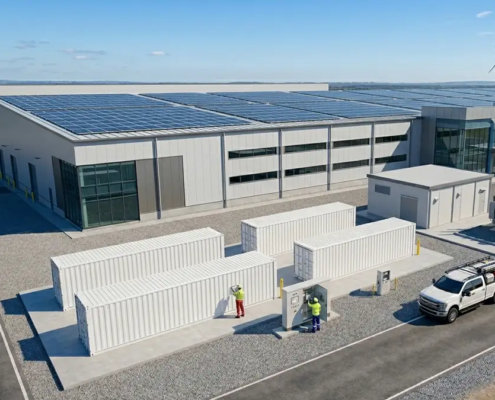 https://anengjipower.com/wp-content/uploads/2026/06/anengji-commercial-solar-plus-storage-benefits-site.webp
675
1000
Charging Station Engineer
https://anengjipower.com/wp-content/uploads/2025/09/anengji-dc-fast-charging-station-manufacturer-and-supplier-logo-white-1.png
Charging Station Engineer2026-06-20 14:34:102026-06-20 14:37:43What Are the Top Benefits of Solar Battery Storage in Factories?
https://anengjipower.com/wp-content/uploads/2026/06/anengji-commercial-solar-plus-storage-benefits-site.webp
675
1000
Charging Station Engineer
https://anengjipower.com/wp-content/uploads/2025/09/anengji-dc-fast-charging-station-manufacturer-and-supplier-logo-white-1.png
Charging Station Engineer2026-06-20 14:34:102026-06-20 14:37:43What Are the Top Benefits of Solar Battery Storage in Factories?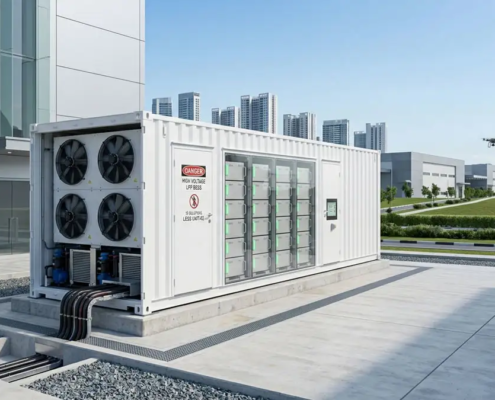 https://anengjipower.com/wp-content/uploads/2026/06/modular-commercial-solar-battery-storage-cabinet.webp
675
1000
Charging Station Engineer
https://anengjipower.com/wp-content/uploads/2025/09/anengji-dc-fast-charging-station-manufacturer-and-supplier-logo-white-1.png
Charging Station Engineer2026-06-18 09:16:522026-07-03 03:05:13What Is Solar Battery Storage? Complete C&I Engineering Guide
https://anengjipower.com/wp-content/uploads/2026/06/modular-commercial-solar-battery-storage-cabinet.webp
675
1000
Charging Station Engineer
https://anengjipower.com/wp-content/uploads/2025/09/anengji-dc-fast-charging-station-manufacturer-and-supplier-logo-white-1.png
Charging Station Engineer2026-06-18 09:16:522026-07-03 03:05:13What Is Solar Battery Storage? Complete C&I Engineering Guide


Leave a Reply
Want to join the discussion?Feel free to contribute!