
Introduction
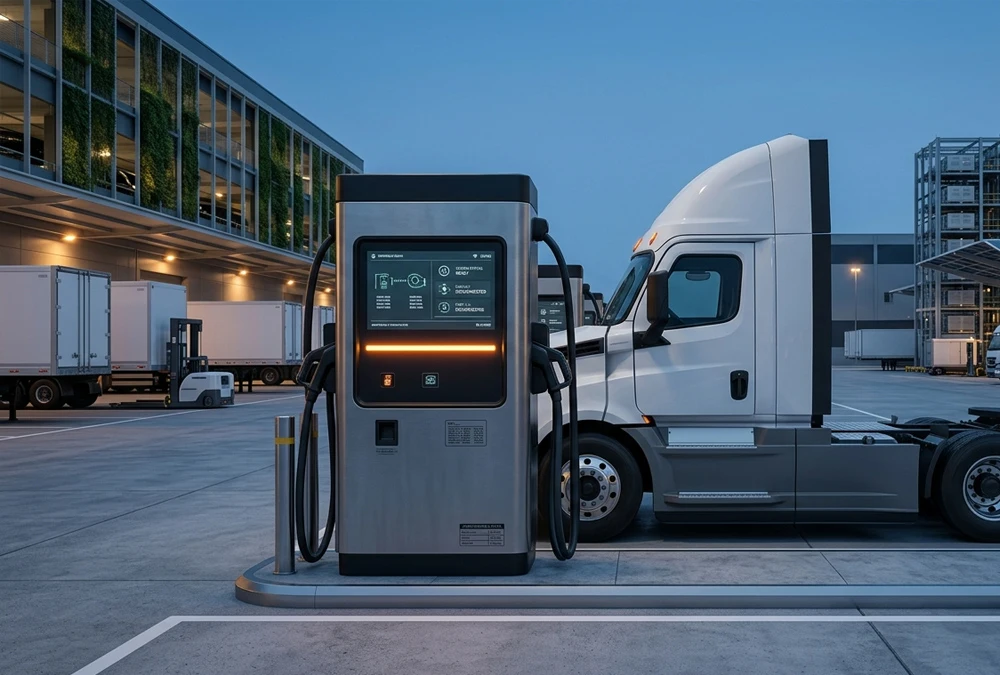
A high-performance commercial ev charger built for fast turnaround is no longer optional for businesses today. Selecting a robust commercial EV charger, often called a DC fast charger, solves the primary operational hurdle for modern site hosts: eliminating long vehicle dwell times. Unlike Level 1 or AC units, a commercial ev charger feeds high-voltage direct current straight to the battery, delivering up to 80% range in 15 to 30 minutes. Under the European Union’s updated Alternative Fuels Infrastructure Regulation (AFIR) mandating 150kW fast chargers along major corridors, selecting the right hardware defines your site’s profitability. This 2026 industry assessment evaluates the top 10 Level 3 charging equipment manufacturers operating across Europe. We analyze each supplier across critical real-world operational engineering metrics:
- Charging Power Output
- Connector Compatibility
- Power Conversion Tech
- Compliance Standards
- Smart Charging Features
- OCPP Interoperability
- Site Application Fit
- Hardware Customization
- Engineering Field Support
- European Service Networks
Why Are Level 3 Commercial EV Chargers Ideal for Business Applications?
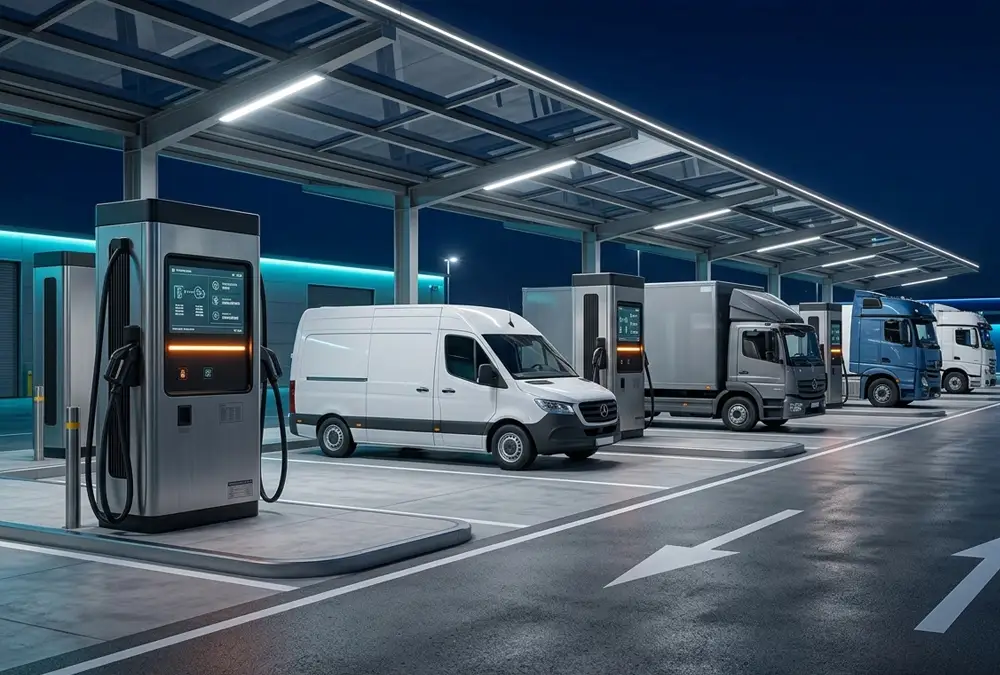
Deploying a high-power commercial DC fast charger transforms parking facilities from passive static spaces into revenue-generating assets, establishing essential commercial EV charging infrastructure that supports heavy daily utilization.
Faster EV Charging Reduces Vehicle Downtime
Time spent parked at an AC station eats directly into delivery schedules. High-power DC charging provides rapid energy delivery, keeping commercial vans and electric trucks on the road.
Level 3 Charging Supports High-Turnover Commercial Locations
Locations such as highway service plazas, retail parking hubs, and logistics centers rely on fast customer turnaround. Short dwell times require high kilowatt delivery to keep vehicles moving continuously.
Level 3 EV Chargers Improve Commercial Charging Revenue Potential
Charging Point Operators (CPOs) maximize returns by dispensing more kilowatt-hours per day per parking bay, increasing station throughput and overall revenue.
Level 3 Charging Is Better Suited to Commercial Fleets
Last-mile delivery fleets and municipal buses operate on strict timetables. A continuous supply of fast DC charging ensures fleet readiness across shift changes without extended delays.
Level 3 Chargers Can Integrate With Smart Energy Management
Modern Level 3 hardware coordinates with local Dynamic Load Management (DLM) and building automation software, protecting local transformers from sudden demand spikes.
Buyer’s Perspective & Worry Check:
“Will fast DC charging destroy our electrical infrastructure budget?” Not necessarily. Installing a level 3 EV charger for commercial use does not automatically require expensive utility substation upgrades. Combining smart dynamic load balancing with localized battery storage lets site owners control grid draw while maintaining maximum peak power delivery to vehicles.
What Should You Look for in a Level 3 Commercial EV Charger?
Evaluating hardware specifications prevents costly operational mismatches later. Key system parameters determine long-term performance and ROI.
Charging Power and Output Configuration
Deploying a commercial DC fast charger 150kW 180kW 240kW 360kW architecture gives fleet owners room to grow energy output as vehicle battery capacities increase.
Connector Compatibility
European installations prioritize dual CCS2 cable configurations to serve incoming passenger and commercial vehicles reliably, alongside optional CHAdeMO or NACS adapters.
OCPP and Charging Management
An OCPP commercial EV charger compliant with protocols 1.6J or 2.0.1 prevents vendor lock-in, enabling integration with third-party billing networks and enterprise fleet software.
Safety and Protection Features
Commercial hardware requires integrated overcurrent protection, ground-fault isolation, surge arresters, emergency shutdown triggers, and continuous temperature control.
Certifications and European Compliance
Full alignment with CE directives, IEC 61851-23/24, and local metering directives (such as German Eichrecht) guarantees legal commercial operation.
Installation and Grid Requirements
Engineers must review transformer ratings, sub-panel capacity, short-circuit current ratings, and trenching costs prior to procurement.
Warranty, Service and Spare Parts
Hardware dependability relies on responsive local field technicians, guaranteed Service Level Agreements (SLAs), and modular spare power blocks.
Top 10 Level 3 Commercial EV Chargers in Europe in 2026
This list reviews leading equipment suppliers supplying dependable level 3 commercial ev chargers across the European market.
1. ABB E-mobility
Company Overview: ABB is a global heavy-electrical manufacturer with extensive experience supplying DC fast charging systems worldwide.
Key Technologies: Modular cabinet power blocks, liquid-cooled cables, and cloud connectivity.
Main Applications: Highway charging hubs, commercial fleets, public transit stations.
| Feature | Specification Details | Direct Buyer Benefit |
|---|---|---|
| Max Power Output | Up to 360kW continuous output | Charges four passenger EVs concurrently, reducing driver wait times. |
| Compliance & Safety | CE certified, IEC 61851-23, Eichrecht compliant | Simplifies grid interconnection and regulatory compliance across Europe. |
Main Advantages: Exceptional field service coverage and proven high-power reliability.
2. Alpitronic
Company Overview: Italy-based Alpitronic manufactures the Hypercharger series, a widely deployed fast-charging platform across European networks.
Key Technologies: Compact SiC power stack design with dynamic output allocation.
Main Applications: Retail hubs, municipal parking, highway fast-charging networks.
| Feature | Specification Details | Direct Buyer Benefit |
|---|---|---|
| Modular Power Architecture | 75kW power stack increments up to 400kW | Allows operators to scale charging power incrementally as demand increases. |
| Footprint Optimization | High power density per square meter | Fits constrained parking bays without sacrificing charging performance. |
Main Advantages: Extremely high uptime ratings and modular repairability.
3. Kempower
Company Overview: Headquartered in Finland, Kempower specializes in decentralized, dynamic DC charging hardware designed for fleet depots and public stations.
Key Technologies: Dynamic power management paired with slim satellite charging dispensers.
Main Applications: Bus depots, electric truck facilities, commercial logistics yards.
| Feature | Specification Details | Direct Buyer Benefit |
|---|---|---|
| Dynamic Distribution | Adaptive power sharing in 25kW steps | Prevents power loss by matching available grid capacity to real-time vehicle demand. |
| Cable Routing System | Spring-loaded cable retractors | Keeps heavy charging cables off the ground, reducing wear and trip hazards. |
Main Advantages: Outstanding modularity for multi-vehicle depot charging hubs.
4. Siemens
Company Overview: Siemens integrates high-power hardware into industrial energy environments, offering full microgrid connectivity.
Key Technologies: Sicharge UC series charging, smart building management integration, and robust network security.
Main Applications: Industrial manufacturing sites, depot yards, commercial offices.
| Feature | Specification Details | Direct Buyer Benefit |
|---|---|---|
| Energy Management | Direct integration with MindSphere / Desigo EMS | Coordinates overall facility energy draw to minimize utility demand charges. |
| Dual Port Charging | 150kW to 300kW output splitting | Provides reliable fast charging for two commercial vehicles simultaneously. |
Main Advantages: Seamless integration into broader commercial electrical infrastructure.
5. Ekoenergetyka
Company Overview: Based in Poland, Ekoenergetyka builds heavy-duty charging solutions for public transit operators and commercial transport networks across Europe.
Key Technologies: High-amperage liquid cooling systems and custom depot control hardware.
Main Applications: Municipal bus depots, heavy electric truck corridors, logistics hubs.
| Feature | Specification Details | Direct Buyer Benefit |
|---|---|---|
| Ultra-High Power Output | Scalable configurations up to 600kW | Delivers ultra-fast charging for heavy-duty electric trucks and transit buses. |
| Pantograph Connectivity | Automated overhead contact charging support | Enables hands-free rapid charging for municipal bus networks. |
Main Advantages: Heavy-duty vehicle focus with proven success across European transit projects.
6. ADS-TEC Energy
Company Overview: Germany’s ADS-TEC Energy develops battery-buffered fast chargers engineered for sites with grid connection constraints.
Key Technologies: Integrated battery buffering, high-power DC boost converters, and intelligent energy management.
Main Applications: Commercial sites with low-voltage grid access, auto dealerships, rural service stations.
| Feature | Specification Details | Direct Buyer Benefit |
|---|---|---|
| Integrated Battery Buffer | Internal lithium-ion storage buffer | Delivers 320kW output while drawing minimal continuous power from the local grid. |
| Low-Voltage Grid Connection | Operates on standard 110kW grid feeds | Avoids expensive utility grid upgrades and shortens project installation timelines. |
Main Advantages: Ideal for fast charging at sites with limited transformer capacity.
7. Delta Electronics
Company Overview: Delta provides reliable power conversion hardware for industrial and commercial EV installations globally.
Key Technologies: High-efficiency power conversion modules, IP55 weatherproof enclosures, and dynamic power distribution.
Main Applications: Commercial parking garages, fleet depots, public fast-charging points.
| Feature | Specification Details | Direct Buyer Benefit |
|---|---|---|
| Power Conversion Efficiency | >94% efficiency rating | Reduces energy conversion losses and cuts long-term operating costs. |
| Dual Simultaneous Charging | Configurable 100kW – 200kW outputs | Provides flexible charging speeds to match varying fleet operational schedules. |
Main Advantages: Reliable power electronics backed by strong global supply chain support.
8. Schneider Electric
Company Overview: Schneider Electric focuses on commercial building integration, combining smart energy management with DC charging infrastructure.
Key Technologies: EcoStruxure management integration, smart dynamic load distribution, and advanced cybersecurity protections.
Main Applications: Commercial real estate, workplace parking, industrial facilities.
| Feature | Specification Details | Direct Buyer Benefit |
|---|---|---|
| Building Platform Integration | Direct links to facility EMS and BMS | Coordinates EV load management with facility power demand to lower overall costs. |
| Commercial Safety Protections | Integrated RCDs, surge suppressors, temperature monitors | Ensures full safety compliance and protects connected commercial vehicles. |
Main Advantages: Excellent fit for real estate developers needing unified building-and-charging power management.
9. Tritium
Company Overview: Tritium builds compact liquid-cooled DC fast chargers designed for durable public and commercial operation.
Key Technologies: Sealed IP65 liquid-cooled power cabinets, small-footprint designs, and customizable branding options.
Main Applications: Highway corridors, fleet depots, commercial retail sites.
| Feature | Specification Details | Direct Buyer Benefit |
|---|---|---|
| Sealed Liquid Cooling | IP65 fully sealed internal electronics | Protects internal components from dust, salt, and debris, lowering maintenance needs. |
| High Power Density | Scalable 50kW to 175kW+ units | Provides high charging output while minimizing spatial impact in narrow bays. |
Main Advantages: Weather-sealed design delivers reliable operation in harsh environmental conditions.
10. AnengJI
AnengJI Company Overview
AnengJI manufactures commercial energy equipment, focusing on OEM/ODM flexibility, DC fast charging hardware, and full Microgrid system integration for commercial and industrial clients worldwide.
AnengJI Level 3 Commercial EV Charging Solutions
AnengJI offers modular Level 3 DC chargers from 60kW to 360kW+ high-power units. Built for demanding B2B deployments, these systems deliver reliable performance for commercial fleets, logistics networks, and public charging hubs.
AnengJI Smart Charging Technology
Featuring dynamic load balancing algorithms and full open OCPP 1.6J/2.0.1 compliance, AnengJI systems actively adjust power output based on real-time site electrical loads to prevent grid overloads.
AnengJI EV Charging + BESS Integration
AnengJI directly integrates solar PV, localized Battery Energy Storage Systems (BESS), and DC fast chargers into a unified microgrid architecture—solving local grid capacity limits efficiently.
| Feature | Specification Details | Direct Buyer Benefit |
|---|---|---|
| BESS Microgrid Native Linkage | Direct DC bus linking to 100kWh–1MWh BESS systems | Enables high-power fast charging even on constrained utility connections while reducing demand charges. |
| Factory-Direct Customization | Full OEM/ODM hardware and software customization | Allows CPOs and business owners to customize branding and technical features at manufacturer-direct prices. |
Why Choose AnengJI?
AnengJI provides complete turnkey energy systems. By combining high-power chargers, local battery storage, and dynamic control software under one roof, we eliminate vendor integration friction and lower overall project total cost of ownership (TCO).
Level 3 Commercial EV Charger Power Comparison: Which Power Rating Do You Need?
Selecting the right power output rating involves balancing vehicle turnaround times against grid connection costs. Sizing hardware accurately ensures site capacity matches operational demands.
Recommended Charging Power by Application
| Application Scenario | Recommended Power | Primary Engineering Reason | Direct Buyer Benefit |
|---|---|---|---|
| Hotels & Hospitality | 60kW – 180kW | Dwell times range between 1 and 3 hours. | Provides guest charging convenience without requiring massive transformer upgrades. |
| Retail & Shopping Plazas | 120kW – 240kW | Turnaround times range between 30 and 60 minutes. | Increases parking bay turnover, driving more foot traffic into retail stores. |
| Fleet Depots & Logistics | 120kW – 360kW+ | Requires fast turnarounds between driver shifts. | Keeps delivery vehicles on schedule and maximizes daily route efficiency. |
| Highway Fast Charging Hubs | 180kW – 350kW+ | Drivers expect quick 15-to-20-minute top-ups. | Maximizes kilowatt-hour sales per charger, increasing CPO revenue. |
| Heavy Logistics & Port Hubs | 350kW – Megawatt (MCS) | Charges large 300kWh+ commercial truck batteries. | Enables long-haul electric freight operations with rapid mid-route charging. |
How to Choose the Right Level 3 Commercial EV Charger Manufacturer
Selecting a trustworthy commercial EV charging station supplier Europe partner requires evaluating more than initial equipment pricing. Site hosts should assess manufacturers against eight core engineering criteria:
- Evaluate Charging Power: Verify continuous power output ratings under high ambient temperatures, rather than relying solely on short peak performance numbers.
- Check EV Connector Compatibility: Confirm standard CCS2 support, along with dynamic power sharing across dual output cables.
- Check European Certifications and Compliance: Verify genuine CE, IEC 61851-23/24, EMC class compliance, and local grid code certifications.
- Evaluate OCPP and Software Integration: Ensure open OCPP 1.6J/2.0.1 compliance to retain freedom in choosing network management platforms.
- Evaluate Grid and Installation Requirements: Check incoming AC voltage limits, integrated isolation monitoring, and short-circuit current ratings.
- Check Dynamic Load Balancing: Confirm hardware supports local master-slave load management to avoid exceeding utility supply caps.
- Evaluate Warranty and After-Sales Support: Prioritize suppliers offering modular spare parts, remote technical support, and clear SLA response commitments.
- Evaluate OEM/ODM and Customization: Select flexible manufacturers capable of tailoring hardware housing, cable lengths, software interfaces, and corporate branding to your project needs.
Level 3 Commercial EV Charger Installation: What Does a Project Need?
Building high-power commercial electric vehicle charging stations requires systematic site engineering and execution:
- Site Power Assessment: Review existing service entrance capacity, transformer headroom, and daily load profiles.
- Grid Connection & Transformer Upgrade: Coordinate with local distribution system operators (DSOs) for medium-voltage transformer installations when required.
- Electrical Distribution & Protection: Install dedicated switchgear, circuit breakers, RCD protection, and surge protection devices.
- Civil Construction & Cable Routing: Execute trenching, conduit laying, concrete pad pouring, and protective bollard placement.
- Communication & Network Infrastructure: Ensure dependable 4G/5G cellular connectivity or Ethernet runs for OCPP backhaul communication.
- Commissioning & Safety Testing: Perform insulation checks, ground loop testing, and live vehicle charging verification prior to launch.
How Much Does a Level 3 Commercial EV Charger Cost?
Understanding the true total cost of ownership (TCO) requires breaking down project expenses into clear capital and operational line items.
Charger Hardware Cost
Equipment pricing scales with kilowatt capacity, ranging from €15,000 for standard 60kW units up to €65,000+ for liquid-cooled 360kW systems.
Electrical Installation Cost
Includes heavy copper wiring, breaker panels, protective enclosures, and certified electrical labor, typically adding €8,000 to €25,000 per site.
Transformer & Grid Upgrades
Utility connection extensions and new dedicated step-down transformers can cost between €20,000 and €100,000+ when grid capacity is constrained.
Software & Maintenance Costs
Covers annual network management fees, cellular data plans, periodic preventive maintenance, and on-site field service agreements.
Can Battery Energy Storage Reduce the Cost of High-Power EV Charging?
High-power DC charging draws substantial peak current from the grid, creating steep utility demand charges and often requiring expensive substation upgrades. Integrating localized commercial Battery Energy Storage Systems (BESS) provides a practical alternative.
Why High-Power DC Charging Creates Peak Demand
Plugging in multiple commercial vehicles simultaneously creates sudden power spikes. Utility operators penalize these spikes through heavy monthly demand charges based on peak kilowatt draw.
How BESS Supports DC Fast Charging
A localized BESS charges steadily from the grid during low-demand periods. When high-power EV charging begins, the battery system discharges immediately to supply peak energy, insulating the local transformer from sharp spikes.
Recommended Industrial BESS Products for EV Fast Charging Hubs
| BESS Battery Capacity | Key Technology Specs | Ideal Commercial Application | Direct Buyer Advantage |
|---|---|---|---|
| 100kWh BESS Cabinet | LFP Chemistry, Integrated Liquid Cooling, Outdoor IP55 Cabinet | Small commercial sites, auto dealerships, retail outlets with 1–2 fast chargers | Eliminates minor grid upgrades and shaves off peak utility demand fees reliably. |
| 261kWh Commercial BESS | High-Density LFP Cells, Modular Rack Design, Smart EMS Control | Medium fleet logistics depots and busy commercial parking hubs | Supports multiple fast chargers concurrently without exceeding local transformer limits. |
| 418kWh Modular BESS | Advanced Liquid Cooling, Automated Fire Suppression, High C-rate discharge | Large logistics centers and high-turnover highway charging plazas | Provides long-duration peak shaving while integrating smoothly with site solar installations. |
| 1MWh Containerized BESS | Fully Integrated 20ft Container, Centralized HVAC, MW-Scale PCS | Heavy-duty electric truck charging stations and public transport bus depots | Enables megawatt-scale fast charging in locations where utility grid expansion is delayed or cost-prohibitive. |
Technical Explanations for Procurement Teams:
- LFP (Lithium Iron Phosphate) Chemistry: A battery chemistry known for thermal stability, high safety levels, and long cycle life (>6,000 cycles), making it ideal for daily stationary storage.
- Peak Shaving: Automatically discharging stored battery energy during high power draw periods to flatten peak demand spikes and reduce utility demand charges.
- Energy Management System (EMS): Control software that monitors grid constraints, solar output, battery status, and charger draw to optimize overall site energy flow in real time.
What Is the Future of Level 3 Commercial EV Charging in Europe?
According to recent industry reports from BloombergNEF and the International Energy Agency (IEA), commercial electric vehicle adoption across Europe is shifting rapidly from initial pilots toward large-scale fleet integration. Several core trends shape this transition:
- Transition to Higher Power Outputs: Market demand is moving from 120kW units toward 240kW–360kW+ chargers as standard baseline installations for high-turnover public sites.
- Heavy-Duty Fleet Electrification: Logistics operators are rapidly electrifying Class 7–8 regional transport trucks, creating strong demand for dedicated high-power fleet depot charging infrastructure.
- Deployment of Megawatt Charging Systems (MCS): Standardized MCS connectors operating at over 1MW are entering key European logistics corridors to support long-haul heavy electric freight.
- Growth of Integrated Microgrids: Combining solar PV, localized BESS storage, and smart DC chargers into dynamic microgrids is becoming the standard approach for managing grid constraints.
Frequently Asked Questions About Level 3 Commercial EV Chargers
What is a Level 3 commercial EV charger?
A Level 3 commercial charger, or DC fast charger, converts AC grid power to direct current within the station cabinet, delivering high power (50kW to 360kW+) directly to the vehicle battery.
How fast is a Level 3 commercial EV charger?
A 150kW to 240kW Level 3 charger can replenish an electric vehicle battery from 10% to 80% state-of-charge in roughly 15 to 30 minutes, depending on the vehicle’s maximum intake rate.
How much does a commercial Level 3 EV charger cost?
Hardware costs range from €15,000 for standard 60kW chargers to over €65,000 for 360kW systems. Complete installed project costs vary based on required grid and site upgrades.
Is Level 3 charging the same as DC fast charging?
Yes. In commercial applications, “Level 3 charging” and “DC fast charging” refer to high-power direct-current charging systems.
What connector does a Level 3 charger use in Europe?
The Combined Charging System 2 (CCS2) is the primary standard across Europe. Some chargers also include CHAdeMO cables or NACS adapters for broader fleet compatibility.
Is 350kW charging necessary for commercial EV charging?
350kW+ chargers are essential for highway travel corridors and heavy-duty trucks requiring ultra-fast turnover. For retail or hotel parking, 60kW–180kW units are often sufficient.
Can Level 3 chargers support multiple EVs at once?
Yes. Modern dual-port Level 3 chargers feature dynamic power sharing, splitting available kilowatts between connected vehicles based on real-time battery needs.
Do Level 3 chargers require a transformer?
Most Level 3 installations require dedicated 400V 3-phase AC connections. High-power multi-charger stations often need a dedicated step-down transformer linked to local medium-voltage lines.
Can BESS support Level 3 commercial EV charging?
Yes. Integrating a BESS allows site owners to store energy during off-peak hours and discharge it during fast charging sessions, reducing grid impact and demand charges.
What is the best Level 3 EV charger for a commercial fleet?
The best charger depends on your daily fleet mileage, available grid capacity, and operational turnaround requirements. Systems featuring dynamic load management and BESS integration options offer strong long-term flexibility.
Choose a Level 3 Commercial EV Charging Solution for Your Project
From standalone DC fast chargers to fully integrated EV charging and battery energy storage microgrids, AnengJI helps commercial customers design, deploy, and scale high-power charging projects efficiently.
Related Article
- How Much Does an EV Charging Station Cost? Complete Commercial Guide
- Benefits of Commercial EV Charging Stations for Businesses | ROI & Strategy
- Commercial EV DC Fast Charging Solutions | Modular Stations & BESS
- Commercial EV Charging Station Cost: 2026 Price Guide & ROI
- How Long Does a Level 3 Charger Take? Real-World DC EV Charging Time
 https://anengjipower.com/wp-content/uploads/2026/06/epc-vs-turnkey-solar-project-bess.webp
675
1000
Charging Station Engineer
https://anengjipower.com/wp-content/uploads/2025/09/anengji-dc-fast-charging-station-manufacturer-and-supplier-logo-white-1.png
Charging Station Engineer2026-06-22 07:16:042026-06-24 07:13:17What Is the Difference Between EPC and Turnkey Contract Models in Energy Projects?
https://anengjipower.com/wp-content/uploads/2026/06/epc-vs-turnkey-solar-project-bess.webp
675
1000
Charging Station Engineer
https://anengjipower.com/wp-content/uploads/2025/09/anengji-dc-fast-charging-station-manufacturer-and-supplier-logo-white-1.png
Charging Station Engineer2026-06-22 07:16:042026-06-24 07:13:17What Is the Difference Between EPC and Turnkey Contract Models in Energy Projects? https://anengjipower.com/wp-content/uploads/2026/06/anengji-commercial-solar-plus-storage-benefits-site.webp
675
1000
Charging Station Engineer
https://anengjipower.com/wp-content/uploads/2025/09/anengji-dc-fast-charging-station-manufacturer-and-supplier-logo-white-1.png
Charging Station Engineer2026-06-20 14:34:102026-06-20 14:37:43What Are the Top Benefits of Solar Battery Storage in Factories?
https://anengjipower.com/wp-content/uploads/2026/06/anengji-commercial-solar-plus-storage-benefits-site.webp
675
1000
Charging Station Engineer
https://anengjipower.com/wp-content/uploads/2025/09/anengji-dc-fast-charging-station-manufacturer-and-supplier-logo-white-1.png
Charging Station Engineer2026-06-20 14:34:102026-06-20 14:37:43What Are the Top Benefits of Solar Battery Storage in Factories? https://anengjipower.com/wp-content/uploads/2026/06/modular-commercial-solar-battery-storage-cabinet.webp
675
1000
Charging Station Engineer
https://anengjipower.com/wp-content/uploads/2025/09/anengji-dc-fast-charging-station-manufacturer-and-supplier-logo-white-1.png
Charging Station Engineer2026-06-18 09:16:522026-07-03 03:05:13What Is Solar Battery Storage? Complete C&I Engineering Guide
https://anengjipower.com/wp-content/uploads/2026/06/modular-commercial-solar-battery-storage-cabinet.webp
675
1000
Charging Station Engineer
https://anengjipower.com/wp-content/uploads/2025/09/anengji-dc-fast-charging-station-manufacturer-and-supplier-logo-white-1.png
Charging Station Engineer2026-06-18 09:16:522026-07-03 03:05:13What Is Solar Battery Storage? Complete C&I Engineering Guide


Leave a Reply
Want to join the discussion?Feel free to contribute!