
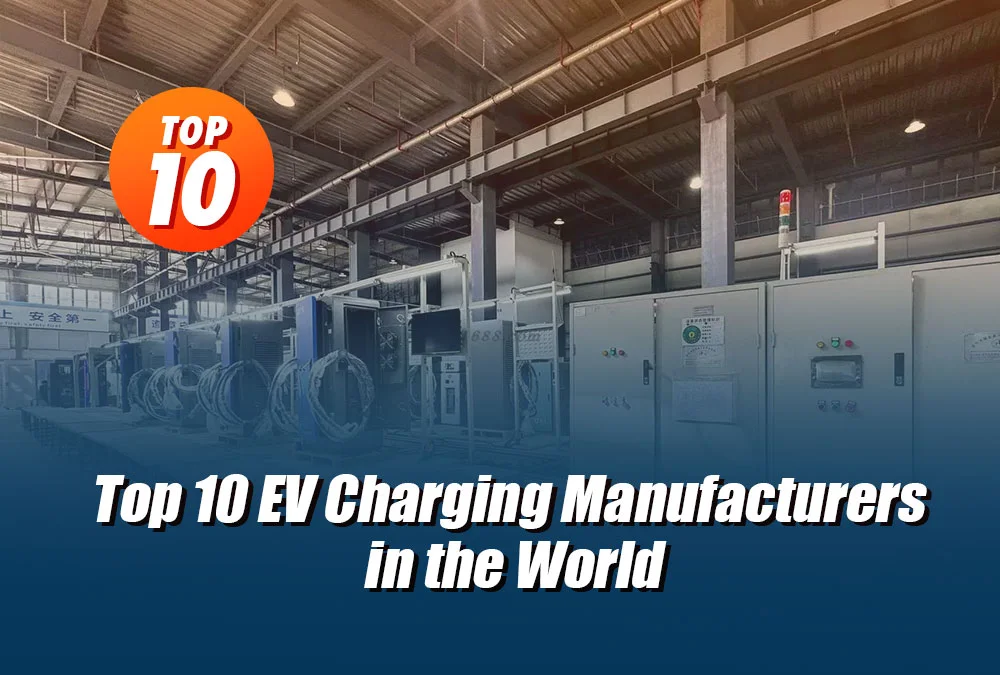
An in-depth technical and commercial evaluation of global EVSE hardware suppliers, market projections, total cost of ownership (TCO), and infrastructure integration.
Executive Procurement Summary
Selecting an Electric Vehicle Supply Equipment (EVSE) manufacturing partner in 2026 requires balancing hardware reliability, grid capacity, dynamic software protocols, and long-term lifecycle costs. As battery architectures transition to 800V/1000V platforms and commercial fleets rapidly electrify, selecting a vendor based solely on upfront hardware cost often leads to catastrophic operational downtime and grid demand penalty charges.
This procurement guide evaluates the world’s top 10 EV charging equipment manufacturers based on rigorous operational benchmarks:
- Power Conversion Scalability: From 7kW AC Level 2 wallboxes to 900kW+ split DC ultra-fast systems and Megawatt Charging Systems (MCS).
- Electrical Efficiency & Thermal Management: Silicon Carbide (SiC) power modules, liquid-cooled cabling, and IP65/NEMA 3R enclosure ratings.
- Software Interoperability: Native OCPP 1.6J / 2.0.1 compliance and ISO 15118 Plug & Charge support.
- Grid & Storage Integration: Dynamic Load Balancing (DLB), Energy Management Systems (EMS), and Battery Energy Storage System (BESS) pairing.
- Total Cost of Ownership (TCO): 5-to-10 year lifecycle evaluation encompassing CAPEX, civil installation, cloud licensing, demand fees, and uptime guarantees.
Global EV Charging Equipment Market Analysis & Industry Data
Commercial and public electrification infrastructure is undergoing an aggressive expansion cycle. According to verified industry data from the International Energy Agency (IEA) Global EV Outlook and market intelligence reports, the global public EV charging point deployment surpassed 4.5 million active units entering 2026. The overall global EVSE market value is projected to grow from USD 28.5 billion in 2023 to over USD 128.4 billion by 2030, reflecting a compound annual growth rate (CAGR) of 24.8%.
Technical Classification: AC Level 2 vs. DC Fast vs. MCS Megawatt Systems
Commercial buyers must match their specific site parking dwell times with the appropriate electrical conversion architecture:
| Charging Class | Power Output (kW) | Voltage Architecture | Connector Standards | Avg. Dwell Time | Primary Target Application |
|---|---|---|---|---|---|
| AC Level 2 | 7kW – 22kW | 208V – 400V AC (1/3-Phase) | Type 1 (SAE J1772), Type 2, NACS | 4 – 8 Hours | Workplaces, Hotels, Multi-Family Residential, Long-stay Depots |
| Commercial DC Fast | 50kW – 180kW | 150V – 1000V DC | CCS1, CCS2, NACS, CHAdeMO | 30 – 60 Mins | Shopping Centers, Urban Charging Hubs, Fleet Vans, Commercial Garages |
| Ultra-Fast DC | 240kW – 480kW | 200V – 1000V DC (SiC) | CCS1, CCS2, NACS (Liquid Cooled) | 10 – 20 Mins | Highway Corridors, Express Service Stations, Passenger Fleet Plazas |
| Megawatt (MCS) | 350kW – 1.2MW+ | Up to 1250V DC (1500A) | MCS Connector Standard | 15 – 30 Mins | Class 8 Logistics Trucks, Electric Mining Vehicles, Heavy Bus Depots |
Top 10 Global EV Charging Manufacturers Comparison Matrix
The table below provides a side-by-side technical evaluation of the top 10 EV charging equipment manufacturers globally:
| Manufacturer | HQ Location | Max Power Output | Efficiency Rating | Software Protocol | OEM/ODM Availability | Core Competitive Advantage | Primary Target Segment |
|---|---|---|---|---|---|---|---|
| ABB E-mobility | Switzerland | 360kW – 400kW | >95% | OCPP 1.6J / 2.0.1 | Very Limited | Medium-voltage grid integration & worldwide support | Public Highway Networks, Transit Bus Depots |
| Siemens | Germany | 300kW | >96% | OCPP 1.6J / 2.0.1 | Limited | Industrial automation & Building Management (BMS) link | Industrial Hubs, Commercial Campuses, Smart Buildings |
| ChargePoint | USA | 500kW | >95% | Proprietary / OCPP | No | Turnkey cloud CPMS network & fleet management software | Commercial Real Estate, North American Fleets |
| Tritium | Australia | 350kW | >95% | OCPP 1.6J | No | Fully sealed IP65 liquid-cooled filterless enclosures | Harsh Coastal, Dusty Desert, Outdoor Fast Hubs |
| Alpitronic | Italy | 400kW | >97.5% (SiC) | OCPP 1.6J / 2.0.1 | No | Market-leading power density & SiC efficiency | European Ultra-Fast Charging Plazas, Retail Drive-Thrus |
| Kempower | Finland | 600kW (Cabinet) | >96% | OCPP 1.6J / 2.0.1 | No | Dynamic 25kW power sharing & flexible satellite posts | Logistics Fleet Terminals, Heavy Bus Hubs, Public Depots |
| EVBox | Netherlands | 320kW | >95% | OCPP 1.6J / 2.0.1 | Limited | Modular field serviceability & extensive European footprint | Commercial Real Estate, Parking Operators, Workplace |
| Delta Electronics | Taiwan | 350kW | >96.5% | OCPP 1.6J / 2.0.1 | Yes (Strong) | Industrial power electronics quality & tier-1 OEM manufacturing | Utilities, System Integrators, White-label Hardware Partners |
| Wallbox | Spain | 150kW | >95% | OCPP 1.6J / 2.0.1 | Limited | Compact UI ergonomics, modular power banks, bi-directional V2G | Luxury Hospitality, Fleet Garages, Premium Commercial Retail |
| AnengJI | China | 480kW – 900kW (MCS) | >96.8% (SiC) | OCPP 1.6J / 2.0.1 | Full OEM/ODM | Factory-direct hardware CAPEX, custom enclosure engineering & BESS integration | Commercial Fleet Operators, Private Charging Networks, BESS Microgrids |
Detailed Profiles: Top 10 Global EV Charging Manufacturers
Below are comprehensive profiles for each of the top 10 manufacturers, detailing their technological edge, core product offerings, safety compliance, and ideal project applications.
1. ABB E-mobility — Global Industrial Scale Specialist
Company Overview & Global Reach: Headquartered in Zurich, Switzerland, ABB E-mobility is an undisputed global pioneer in power electronics and heavy electrical equipment. Leveraging decades of grid integration experience, ABB has deployed over 1.1 million EV chargers across more than 85 international markets, operating massive production hubs across Europe, North America, and Asia-Pacific.
Core Product Portfolio: ABB provides an end-to-end lineup spanning the Terra AC wallbox series (7kW to 22kW) for long-dwell commercial sites, up to the flagship Terra HP and Terra 360 DC platforms capable of delivering up to 360kW–400kW. Their modular split-cabinet power distribution units are built for high-throughput commercial stations.
Technical Edge & Certifications: ABB’s key strength lies in seamlessly pairing chargers directly with medium-voltage substation transformers and grid protection gear. Their equipment is globally certified under UL, CE, TÜV, IEC 61851, and ISO 15118 standards, achieving hardware uptime metrics exceeding 98% in public networks.
Best Suited For: Government-backed highway corridor projects, utility-scale charging networks, and municipal transit bus electrification programs requiring extensive international field service coverage.
2. Siemens — Building Infrastructure Integration Pioneer
Company Overview & Global Reach: German industrial conglomerate Siemens AG brings unmatched expertise in electrical distribution, building automation, and industrial digital software. Siemens eMobility operates globally, engineering hardware and integrated Energy Management Systems (EMS) for commercial facilities and logistics hubs.
Core Product Portfolio: Siemens manufactures the VersiCharge AC commercial series (7.2kW to 22kW) alongside the modular Sicharge D DC fast charging system (50kW up to 300kW). The Sicharge D features dynamic power allocation, allowing a single cabinet to charge up to four vehicles simultaneously with dynamic power sharing.
Technical Edge & Certifications: Siemens excels at linking charging equipment directly into Building Management Systems (BMS) via Desigo CC and MindSphere cloud architecture. This enables real-time facility peak shaving and local solar PV smoothing. Full compliance with UL 2202, CE, IEC, and DIN 70121 standards.
Best Suited For: Manufacturing plants, smart corporate campuses, commercial office towers, and industrial sites expanding existing facility switchgear.
3. ChargePoint — Turnkey Cloud Network Leader
Company Overview & Global Reach: Based in Campbell, California, ChargePoint operates one of the world’s largest open EV charging networks. With over 300,000 active managed ports globally, ChargePoint focuses heavily on hardware-software integration, offering commercial site hosts turnkey management tools.
Core Product Portfolio: Product lines include the commercial CT4000 dual-port Level 2 series, the CPF50 fleet charger, and the high-power Express Plus DC modular platform (capable of scaling up to 500kW per site architecture with liquid-cooled cables).
Technical Edge & Certifications: ChargePoint’s core moat is its cloud-based ChargePoint Cloud Services (CPMS), featuring automatic billing, driver reservation apps, fleet telematics tracking, and dynamic load scheduling. Fully UL listed, ENERGY STAR certified, and compliant with local US/European safety codes.
Best Suited For: Commercial real estate hosts, retail centers, workplace parking lots, and North American commercial fleet operators needing fully managed cloud software.
4. Tritium — Liquid-Cooled Hardware Expert
Company Overview & Global Reach: Originating in Brisbane, Australia, Tritium specializes exclusively in Direct Current Fast Chargers (DCFC). Known for innovative thermal management engineering, Tritium hardware is deployed across more than 40 countries, powering major highway charging corridors globally.
Core Product Portfolio: Focuses strictly on DC platforms, including the compact 50kW RTM series and the modular PKM150 (150kW) up to 350kW high-power units designed for heavy usage along transit corridors.
Technical Edge & Certifications: Tritium engineered the world’s first fully liquid-cooled, IP65-sealed DC charger enclosure. By isolating internal electronics from external ambient air, the hardware eliminates air filters, drastically reducing maintenance costs in dusty, salty, or hot environments. Fully certified under UL, CE, and IEC standards.
Best Suited For: Harsh outdoor environments, coastal regions, desert locations, and highway fast-charging plazas where air-filter maintenance is cost-prohibitive.
5. Alpitronic — High Power Density Specialist
Company Overview & Global Reach: Headquartered in Bolzano, Italy, Alpitronic has quickly become a dominant force in the European fast-charging landscape. Their flagship “Hypercharger” series has established a benchmark across Europe for reliability, high power density, and sleek industrial design.
Core Product Portfolio: Alpitronic manufactures the Hypercharger product line, ranging from the compact HYC50 (50kW wall DC) to the flagship HYC150, HYC300, and HYC400 (up to 400kW direct power output with dual CCS/NACS connectors).
Technical Edge & Certifications: Utilizing advanced Silicon Carbide (SiC) semiconductor power modules, Alpitronic achieves peak conversion efficiencies exceeding 97.5%. Their hyper-compact footprint allows installation in tight parking spaces without sacrificing power. Certified under strict European CE, TÜV, Eichrecht calibration, and IEC standards.
Best Suited For: Space-constrained urban charging hubs, European highway service stations, fast-food retail drive-thrus, and premium commercial property lots.
6. Kempower — Dynamic Satellite Charging Innovator
Company Overview & Global Reach: Based in Lahti, Finland, Kempower designs modular DC fast-charging solutions built specifically to withstand extreme Nordic sub-zero winters. Kempower has rapidly expanded across Europe and North America, earning widespread acclaim for its user-centric satellite layout.
Core Product Portfolio: Kempower utilizes a split system architecture featuring centralized Power Cabinets (delivering up to 600kW total power) connected to multiple slender Satellite dispensers with spring-loaded cable management systems.
Technical Edge & Certifications: Features real-time dynamic power allocation in granular 25kW steps across all connected satellites. Their intuitive user display and dynamic QR mobile payment interface minimize customer friction. Fully certified for UL, CE, and severe weatherproof durability.
Best Suited For: Commercial vehicle depots, electric transit bus stations, logistics centers, and large public charging parks requiring flexible cable routing.
7. EVBox — Flexible Commercial Solutions Supplier
Company Overview & Global Reach: Founded in Amsterdam, Netherlands, EVBox is a global EVSE manufacturer with over 500,000 charging ports installed worldwide. EVBox provides scalable commercial hardware and enterprise software solutions across North America and Europe.
Core Product Portfolio: Offers commercial AC systems including the EVBox Livo and BusinessLine (7.4kW–22kW), as well as modular DC fast chargers including the Troniq Modular and Troniq High Power series (50kW to 320kW).
Technical Edge & Certifications: Designed with field serviceability in mind, EVBox units feature modular sub-assemblies that can be swapped easily by local technicians. Paired with the EVBox Everon cloud management software, hosts gain complete control over billing and dynamic load management. Certified under CE, UL, and ISO standards.
Best Suited For: Multi-tenant real estate developments, corporate parking facilities, and commercial fleet operators seeking scalable AC-to-DC product lines.
8. Delta Electronics — High-Efficiency Power Module Manufacturer
Company Overview & Global Reach: Headquartered in Taipei, Taiwan, Delta Electronics is a global leader in power electronics, industrial automation, and switching power supplies. Delta manufactures high-density power conversion modules and full charging stations for leading automotive and infrastructure brands worldwide.
Core Product Portfolio: Ranges from the AC MAX commercial wallbox series (7kW to 22kW) to versatile DC fast chargers, including the Citycharger (50kW/100kW) and Ultra Fast Charger series (up to 350kW multi-port setups).
Technical Edge & Certifications: Delta leverages in-house power electronic manufacturing capabilities to achieve high power conversion efficiency (>96.5%) and thermal reliability. Delta is a preferred hardware partner for Tier-1 automotive brands and system integrators globally. Full UL, CE, and TÜV safety approvals.
Best Suited For: Utilities, system integrators, public transit authorities, and global network operators requiring robust industrial-grade hardware components.
9. Wallbox — User-Centric Compact Charging Innovator
Company Overview & Global Reach: Headquartered in Barcelona, Spain, Wallbox NV is a publicly traded EVSE manufacturer recognized for innovative, user-centric hardware design. Operating manufacturing plants in Europe, the US, and China, Wallbox distributes hardware across more than 110 countries.
Core Product Portfolio: Manufactures commercial AC units like Pulsar Pro and Commander 2 (7.4kW–22kW), the iconic Quasar 2 bidirectional V2G DC charger, and the Supernova public DC fast charger series (60kW to 150kW).
Technical Edge & Certifications: Supernova utilizes a patented independent power-module architecture; if one module fails, the charger continues running at reduced power, ensuring high uptime. Excellent touch-screen UI and MyWallbox software suite. Certified under CE, UL, and Energy Star.
Best Suited For: Luxury hospitality sites, high-end commercial retail, auto dealerships, and corporate parking garages prioritizing aesthetics and reliability.
10. AnengJI — Factory-Direct EV Charging & BESS Integrator
Company Overview & Global Reach: AnengJI operates as a direct OEM/ODM manufacturer specializing in high-power commercial EV charging hardware, energy management software, and integrated Battery Energy Storage Systems (BESS). By eliminating third-party distribution markups, AnengJI provides commercial project developers direct factory pricing and technical support worldwide.
Core Product Portfolio: Complete commercial hardware lineup including AC Level 2 chargers (7kW, 11kW, 22kW), all-in-one DC fast chargers(60kW, 120kW, 180kW, 240kW), and split-cabinet ultra-fast systems (360kW, 480kW, up to 900kW Megawatt MCS setups).
Technical Edge & Certifications: Offers complete private-label OEM enclosure design, advanced Silicon Carbide (SiC) power modules (>96.8% efficiency), native OCPP 2.0.1 compliance, dynamic load management, and microgrid BESS coupling to buffer grid demand spikes. Certified under UL, CE, TÜV, and IEC safety frameworks.
Best Suited For: Fleet operators, private charging network developers, and commercial project managers seeking direct factory pricing, flexible customization, and integrated BESS battery buffers.
Commercial Solution Spotlight: Pairing BESS Storage with High-Power DC Chargers
Deploying high-power DC fast chargers often causes severe peak demand spikes on local utility transformers. Integrating industrial Battery Energy Storage Systems (BESS) allows site operators to store off-peak power and buffer high-power charging sessions, avoiding utility grid upgrade costs and peak demand surcharges.
| BESS Model | Storage Capacity | Target EV Charger Configuration | Operational Impact | Financial ROI Benefit |
|---|---|---|---|---|
| BESS-100 | 100kWh / 50kW Output | Dual 60kW DC Fast Chargers | Buffers afternoon power spikes during simultaneous charging sessions. | Eliminates $15,000–$30,000 in transformer upgrade fees. |
| BESS-261 | 261kWh / 100kW Output | Dual 120kW or 180kW DC Chargers | Enables rapid back-to-back commercial vehicle charging without grid voltage sags. | Cuts monthly utility peak demand charges by up to 45%. |
| BESS-418 | 418kWh / 200kW Output | 4 x 180kW DC Fast Ports / Fleet Hubs | Supports high-throughput commercial fleet operations in grid-constrained areas. | Generates revenue via grid demand response and frequency regulation. |
| BESS-1MWH+ | 1.0MWh – 3.5MWh Container | MCS Truck Hubs / Transit Bus Depots | Delivers megawatt-scale power discharge for heavy Class 8 commercial vehicles. | Enables fleet electrification in remote or capacity-blocked logistics zones. |
2026–2030 Global EV Charging Technology Trends & Data Forecast
Technological shifts in battery chemistry, vehicle architecture, and grid capacity are changing hardware selection criteria for commercial sites. Key market trends backed by verified data include:
1. Rise of Megawatt Charging Systems (MCS) for Heavy Transport
Commercial electrification is moving beyond passenger cars into heavy logistics. According to fleet forecasts, heavy-duty commercial truck electrification is growing at a 34.2% CAGR through 2030. The standardized Megawatt Charging System (MCS) supports up to 1,250V and 3,000A (delivering up to 3.75MW peak power), enabling a Class 8 electric truck to charge fully in under 25 minutes during mandatory driver rest breaks.
2. Silicon Carbide (SiC) Power Modules & 800V Architecture Dominance
Over 55% of new commercial passenger EVs and medium-duty delivery vans built in 2026 utilize 800V nominal battery architectures. In response, Tier-1 manufacturers are replacing legacy Silicon IGBT power modules with Silicon Carbide (SiC) semiconductors. SiC MOSFET power modules reduce internal heat dissipation losses by 40%, boosting overall charger AC-to-DC conversion efficiency from ~94% to over 97.5% while reducing cabinet physical footprint by one-third.
3. ISO 15118-20 Plug & Charge & Bidirectional V2G Integration
Manual RFID card swipes and mobile app payments are being replaced by automated PKI authentication via ISO 15118-2 Plug & Charge standard. Furthermore, ISO 15118-20 enables Vehicle-to-Grid (V2G) bidirectional energy transfer. Fleet operators can discharge battery energy back to the grid during emergency price surges, creating an additional recurring revenue stream of $1,200–$2,800 per vehicle per year.
4. Microgrids & Dynamic Battery Buffer Coupling
With utility transformer lead times extending to 50–80 weeks in major industrial markets, microgrid fast-charging stations pairing rooftop solar PV, stationary BESS, and DC fast chargers are becoming the industry standard. Local energy management systems (EMS) allow commercial operators to run 360kW chargers on limited 100kW grid connections without incurring heavy demand charges.
Total Cost of Ownership (TCO) Model & Procurement Framework
Experienced commercial project buyers evaluate hardware based on 5-year Total Cost of Ownership (TCO) rather than initial purchase invoice quotes alone. Initial hardware invoice price typically accounts for less than 35% of total project expenditure over 5 years.
Mathematical 5-Year Lifecycle TCO Model:
TCO_5Year = CAPEX_HW + CAPEX_Civil + OPEX_Cloud + OPEX_Maint + OPEX_DemandPenalty – REV_Subsidy
- CAPEX_HW: Charger purchase price, connectors, liquid cooling loops, local EMS controllers.
- CAPEX_Civil: Trenching, concrete pads, conduit, panel upgrades, utility interconnection fees.
- OPEX_Cloud: Annual software CPMS licensing, SIM card cellular data charges per port.
- OPEX_Maint: Preventive cable replacement, air filter cleaning, emergency field labor.
- OPEX_DemandPenalty: Utility peak demand charges ($/kW surcharge) triggered by unbuffered charging spikes.
- REV_Subsidy: Local carbon credits (e.g., LCFS), government infrastructure grants, charging revenues.
| Cost Category | Dual 180kW DC Fast Charger Site | % of 5-Year Total Cost | Optimization Strategy |
|---|---|---|---|
| Initial Hardware CAPEX | $45,000 – $65,000 | ~30% | Sourcing factory-direct OEM/ODM hardware eliminates distributor markup. |
| Civil Works & Interconnection | $35,000 – $75,000 | ~35% | Integrate BESS buffer to avoid costly utility grid transformer upgrades. |
| 5-Year Cloud Software & Telecom | $6,000 – $12,000 | ~7% | Use open OCPP 2.0.1 compliance to switch network software without replacing hardware. |
| Preventive & Corrective Maintenance | $10,000 – $20,000 | ~10% | Choose IP65/IP66 sealed liquid-cooled cabinets to reduce field filter maintenance. |
| Utility Demand Charges (5 Years) | $20,000 – $50,000 | ~18% | Implement Dynamic Load Management (DLM) and peak shaving protocols. |
10 Vendor Screening Questions & Recommended Benchmarks
When evaluating commercial EV charger manufacturers, submit these questions to factory engineering teams to verify vendor capabilities:
1. What is the peak electrical efficiency of your DC power conversion modules under 80% continuous load?
Recommended Benchmark: Look for >96.5% efficiency ratings using Silicon Carbide (SiC) MOSFET semiconductors to lower site operating electricity losses.
2. Does your equipment support native, un-locked OCPP 2.0.1 and ISO 15118-20 protocols out of the box?
Recommended Benchmark: Must be 100% vendor-agnostic. Avoid vendors who lock hardware into proprietary cloud networks with mandatory recurring software lock-ins.
3. What is your guaranteed SLA for dispatching spare parts (power modules, liquid cables, mainboards)?
Recommended Benchmark: Require guaranteed spare part dispatch within 24 to 48 hours to maintain network uptime above 98%.
4. How does your hardware handle thermal derating in ambient temperatures exceeding 45°C (113°F)?
Recommended Benchmark: Full rated power output up to 50°C using liquid cooling or active liquid-to-air heat exchangers without premature thermal throttling.
5. Can your local controller perform Dynamic Load Balancing (DLB) offline without an active cloud internet connection?
Recommended Benchmark: On-site Modbus/CAN bus local dynamic load management must continue functioning safely even if local cellular/Wi-Fi connection drops.
6. What specific safety certifications apply to this model for local municipal electrical inspections?
Recommended Benchmark: Full documentation for UL 2202, UL 2594, CE, TÜV mark, and relevant country-specific metrology certifications (e.g., CTE, Eichrecht).
7. Do you support direct BESS battery storage dynamic coupling via a common DC bus or AC microgrid integration?
Recommended Benchmark: System should accept dry contact or RS485/Ethernet API communication with industrial BESS power conversion systems (PCS).
8. What full custom OEM/ODM options are available for custom branded cabinet enclosures and software UI themes?
Recommended Benchmark: Ability to customize exterior vinyl wrapping, sheet metal color painting, custom logo LED backlighting, and branded touchscreen UI.
9. What is the MTBF (Mean Time Between Failures) rating for your internal DC power converter modules?
Recommended Benchmark: MTBF ratings should exceed 100,000 operating hours with modular hot-swappable sub-cabinet construction.
10. What warranty coverage is standard, and what are the costs for extended 5-year on-site service contracts?
Recommended Benchmark: Minimum 2-year factory hardware warranty standard, with options to extend to 5 years including preventative cable replacements.
Common Procurement Pitfalls & Mitigation Strategies
Commercial project developers often encounter costly delays due to preventable oversight. Key mistakes to avoid include:
- Procuring Locked Proprietary Hardware: Purchasing chargers tied to a vendor’s closed cloud software network leaves site owners stranded if cloud subscription fees increase or if the supplier discontinues service. Solution: Mandate native OCPP 2.0.1 compliance in contract specifications.
- Underestimating Utility Lead Times: Ordering 360kW DC fast chargers before initiating utility service interconnect studies often leads to completed hardware sitting idle on site for 6–12 months waiting for transformer upgrades. Solution: Conduct utility grid interconnect studies early during site acquisition.
- Ignoring Local Climate Protection Ratings: Installing standard IP54 air-cooled chargers in coastal or desert environments leads to rapid internal component corrosion and dust buildup. Solution: Require IP65/NEMA 3R liquid-cooled or sealed power cabinets in severe climates.
- Overlooking Cable Management Hydraulics: Unmanaged heavy liquid-cooled cables drag on concrete, causing connector head damage and safety trip hazards. Solution: Specify spring-loaded overhead cable retractors or satellite dispensers.
Related Article
- The 10 Biggest EV Charging Companies in the World
- Top 10 Electric Car Charging Station Manufacturers in China (2026 Guide)
- Commercial Electric Car Charging Station Cost: 2026 Installation Guide
- 10 Megawatt Charging System Myths Fleet Managers Must Know
- Megawatt Charging System: Ultra-Fast EV Charging for Fleets
- Benefits of Commercial EV Charging Stations for Businesses | ROI & Strategy
 https://anengjipower.com/wp-content/uploads/2026/06/epc-vs-turnkey-solar-project-bess.webp
675
1000
Charging Station Engineer
https://anengjipower.com/wp-content/uploads/2025/09/anengji-dc-fast-charging-station-manufacturer-and-supplier-logo-white-1.png
Charging Station Engineer2026-06-22 07:16:042026-06-24 07:13:17What Is the Difference Between EPC and Turnkey Contract Models in Energy Projects?
https://anengjipower.com/wp-content/uploads/2026/06/epc-vs-turnkey-solar-project-bess.webp
675
1000
Charging Station Engineer
https://anengjipower.com/wp-content/uploads/2025/09/anengji-dc-fast-charging-station-manufacturer-and-supplier-logo-white-1.png
Charging Station Engineer2026-06-22 07:16:042026-06-24 07:13:17What Is the Difference Between EPC and Turnkey Contract Models in Energy Projects? https://anengjipower.com/wp-content/uploads/2026/06/anengji-commercial-solar-plus-storage-benefits-site.webp
675
1000
Charging Station Engineer
https://anengjipower.com/wp-content/uploads/2025/09/anengji-dc-fast-charging-station-manufacturer-and-supplier-logo-white-1.png
Charging Station Engineer2026-06-20 14:34:102026-06-20 14:37:43What Are the Top Benefits of Solar Battery Storage in Factories?
https://anengjipower.com/wp-content/uploads/2026/06/anengji-commercial-solar-plus-storage-benefits-site.webp
675
1000
Charging Station Engineer
https://anengjipower.com/wp-content/uploads/2025/09/anengji-dc-fast-charging-station-manufacturer-and-supplier-logo-white-1.png
Charging Station Engineer2026-06-20 14:34:102026-06-20 14:37:43What Are the Top Benefits of Solar Battery Storage in Factories? https://anengjipower.com/wp-content/uploads/2026/06/modular-commercial-solar-battery-storage-cabinet.webp
675
1000
Charging Station Engineer
https://anengjipower.com/wp-content/uploads/2025/09/anengji-dc-fast-charging-station-manufacturer-and-supplier-logo-white-1.png
Charging Station Engineer2026-06-18 09:16:522026-07-03 03:05:13What Is Solar Battery Storage? Complete C&I Engineering Guide
https://anengjipower.com/wp-content/uploads/2026/06/modular-commercial-solar-battery-storage-cabinet.webp
675
1000
Charging Station Engineer
https://anengjipower.com/wp-content/uploads/2025/09/anengji-dc-fast-charging-station-manufacturer-and-supplier-logo-white-1.png
Charging Station Engineer2026-06-18 09:16:522026-07-03 03:05:13What Is Solar Battery Storage? Complete C&I Engineering Guide


Leave a Reply
Want to join the discussion?Feel free to contribute!