
The best ev charging companies for your commercial site will depend on your grid power capacity, hardware build, software demands, and total cost of ownership. This detailed comparison evaluates leading global EV charging companies across hardware performance, system uptime, commercial scalability, software connectivity, and real project suitability.
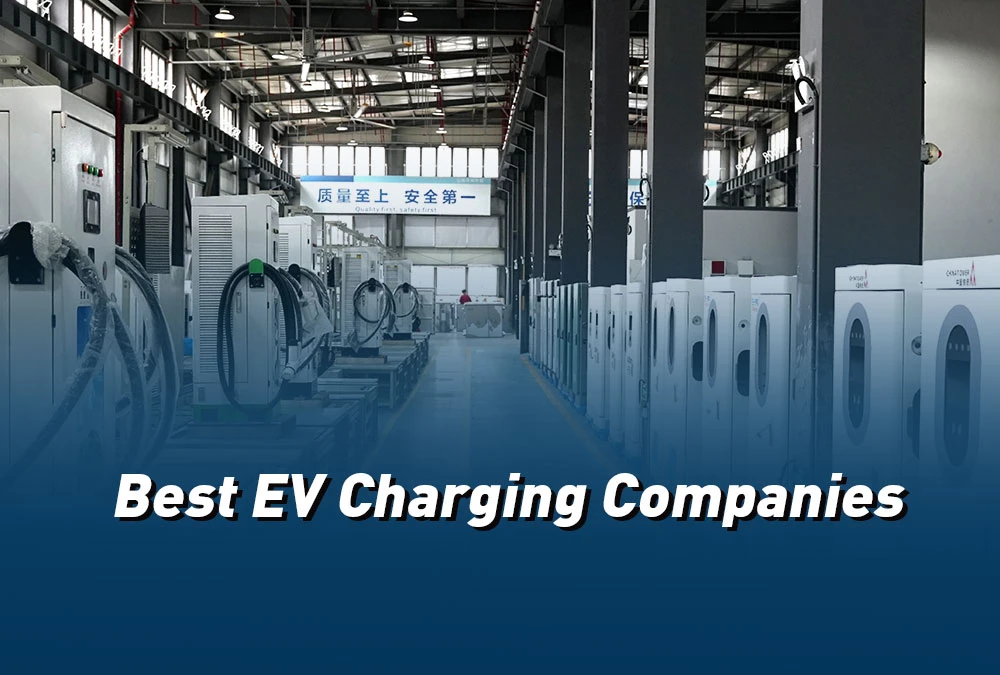
Quick Answer Box: Match Your Use Case to the Right Platform
| If You Need… | Consider Suppliers With… | Strategic Value to Buyer |
|---|---|---|
| Commercial Charging | Scalable DC hardware + open software ecosystems | Maximizes visitor dwell-time revenue while avoiding vendor lock-in. |
| Highway Fast Charging | High-power DC (150kW–350kW+) + 98%+ uptime guarantee | Eliminates range anxiety with rapid vehicle turnaround on main corridors. |
| Fleet Charging | Dynamic load management + depot scheduling software | Cuts peak demand utility charges while keeping delivery vehicles ready. |
| Public Networks | Robust hardware + flexible CPO platform integration | Drives recurring driver usage with reliable automated billing options. |
| EV + Solar + Storage | Integrated DC fast charger + EMS/BESS platform | Bypasses strict utility grid transformer limits without multi-year delays. |
Industry Insight: “There is no single best EV charging company for every project.” Selecting a vendor requires matching site transformer limits, vehicle dwell times, and revenue goals against hardware capabilities.
What Are the Best EV Charging Companies in the World?
According to theIEA Global EV Outlook 2025 report, public fast charging infrastructure grew over 30% globally in recent years, putting severe strain on utility distribution networks. Meanwhile, data from Precedence Research forecasts the global electric vehicle charging station market will top several hundred billion dollars by the 2030s. Market intelligence from Statzon also shows that commercial charging deployments are shifting heavily toward high-power DC fast charging setups. For commercial buyers, this fast growth creates a practical challenge: sorting through dozens of equipment providers claiming to be the best ev charging companies for commercial use or fleet operations.
What Does an EV Charging Company Actually Provide?
When you invest in commercial EV infrastructure, you are not just buying heavy metal cabinets and cables. A functional project requires physical hardware and digital control layers:
- EV charging hardware: AC wallboxes, dual-port pedestals, and high-voltage DC fast chargers built for harsh outdoor environments.
- Charging software & platforms: Cloud-based management dashboards that track real-time session power, execute remote resets, and manage dynamic power allocation.
- Payment & network services: Payment terminal integrations, credit card readers, RFID access tools, and open roaming protocols.
- Field support & maintenance: Turnkey site civil works, utility interconnect management, spare parts supply, and long-term service level agreements.
EV Charging Companies vs EV Charger Manufacturers vs Charging Networks
Understanding these business model differences prevents costly mistakes during hardware procurement:
- EV Charger Manufacturers: Companies like ABB or Siemens focus primarily on original equipment manufacturing. They manufacture physical EV charging hardware and supply units through engineering, procurement, and construction (EPC) contractors or regional distributors.
- EV Charging Network Operators (CPOs): Entities like ChargePoint or EVgo run subscription platforms, driver apps, and billing networks. They may design proprietary hardware or license equipment from third-party EV charging manufacturers.
- Turnkey EV Charging Solution Providers: Integrated companies that handle full engineering design, equipment procurement, energy storage integration, and long-term maintenance under one agreement.
Why the “Best” EV Charging Company Depends on Your Project
We base our advice on the Project-Fit Principle: The best ev charging companies are not simply the largest corporations by market cap. The best supplier is the equipment vendor whose power outputs, software openness, and warranty terms match your specific operational profile. Installing expensive highway-grade chargers at a hotel where cars park overnight will waste your budget on unnecessary capacity.
How We Ranked the Best EV Charging Companies
Instead of relying on marketing claims, we evaluated market leaders using our practical EV Charging Supplier Scorecard built on core engineering standards.
Charging Technology and Power Capability
We evaluated product lineups ranging from standard Level 2 AC units (7kW to 22kW) to multi-port DC fast chargers (60kW, 120kW, 180kW, 240kW, and 350kW+). Extra weight was given to vendors offering liquid-cooled systems and Megawatt Charging System (MCS) readiness for commercial trucks.
Reliability, Uptime and Charger Availability
Charger availability directly impacts customer satisfaction and revenue. We examined field failure rates, cabinet ingress protection ratings, modular power module redundancy, remote automated diagnostics, and spare parts supply chains.
Commercial Scalability and Global Deployment
Can the supplier deliver dozens of fast chargers within predictable lead times? We reviewed international safety certifications (UL, CE, IEC), manufacturing footprints, and track records across commercial EV charging station installations.
Software, OCPP and Smart Charging
Avoiding proprietary software lock-in is essential for long-term project flexibility. We prioritized hardware that natively supports Open Charge Point Protocol (OCPP 1.6-J and OCPP 2.0.1). This lets site hosts switch cloud management software without replacing physical equipment.
Total Cost of Ownership
A cheap initial purchase price often hides high operational costs down the road. We evaluate projects using our EV Charging TCO Model:
Service, Warranty and After-Sales Support
We reviewed standard factory warranty terms, component replacement pricing, commissioning engineer support, and local service networks across major commercial markets.
Top 10 Best EV Charging Companies in the World
1. ABB E-mobility — Best for High-Power Highway & Industrial Charging
Company Overview: ABB E-mobility is an industrial electrification giant with thousands of high-power DC fast charging cabinets deployed globally. Known for heavy-duty electrical engineering, ABB builds ultra-fast chargers engineered specifically for intensive commercial usage, highway travel corridors, and public transit depots. Their hardware features modular internal power electronics and advanced liquid cooling systems designed to deliver continuous high power in extreme ambient temperatures without thermal derating.
Key EV Charging Products: Terra AC wallbox, Terra 184 DC fast charger, Terra 360 (up to 360kW output), HVC Megawatt heavy vehicle charging platforms.
DC Fast Charging Capability: Excellent performance. Modular DC power cabinets scale smoothly from 50kW up to 360kW+ per unit.
EV Charging Software and Network: Native OCPP support with integrated ABB Ability remote diagnostics, fleet power balancing, and cloud management.
Main Markets and Applications: Highway transit corridors, commercial fleet yards, municipal bus electrification, public charging networks.
Key Strengths: High hardware engineering standards, global spare parts distribution, proven equipment reliability in extreme climates.
Potential Limitations: Premium capital hardware cost; longer procurement lead times for high-power liquid-cooled units.
Best suited for: Highway charging corridors and large enterprise electric fleet depots.
2. ChargePoint — Best for Turnkey Commercial SaaS & Turnkey Operations
Company Overview: ChargePoint operates one of the largest commercial EV charging networks in North America and Europe. Rather than focusing solely on hardware sales, ChargePoint delivers an integrated ecosystem combining robust charging stations with a feature-rich cloud software platform. Their commercial portfolio spans Level 2 AC chargers for workplace parking to liquid-cooled high-power DC fast chargers for commercial fleets and retail centers, backed by turnkey host management tools.
Key EV Charging Products: CP6000 series (Commercial Level 2 AC), Express 250, Express Plus modular high-power DC platform (up to 500kW).
DC Fast Charging Capability: Highly modular DC architecture designed to scale power capacity as site vehicle demand increases.
EV Charging Software and Network: Market-leading SaaS management software providing dynamic load control, driver payment processing, and host analytics.
Main Markets and Applications: Commercial real estate, corporate workplace parking, commercial fleet depots, municipal parking facilities.
Key Strengths: Outstanding host dashboard software, intuitive mobile app integration, flexible driver access management tools.
Potential Limitations: Recurring annual software subscription fees; proprietary network features can limit third-party software migration.
Best suited for: Commercial property owners and commercial ev charging companies for businesses.
3. Siemens (eMobility) — Best for Microgrids & Building Management Integration
Company Overview: Siemens eMobility leverages decades of power distribution expertise to deliver integrated commercial charging systems. Siemens connects charging hardware directly with medium-voltage switchgear, transformers, and building energy management systems (BMS). Their high-power DC fast charging cabinets feature dynamic power distribution and high power conversion efficiency, making them ideal for complex industrial sites and fleet facilities needing microgrid coordination.
Key EV Charging Products: VersiCharge AC wallboxes, SICHARGE D high-power DC fast charging platforms (150kW to 300kW).
DC Fast Charging Capability: High power density DC units featuring peak conversion efficiency above 96% and dynamic power sharing.
EV Charging Software and Network: Open OCPP architecture, native integration with Siemens Desigo building management software and grid interfaces.
Main Markets and Applications: Industrial complexes, transit hubs, logistics fleets, utility-scale charging infrastructure.
Key Strengths: Comprehensive electrical portfolio from switchgear to chargers, high industrial hardware durability, microgrid compatibility.
Potential Limitations: Technical software configuration can be complex, requiring certified field engineers during installation.
Best suited for: Industrial sites and logistics hubs requiring integrated power distribution.
4. EVBox — Best for European Commercial Real Estate & Workplace Charging
Company Overview: Netherlands-based EVBox is a prominent provider of flexible AC and DC commercial charging equipment across Europe and global export markets. EVBox focuses heavily on clean physical design, simple user interfaces, and modular internal components that simplify field maintenance. Their commercial AC and DC charging stations are built specifically for workplace parking lots, commercial retail venues, and fleet parking, backed by scalable cloud management tools.
Key EV Charging Products: EVBox Livo and BusinessLine AC wallboxes, Troniq Modular DC fast charger (30kW up to 240kW).
DC Fast Charging Capability: Modular DC power modules allowing step-by-step capacity upgrades from 30kW to 240kW within the same cabinet.
EV Charging Software and Network: EVBox Everon cloud management platform supporting full OCPP compliance, dynamic load balancing, and automated billing.
Main Markets and Applications: Corporate workplace parking, retail centers, commercial real estate, European public parking venues.
Key Strengths: Modern cabinet aesthetics, straightforward installation, strict compliance with European grid regulations.
Potential Limitations: Regional field technician coverage can vary outside major European commercial hubs.
Best suited for: Commercial real estate hosts and urban corporate workplace parking lots.
5. Kempower — Best for Dynamic Power Allocation & Multi-Satellite Fleet Depots
Company Overview: Kempower specializes in modular, dynamic DC fast charging technology designed for commercial fleet yards and busy public charging plazas. Rather than using rigid power cabinets attached to single dispensers, Kempower uses centralized DC power supply cabinets connected to multiple slim satellite charging posts. Their system dynamically distributes available power modules to plugged-in vehicles in 25kW increments based on real-time battery needs, maximizing site power efficiency.
Key EV Charging Products: Kempower C-Station power cabinets, S-Series satellite charging posts, C-Cabinet power units (up to 600kW per cluster).
DC Fast Charging Capability: Industry-leading dynamic load distribution across multiple vehicle dispenser posts from a central power bank.
EV Charging Software and Network: Kempower ChargEye cloud software designed specifically for fleet energy scheduling and remote site diagnostics.
Main Markets and Applications: Electric truck and bus fleet depots, logistics terminals, high-density public charging plazas.
Key Strengths: Efficient dynamic power sharing, user-friendly satellite screens, narrow footprint for tight fleet parking bays.
Potential Limitations: Product catalog focuses almost entirely on DC fast charging, making them less suited for basic AC wallbox projects.
Best suited for: High-density commercial fleet depots and space-constrained fast charging hubs.
6. Tritium — Best for Compact Liquid-Cooled Outdoor Fast Charging
Company Overview: Tritium is well known for pioneering fully sealed, liquid-cooled DC fast chargers engineered for harsh weather conditions. By removing air vents and fan filters, Tritium protects sensitive internal power electronics from salt air, dust, and debris. Their slim, narrow cabinets deliver high-power DC charging in tight retail parking lots, fuel stations, and auto dealerships where space is limited.
Key EV Charging Products: RTM75 (75kW compact DC charger), PKM150 (150kW modular DC fast charging platform).
DC Fast Charging Capability: High power output housed within narrow, liquid-cooled cabinet enclosures.
EV Charging Software and Network: Fully open OCPP compliant hardware compatible with major third-party CPO backend management tools.
Main Markets and Applications: Highway service plazas, retail center parking bays, auto dealerships, coastal public chargers.
Key Strengths: IP65 sealed cabinet design, small physical footprint, sleek exterior styling.
Potential Limitations: Recent corporate restructuring requires buyers to verify local service partner support and long-term spare parts lead times.
Best suited for: Space-constrained outdoor commercial parking spaces and coastal locations.
7. Blink Charging — Best for Flexible Owner-Operator & Revenue-Share Models
Company Overview: Blink Charging is a global EV charging provider that offers versatile hardware alongside flexible commercial deployment models. Unlike manufacturers that only sell hardware upfront, Blink provides host-owned, hybrid, and Blink-owned deployment options where site hosts share in charging session revenues. Their commercial portfolio includes heavy-duty Level 2 AC chargers and fast DC charging cabinets designed for commercial retail, hospitality, and residential properties.
Key EV Charging Products: Blink IQ 200 (Level 2 AC), 60kW to 300kW DC fast charging stations.
DC Fast Charging Capability: Versatile DC fast chargers built for mid-speed commercial stops and public fast charging hubs.
EV Charging Software and Network: Blink Network cloud software handling payment processing, remote monitoring, and host control dashboards.
Main Markets and Applications: Hotels, multi-family housing, shopping centers, municipal parking lots, auto dealerships.
Key Strengths: Flexible business models that help site hosts lower initial hardware capital expenditures.
Potential Limitations: Older legacy equipment showed mixed reliability, though newer hardware lines show significant build improvements.
Best suited for: Hospitality and retail venue hosts seeking shared-revenue deployment models.
8. Wallbox — Best for Smart Energy Management & Compact Commercial Charging
Company Overview: Wallbox is a fast-growing charger manufacturer known for compact design and integrated smart energy software. Beyond standard commercial Level 2 chargers, Wallbox has expanded into high-efficiency DC fast charging with its Supernova platform. Their technology emphasizes local load distribution, solar PV pairing, and bidirectional charging options, making them popular for workplace parking and commercial real estate properties.
Key EV Charging Products: Pulsar Max, Commander 2 (Commercial AC), Supernova DC fast charger (60kW to 180kW), Quasar bidirectional platform.
DC Fast Charging Capability: Modular, lightweight DC fast charger cabinets designed for quick field installations and high efficiency.
EV Charging Software and Network: myWallbox cloud platform featuring dynamic load management, solar charging integration, and corporate billing features.
Main Markets and Applications: Commercial workplaces, multi-tenant residential complexes, commercial parking venues, auto fleets.
Key Strengths: Intuitive touchscreen design, small hardware footprint, advanced local power balance controls.
Potential Limitations: Product catalog focuses primarily on low-to-mid power ranges rather than ultra-high-power highway corridors.
Best suited for: Workplace parking lots and commercial facilities with local solar generation.
9. Tesla (Supercharger / Commercial) — Best for Hardware Efficiency & Network Uptime
Company Overview: Tesla operates one of the most reliable high-power DC fast charging networks in the world. Originally built exclusively for Tesla vehicles, Tesla has expanded its ecosystem by opening stations to non-Tesla drivers and selling charging hardware to third-party commercial hosts. Their high-power DC cabinets feature simple plug-and-charge functionality, high power conversion efficiency, and continuous real-time monitoring that maintains uptime levels above 99%.
Key EV Charging Products: V3 and V4 Supercharger cabinets, Tesla Commercial Universal Wall Connector.
DC Fast Charging Capability: Industry-leading hardware efficiency, delivering up to 250kW to 350kW continuous DC output per post.
EV Charging Software and Network: Proprietary ecosystem now incorporating open payment access options for third-party commercial drivers.
Main Markets and Applications: Public highway charging plazas, commercial shopping centers, high-density fast charging hubs.
Key Strengths: Exceptional station reliability (>99% uptime), proven volume manufacturing, rapid charging performance.
Potential Limitations: Closed software architecture offers less customization compared to open-source OCPP platforms.
Best suited for: Busy public fast charging plazas focused on high vehicle throughput.
10. AnengJi — Best for OEM/ODM Customization & Flexible EV Charging Solutions
Company Overview: AnengJi is an emerging EV charging equipment manufacturer offering flexible AC and DC charging solutions for distributors, installers, commercial operators, and customized charging projects. With strong engineering capabilities and modern production lines, AnengJi builds scalable charging hardware designed to meet strict international standards. Their product range covers everything from compact commercial Level 2 wallboxes to liquid-cooled ultra-fast DC chargers, supporting customized enclosure branding and hardware modifications for OEM/ODM clients.
Key EV Charging Products: AC EV chargers from 7kW to 22kW, commercial DC fast chargers from 60kW to 320kW, 320kW–360kW high-power chargers for heavy-duty trucks and buses, 320kW–480kW high-power DC charging platforms, multi-gun charging stations, and liquid-cooled DC fast charging solutions.
DC Fast Charging Capability: Flexible multi-port DC units with rapid power-sharing capabilities.
EV Charging Software and Network: Supports OCPP-based charging management, network connectivity, remote monitoring, and smart charging functions, with options for Ethernet, 4G, APP, RFID, and other charging-management features depending on the model.
Main Markets and Applications: Commercial parking, auto fleet depots, charging station distributors.
Key Strengths: Broad AC and DC product coverage, high-power 320kW–480kW charging solutions, dedicated heavy-duty truck charging products, liquid-cooled high-power charging technology, OEM/ODM customization, and competitive factory-direct pricing.
Potential Limitations: Compared with established global charging brands, AnengJi has a smaller international brand footprint and less extensive public charging network coverage.
Best suited for: Distributors, charging operators, fleet owners, and project developers seeking customizable EV charging hardware, high-power commercial charging solutions, and flexible OEM/ODM cooperation.
Best EV Charging Companies Compared: Global Matrix
To help you evaluate top suppliers, this matrix outlines hardware capabilities, software options, and strategic benefits:
| Company | Primary Category | AC Range | DC Fast Range | Software Model | Strategic Value to Buyer |
|---|---|---|---|---|---|
| ABB E-mobility | Hardware OEM | 7kW – 22kW | 50kW – 360kW+ | Open OCPP / Agnostic | Cuts long-term maintenance costs through high industrial build quality. |
| ChargePoint | Network Operator / OEM | 7kW – 22kW | 60kW – 500kW | ChargePoint Cloud SaaS | Provides turnkey operations with minimal internal software oversight. |
| Kempower | Modular DC OEM | N/A | 50kW – 600kW Dynamic | Open OCPP / ChargEye | Dynamic load management avoids massive site transformer upgrade costs. |
| Siemens | Industrial OEM | 7kW – 22kW | 50kW – 300kW | Open OCPP / BMS Ready | Integrates smoothly across medium-voltage power distribution systems. |
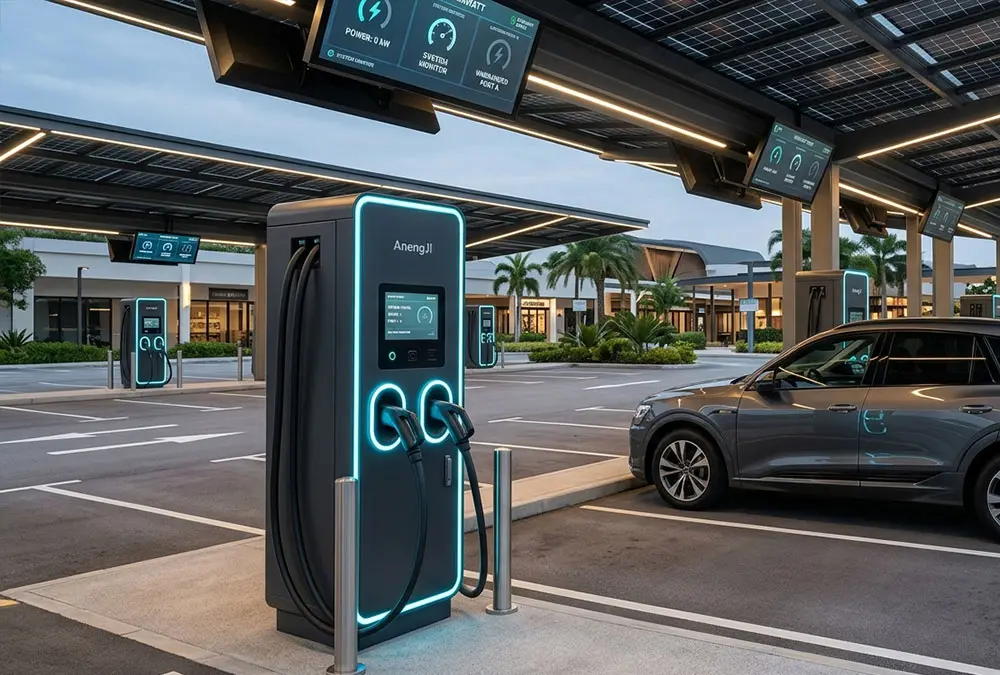
| AnengJi | Custom OEM/ODM Manufacturer | 7kW – 22kW | 60kW – 480kW Liquid-Cooled | Open OCPP / Flexible Cloud | Offers factory-direct pricing and custom OEM branding flexibility. |
Which EV Charging Company Is Best for Different Applications?
Best EV Charging Companies for Commercial Use
Retail plazas, hospitality venues, and multi-tenant offices need easy-to-use charging equipment. Look for best ev charging manufacturers for commercial charging stations like ChargePoint, EVBox, or AnengJi. These suppliers offer clear digital payment displays, credit card terminals, and open OCPP software interfaces.
Best EV Charging Companies for Fleets
Commercial fleet operations managing delivery vans or buses care most about equipment uptime and controlling electricity demand charges. Vendors like Kempower and ABB stand out by offering dynamic load sharing. Their power cabinets route surplus energy automatically to vehicles that need it most without tripping site breakers.
Best EV Charging Companies for Highway Charging
Highway service plazas require ultra-fast 180kW to 350kW+ DC fast chargers built for heavy daily use. Companies like ABB, Tesla, and Siemens lead this space. Their liquid-cooled cables and power cabinets keep uptime above 98% during busy holiday travel periods.
Best EV Charging Companies for Electric Trucks
Heavy-duty electric truck depots require Megawatt Charging System (MCS) infrastructure capable of delivering high currents above 1,000 Amps. Industrial suppliers like ABB, Siemens, and AnengJi provide liquid-cooled 320kW to 480kW charging units built for heavy transport logistics yards.
Best EV Charging Companies for Public Charging Networks
Charge Point Operators (CPOs) expanding public networks need open software access, credit card payment terminals, and roaming protocols. Equipment suppliers like AnengJi, Tritium, and Autel offer open-source hardware that integrates smoothly into major CPO cloud networks.
How to Choose the Best EV Charging Company for Your Project
Use our practical 5-Step EV Charging Supplier Fit Model to guide your procurement decision:
Step 1 — Define Your Charging Application
Identify whether your site serves overnight fleet parking, commercial retail visitors, or fast highway transit. This helps determine whether Level 2 AC chargers or high-power DC fast charging cabinets are required.
Step 2 — Determine the Required Charging Power
| Application | Typical Power Requirement | Recommended Hardware |
|---|---|---|
| Workplace / Hotel Overnight Dwell | 7kW – 22kW | Level 2 AC Commercial Charger |
| Commercial Retail / Shopping Venues | 60kW – 120kW | Dual-Port DC Fast Charger |
| Highway Corridors & Transit Plazas | 180kW – 350kW+ | Ultra-Fast High Power DC System |
| Electric Truck & Bus Fleet Depots | 320kW – 480kW+ / MCS | Liquid-Cooled Megawatt Fast Platform |
Step 3 — Evaluate Grid Capacity and Site Infrastructure
High-power DC fast charging stations place heavy loads on local grid connections. Review transformer capacity, switchgear room, and utility interconnect schedules early in the planning process.
Step 4 — Evaluate Software and Energy Management
Choose chargers built on open OCPP standards. Make sure the software supports smart load balancing, automated billing, dynamic pricing, and remote diagnostics.
Step 5 — Compare Total Cost of Ownership
Look beyond hardware prices. Factor in utility demand charges, installation costs, annual software fees, and maintenance expenses to calculate true lifetime project costs.
What Should Businesses Look for in an EV Charging Supplier?
When reviewing quotes from commercial EV charger manufacturers, look closely at these core technical areas:
- Hardware Reliability & Service SLAs: Insist on clear written performance guarantees for equipment uptime and spare parts availability.
- OCPP Software Compliance: Choose equipment supporting open OCPP 1.6-J or OCPP 2.0.1 protocols to avoid software lock-in.
- Modular Power Modules: Modular DC cabinets allow field technicians to replace individual power modules quickly, keeping stations operating during repairs.
- Commissioning & Technical Support: Work with vendors that provide on-site engineering support during utility interconnect testing.
How Much Does an EV Charging Station Cost?
Total commercial station costs include hardware, electrical upgrades, and software services:
- Commercial Level 2 AC Chargers: $1,500 – $4,500 per port (Hardware cost).
- 60kW – 120kW DC Fast Chargers: $25,000 – $55,000 per unit.
- 180kW – 350kW+ High-Power DC Chargers: $75,000 – $150,000+ per cabinet.
- Electrical Infrastructure & Civil Works: $15,000 to over $100,000, depending on transformer upgrades, trenching, and cabling work.
- Software & Cloud Network Fees: $250 – $900 per port annually for management dashboards and cellular data.
EV Charging Infrastructure: What You Need Beyond the Charger
Installing commercial fast charging stations requires a complete power distribution setup beyond the charger cabinet itself:
- Medium-voltage step-down electrical transformers
- Main switchgear distribution panels and circuit breakers
- Underground trenching, heavy copper cables, and concrete pads
- Cellular network gateways for secure management connectivity
- Battery energy storage systems (BESS) to lower peak utility demand charges
Can Battery Energy Storage Improve EV Charging Projects?
Yes, adding energy storage can turn a grid-constrained site into a profitable fast-charging station. High-power DC fast charging creates sudden electrical spikes that trigger expensive utility demand charges. An on-site battery energy storage system (BESS) charges during low-demand hours and discharges during peak fast charging sessions, protecting your operating margins.
Commercial Storage Options for Fast Charging Stations
Combining battery energy storage with DC fast charging helps site host bypass multi-year grid upgrade delays. Here is how key storage sizes fit commercial applications:
| BESS Capacity | Target Charging Setup | Technical Feature | Strategic Buyer Benefit |
|---|---|---|---|
| 100kWh BESS | 1–2 dual-port 60kW DC Chargers | Compact air-cooled or liquid-cooled cabinet | Avoids costly step-down transformer upgrades for small commercial lots. |
| 261kWh BESS | 2–4 multi-port 180kW DC Chargers | High energy density liquid-cooled cabinet | Delivers longer backup discharge times to support back-to-back fast charging sessions. |
| 418kWh BESS | Medium fleet plazas / Highway hubs | Outdoor cabinet with integrated PCS/BMS | Shaves high demand utility charges during peak afternoon charging surges. |
| 1MWh Containerized BESS | Heavy electric truck depots / Transit hubs | High-power containerized utility interface | Enables high-power depot charging in grid-constrained locations. |
EV Charging Company Red Flags: What Should You Avoid?
- Proprietary Software Lock-In: Avoid suppliers using closed protocols that prevent you from switching cloud management software.
- Comparing Chargers Only by Kilowatt Ratings: Cheap fast chargers built with low-grade power electronics can overheat under continuous load and derate output.
- No Local Spare Parts Support: Make sure the vendor maintains local inventory for replacement cables, screen displays, and internal power modules.
- Vague Warranty Terms: Watch out for warranties that exclude liquid cooling components or require you to ship heavy cabinets overseas for service.
EV Charging Company Buying Checklist
Use this practical checklist to evaluate commercial EV charger suppliers during procurement:
1. Product Qualification
☐ Complete safety certifications (UL 2202, CE, IEC 61851, IEC 62196)
☐ Official OCPP 1.6-J or OCPP 2.0.1 compliance certificates
☐ Ingress protection ratings (IP54/IP55/NEMA 3R minimum)
2. Commercial Qualification
☐ Clear warranty terms covering internal power electronics
☐ Fixed spare parts pricing and local warehouse availability
☐ Reliable factory manufacturing lead times
3. Project & Support Qualification
☐ Technical support for utility grid interconnect modeling
☐ Field engineer assistance during site commissioning
☐ Guaranteed response times for technical service calls
Frequently Asked Questions About the Best EV Charging Companies
What is the best EV charging company in the world?
There is no single best vendor for every use case. ABB leads in high-power industrial hardware, ChargePoint excels in commercial software management, and AnengJi provides flexible OEM/ODM manufacturing for custom projects.
Which company makes the best EV chargers?
For commercial sites like retail lots and office parking, providers like ChargePoint, Autel Energy, and AnengJi offer a solid combination of clear screens, payment processing, and open OCPP management tools.
What are the best DC fast charging companies?
ABB, Kempower, Tesla, and AnengJi are leading DC fast charging providers. They build liquid-cooled cabinets and dynamic power sharing systems designed for high-turnover charging hubs.
Which EV charging company is best for businesses?
Businesses benefit from vendors offering open OCPP software and flexible payment tools. ChargePoint, EVBox, and AnengJi are well suited for commercial real estate properties and workplace parking venues.
Which EV charging company is best for fleets?
Fleet operators prioritize dynamic power balancing and depot software tools. Kempower, Siemens, and AnengJi provide tailored fleet solutions that prevent utility grid overloads during overnight charging sessions.
What is the difference between an EV charging company and a charger manufacturer?
A charger manufacturer builds the physical charging hardware and power electronics. An EV charging company or network operator manages cloud software, billing networks, and driver mobile apps.
How do I choose an EV charging station supplier?
Match the vendor’s hardware output to your site dwell times, verify open OCPP compliance, request uptime guarantees, and check local spare parts availability before signing procurement contracts.
How much does commercial EV charging cost?
Commercial Level 2 AC chargers cost $1,500 to $4,500 per port. Mid-power DC fast chargers range from $25,000 to $55,000, while high-power 180kW+ cabinets cost $75,000 to over $150,000, plus site installation expenses.
Are EV charging networks better than independent charging stations?
Integrated charging networks simplify driver payments, but independent charging stations running open OCPP software give host sites complete freedom to switch cloud software providers down the road.
What should I look for in a commercial EV charger manufacturer?
Look for genuine safety certifications, modular power module design, liquid cooling options for fast chargers, factory commissioning support, and open software interfaces.
Which EV Charging Company Is Right for Your Project?
Finding the right equipment partner requires balancing grid constraints, vehicle turnover rates, and long-term expansion plans against initial hardware costs.
Plan Your Commercial EV Infrastructure Project
Whether you are installing high-power highway fast chargers or adding battery storage to avoid expensive utility demand charges, our engineering team can help optimize your electrical layout.
Commercial EV Charging Solutions from AnengJi
AnengJi supplies high-power commercial EV chargers and integrated energy storage solutions tailored for global distributors and project developers:
- DC Fast Charging Solutions for Commercial Projects: Multi-port 60kW to 320kW DC fast chargers equipped with open OCPP software interfaces.
- High-Power & Liquid-Cooled Hardware: 320kW–480kW liquid-cooled charging platforms designed for commercial fleets, heavy trucks, and bus depots.
- EV Charging + Battery Storage Integration: 100kWh, 261kWh, and 418kWh BESS platforms that shave peak utility demand charges.
- OEM and ODM Customization: Tailored enclosure branding, custom cabinet styling, and flexible hardware configurations for commercial operators.
Talk to an EV Charging Engineer
Related Article
- How to Choose the Best EV Fleet Charging Solution | Fleet Depot Guide
- Commercial Electric Car Charging Station Cost: 2026 Installation Guide
- Top 10 Electric Car Charging Station Manufacturers in China (2026 Guide)
- Benefits of Commercial EV Charging Stations for Businesses | ROI & Strategy
- Commercial EV DC Fast Charging Solutions | Modular Stations & BESS
- Uzbekistan Project:180kW-240kW DC Fast Charging Station
 https://anengjipower.com/wp-content/uploads/2026/06/epc-vs-turnkey-solar-project-bess.webp
675
1000
Charging Station Engineer
https://anengjipower.com/wp-content/uploads/2025/09/anengji-dc-fast-charging-station-manufacturer-and-supplier-logo-white-1.png
Charging Station Engineer2026-06-22 07:16:042026-06-24 07:13:17What Is the Difference Between EPC and Turnkey Contract Models in Energy Projects?
https://anengjipower.com/wp-content/uploads/2026/06/epc-vs-turnkey-solar-project-bess.webp
675
1000
Charging Station Engineer
https://anengjipower.com/wp-content/uploads/2025/09/anengji-dc-fast-charging-station-manufacturer-and-supplier-logo-white-1.png
Charging Station Engineer2026-06-22 07:16:042026-06-24 07:13:17What Is the Difference Between EPC and Turnkey Contract Models in Energy Projects? https://anengjipower.com/wp-content/uploads/2026/06/anengji-commercial-solar-plus-storage-benefits-site.webp
675
1000
Charging Station Engineer
https://anengjipower.com/wp-content/uploads/2025/09/anengji-dc-fast-charging-station-manufacturer-and-supplier-logo-white-1.png
Charging Station Engineer2026-06-20 14:34:102026-06-20 14:37:43What Are the Top Benefits of Solar Battery Storage in Factories?
https://anengjipower.com/wp-content/uploads/2026/06/anengji-commercial-solar-plus-storage-benefits-site.webp
675
1000
Charging Station Engineer
https://anengjipower.com/wp-content/uploads/2025/09/anengji-dc-fast-charging-station-manufacturer-and-supplier-logo-white-1.png
Charging Station Engineer2026-06-20 14:34:102026-06-20 14:37:43What Are the Top Benefits of Solar Battery Storage in Factories?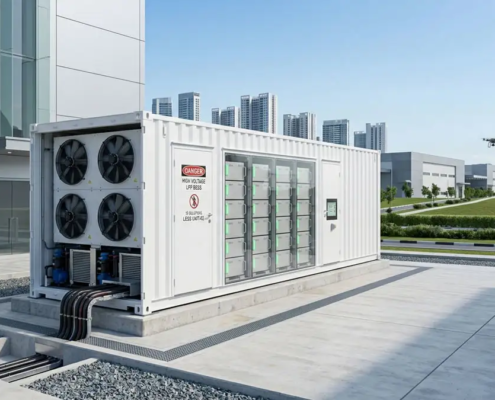 https://anengjipower.com/wp-content/uploads/2026/06/modular-commercial-solar-battery-storage-cabinet.webp
675
1000
Charging Station Engineer
https://anengjipower.com/wp-content/uploads/2025/09/anengji-dc-fast-charging-station-manufacturer-and-supplier-logo-white-1.png
Charging Station Engineer2026-06-18 09:16:522026-07-03 03:05:13What Is Solar Battery Storage? Complete C&I Engineering Guide
https://anengjipower.com/wp-content/uploads/2026/06/modular-commercial-solar-battery-storage-cabinet.webp
675
1000
Charging Station Engineer
https://anengjipower.com/wp-content/uploads/2025/09/anengji-dc-fast-charging-station-manufacturer-and-supplier-logo-white-1.png
Charging Station Engineer2026-06-18 09:16:522026-07-03 03:05:13What Is Solar Battery Storage? Complete C&I Engineering Guide


Leave a Reply
Want to join the discussion?Feel free to contribute!