
Introduction
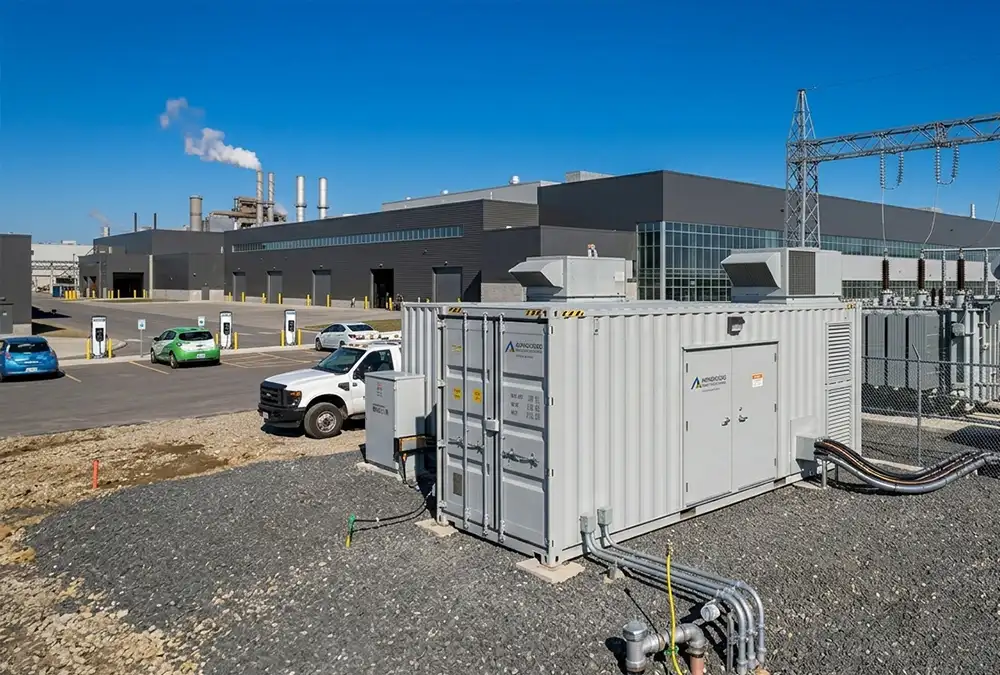
Rising electricity prices, increasing demand charges, grid capacity constraints, and sustainability targets are forcing manufacturers to rethink their energy strategies. A 1MW battery storage system for manufacturing plants has become a practical solution for factories seeking to reduce operating costs, improve energy resilience, support renewable energy integration, and avoid costly grid upgrades. By mitigating instantaneous load sags and absorbing excessive baseline overhead, this high-capacity configuration alters how industrial facilities interact with localized transmission networks.
This guide explores how industrial battery storage works, where it delivers the highest value, how much it costs, and how manufacturers can maximize ROI from a 1MW BESS deployment. For asset managers overseeing heavy automated machinery, stamping presses, or precision chemical processes, integrating a commercial and industrial battery storage solution represents an essential transition toward decentralized grid resilience and direct fiscal control.
Deploying energy infrastructure requires understanding the fine tolerances of power engineering. Throughout this analytical manual, we will evaluate the architectural requirements of industrial energy storage setups, investigate thermal control strategies, and review the practical financial payback metrics driving modern smart factories.
—
Why Industrial Manufacturing Facilities Need Battery Storage Systems
Rising Energy Costs in Industrial Manufacturing
Global baseline electricity rates for heavy industry continue to escalate under shifting regulatory frameworks and commodity volatility. Manufacturing plants operating multi-shift schedules are highly vulnerable to peak pricing bands, making grid reliance an operational financial risk that can erode bottom-line manufacturing margins.
High Demand Charges and Peak Power Consumption
Commercial utilities penalize facilities for short-duration power draw spikes via localized demand fees. These peak penalties, calculated from the highest 15-minute consumption window within a billing cycle, frequently account for up to half of an industrial facility’s total energy expenditure, even if those spikes occur only occasionally during automated tool startups.
Grid Capacity Limitations Impacting Factory Expansion
When engineering teams seek to expand a facility, install high-power production machinery, or add processing lines, local utilities often report that the substation lacks the spare transformer capacity required to increase the building’s allocated power draw. This bottleneck can delay physical expansion plans for months or years while awaiting expensive utility-side equipment upgrades.
Increasing Pressure to Meet Sustainability and ESG Goals
Corporate mandates require modern production complexes to document verifiable pathways toward carbon reductions. Global supply chains increasingly evaluate Tier-1 suppliers based on localized emissions profiles, transforming environmental compliance from an abstract target into an operational necessity for securing enterprise contracts.
The Growing Need for Energy Resilience and Backup Power
Micro-sags, transient voltage drops, and brief power disruptions can stall automated assembly lines, resulting in damaged workpieces, corrupted material batches, and extensive clearing procedures. Installing a dedicated stationary energy reserve provides a reliable defense against external transmission line disruptions.
—
What Is a 1MW Battery Storage System for Industrial Manufacturing?
Understanding MW vs MWh in Industrial Energy Storage
Isolating electrical metrics is critical for accurate facility engineering:
- 1MW (Megawatt): The system’s power rating, defining the instantaneous electrical output capacity of the internal power conversion inverters. This determines the maximum load size the system can support or suppress at any given moment.
- MWh (Megawatt-hour): The energy capacity metric, specifying the total quantity of usable power held within the battery modules. This dictates the duration over which the system can maintain its output before requiring a recharge cycle.
Typical 1MW Industrial BESS Configurations
1MW/1MWh Battery Storage System
A short-duration, high-power asset engineered for rapid discharge cycles. This setup is optimized for facilities requiring immediate, brief load suppression during heavy motor starts, transient voltage ride-through buffering, and fast frequency response control.
1MW/2MWh Battery Storage System
The standard benchmark configuration for an industrial battery energy storage system for factories. Balancing output power with a continuous 2-hour discharge capability, it perfectly matches the typical duration of high-tariff demand windows utilized by regional grid operators.
1MW/4MWh Battery Storage System
A deep energy configuration optimized for extended duration backup, intensive load shifting applications across long manufacturing shifts, and maximum storage capacity for large-scale, on-site solar arrays.
How a Manufacturing Battery Storage System Works
The operational loop relies on high-speed bidirectional electronics. When charging, the asset pulls AC power from the distribution panel, passing it through conversion modules that rectify the current into high-voltage DC for the battery cells. During discharge, the system draws DC power from the cells and inverts it back into clean AC power, synchronized precisely with the facility’s localized distribution frequency.
Key Functions Within an Industrial Energy Management Strategy
The primary goal is establishing a flexible electrical barrier between the external utility connection and the factory floor. By monitoring real-time power consumption, automated systems determine when to store power, when to maintain reserves, and when to discharge energy to optimize factory energy costs.
—
Battery Energy Storage System Components in Industrial Manufacturing
Battery Cells, Modules, and Battery Racks
The system’s foundation consists of sealed lithium cells grouped into series-connected modules to achieve stable working voltages. These modules are installed into heavy-duty vertical steel racks configured with integrated busbars to handle continuous heavy cycling without mechanical degradation.
Battery Management System (BMS)
A critical multi-tier control system. Local controllers constantly monitor cell-level voltages, internal resistance, and temperatures. This localized telemetry feeds into a master BMS unit that manages structural contactors and prevents operation outside safe thresholds.
Power Conversion System (PCS)
The electronic core of the installation, consisting of industrial bidirectional four-quadrant inverter modules. The PCS actively manages active and reactive power levels, provides voltage stabilization, and enables black-start capabilities for independent operation during total grid outages.
Energy Management System (EMS)
The system’s intelligent software engine. The EMS tracks factory power draw patterns, reads time-of-use tariff rates, and applies automated algorithms to execute economic optimizations without requiring daily intervention from the facility’s engineering staff.
Liquid Cooling System and Thermal Management
An essential system designed to maintain cell temperatures within narrow operating limits. Modern high-density enclosures pass a glycol-water mixture through cooling plates mounted inside the battery modules, achieving precise temperature uniformity and reducing auxiliary fan energy consumption.
Fire Protection and Safety Systems
Multi-layered fire mitigation equipment including early gas aspiration detection, specialized gas-flooding suppression agents, automatic ventilation isolation dampers, and structural thermal barriers designed to isolate cell compartments.
Remote Monitoring and Intelligent Control Platforms
Industrial SCADA connection gateways utilizing Modbus TCP or IEC 61850 communication networks. This link sends full system data to off-site operation hubs, allowing continuous safety tracking and remote software optimizations.
—
How 1MW Battery Storage Systems Reduce Manufacturing Energy Costs
Peak Shaving and Demand Charge Reduction
When heavy industrial machinery cycles online, creating a sudden peak in electrical consumption, the energy storage system immediately discharges power to handle the spike locally. This prevents the factory from drawing excessive power from the grid, successfully keeping measured peak utility charges below high-tariff thresholds.
Load Shifting for Lower Electricity Rates
By shifting consumption windows, facilities can lower their energy costs without altering production schedules. The system draws grid power to charge its batteries during low-cost nighttime periods, releasing that stored energy to power the factory floor during expensive peak operational hours.
Energy Arbitrage Opportunities
Energy arbitrage involves buying and selling power to capitalize on fluctuating spot market prices. Facilities with a 1MW BESS for industrial peak shaving can purchase cheap off-peak power and deploy it when grid pricing surges, capturing a predictable spread on their daily utility expenses.
Optimizing Time-of-Use (TOU) Electricity Pricing
Many regional utilities apply variable time-of-use rate structures throughout the day. Automated control software tracks these tariff schedules, configuring the battery system to discharge precisely when rates peak, shielding the facility from high electricity costs.
Reducing Dependence on Expensive Grid Power
Establishing an on-site energy buffer reduces the factory’s reliance on external utility grids during high-cost generation periods, enabling plant managers to stabilize their energy expenses over the long term.
—
Industrial Battery Storage Benefits for Manufacturing Facilities
- Lower Operational Energy Costs: Reduces overall electricity bills by combining peak load reduction, load shifting, and energy arbitrage strategies.
- Improved Energy Reliability and Power Quality: Filters out utility voltage fluctuations, micro-sags, and transient electrical noise, protecting sensitive production machinery.
- Increased Production Continuity During Grid Disturbances: Delivers seamless, high-speed backup power during unexpected grid sags, avoiding costly line restarts and material waste.
- Deferred or Eliminated Grid Upgrade Costs: Enables immediate facility and equipment expansions using existing electrical connections, bypassing expensive substation upgrades.
- Better Integration with Renewable Energy Systems: Stores excess daytime solar production, turning intermittent green energy into a dependable asset for overnight manufacturing processes.
- Reduced Carbon Emissions and ESG Compliance: Displaces diesel generator use and optimizes energy usage profiles to meet corporate sustainability goals and emissions metrics.
- Enhanced Energy Independence: Gives plant managers direct control over their energy supply, insulation from market volatility, and the ability to participate in demand response programs.
—
Peak Shaving Battery Storage Solutions for Industrial Manufacturing
What Is Peak Shaving?
Peak shaving is an energy management strategy used to flatten a facility’s short-duration power consumption spikes. Rather than drawing all peak electrical loads directly from the utility grid, an on-site battery storage system discharges power strategically to keep the building’s net grid draw smooth and predictable.
How Peak Demand Charges Affect Factory Electricity Bills
Industrial rate structures heavily penalize high, sudden power draws. If a facility activates heavy machinery that spikes consumption to 2,500kW for just 15 minutes, the utility bills the plant based on that peak rate for the entire month, drastically increasing operational costs.
How a 1MW BESS Reduces Peak Loads
The system monitors incoming power levels at the main breaker panel. If the factory load exceeds a pre-set kilowatt threshold, the storage container responds within milliseconds, injecting power locally to absorb the peak demand spike and maintain a flat grid profile.
Real-World Peak Shaving Example for Manufacturing Plants
Consider a mid-sized metal stamping plant with a steady baseline load of 800kW. When the heavy automated stamping presses cycle on, consumption repeatedly spikes to 1,800kW for short periods. By deploying a 1MW system, the plant can handle that 1,000kW spike internally, keeping its measured grid load flat at 800kW and saving thousands in monthly demand fees.
Typical Savings Achieved Through Peak Demand Management
Depending on the local utility’s rate structure, capping peak demand charges can reduce an industrial facility’s monthly electricity bill by 20% to 40%, delivering a predictable line-item cost reduction that directly improves manufacturing competitiveness.
—
Solar Plus Battery Storage Systems for Industrial Manufacturing
Why Factories Are Combining Solar and Battery Storage
Installing large rooftop solar arrays allows factories to generate low-cost, zero-carbon energy. However, solar generation rarely aligns perfectly with production shift schedules. Pairing solar with a 1MW system solves this mismatch, ensuring green energy can be saved and used whenever the plant needs it most.
Capturing Excess Solar Energy
During weekend shutdowns or mid-day production lulls, a factory’s solar array often generates more power than the building can absorb. A solar plus storage system captures this excess clean energy, preventing power wastage and keeping it ready for high-demand production hours.
Increasing Renewable Energy Self-Consumption
Exporting excess solar energy back to the utility grid under low feed-in credits provides minimal financial return. Storing that clean energy locally allows manufacturing plants to maximize their solar self-consumption, using their own green energy to power heavy machinery during expensive peak utility rate windows.
Reducing Grid Dependency During Production Hours
Pairing solar generation with stationary energy storage allows factories to operate independently from the utility grid for extended periods, reducing energy costs and protecting production lines from external grid instability.
Typical Solar + Storage Configurations for Industrial Sites
Most industrial installations utilize a DC-coupled configuration for new, integrated projects to maximize round-trip efficiency, or an AC-coupled configuration to easily retrofit a 1MW system into an existing rooftop solar array without altering current inverters.
—
Industrial Battery Storage Applications Across Manufacturing Sectors
Automotive Manufacturing Plants
Automotive assembly facilities use large robotic welding lines and stamping presses that create sudden, heavy power demands. Installing peak shaving storage systems helps flatten these sharp consumption spikes, stabilizing local factory voltages and lowering demand charges.
Food and Beverage Processing Facilities
Food processing plants rely on continuous cooling, mixing, and baking systems where a power interruption can ruin large material batches. Deploying an on-site energy storage system ensures high-speed backup power, protecting production continuity and product safety.
Electronics and Semiconductor Manufacturing
Semiconductor fabrication cleanrooms require extremely clean, stable power, as even brief voltage sags can disrupt sensitive lithography equipment. A 1MW system acts as a precision power quality filter, safeguarding delicate electronics manufacturing processes.
Metal Fabrication and Steel Processing Plants
Arc furnaces, heavy laser cutters, and extrusion machinery create heavy, irregular electrical loads that can trigger power quality penalties from utilities. Stationary battery containers absorb these dynamic load shifts locally, keeping operations within utility compliance limits.
Chemical and Pharmaceutical Factories
Chemical processing requires precise temperature controls and continuous mixing over long production cycles. Integrating a 1MW energy storage asset delivers reliable backup power, ensuring critical heating and ventilation loops remain online during external outages.
Logistics, Warehouses, and Distribution Centers
Modern automated logistics hubs use extensive sorting systems and large electric forklift fleets that create heavy charging demands. Utilizing a battery storage container allows facilities to support fast-charging infrastructure without overloading local utility connections.
Industrial Parks and Multi-Tenant Facilities
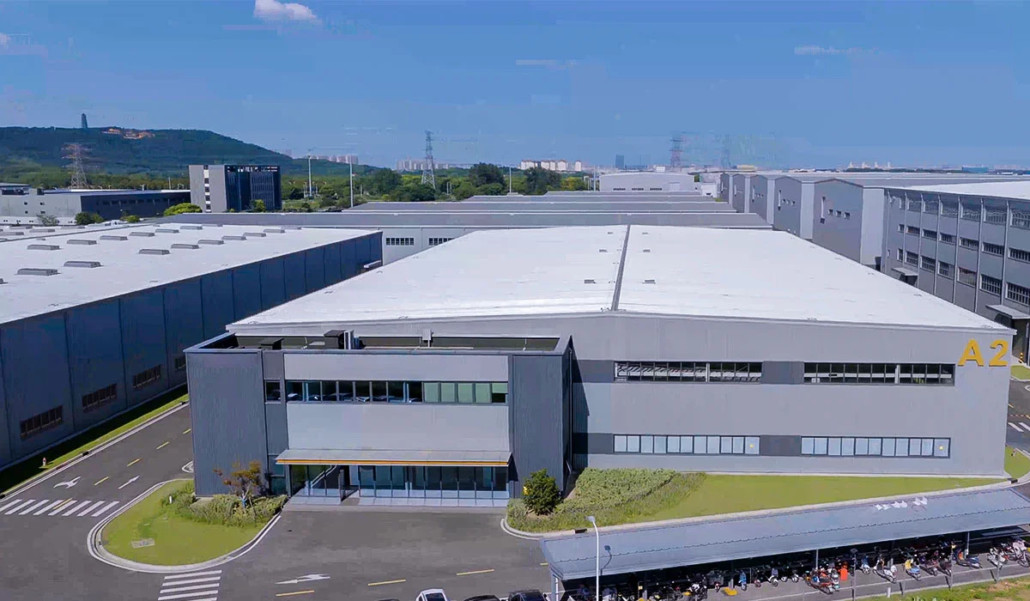
Centralized industrial parks can install a shared 1MW battery system to manage peak loads collectively across multiple tenants, lowering energy costs for all occupants and optimizing the park’s shared substation capacity.
Containerized Battery Storage Systems for Industrial Manufacturing
What Is a Containerized BESS?
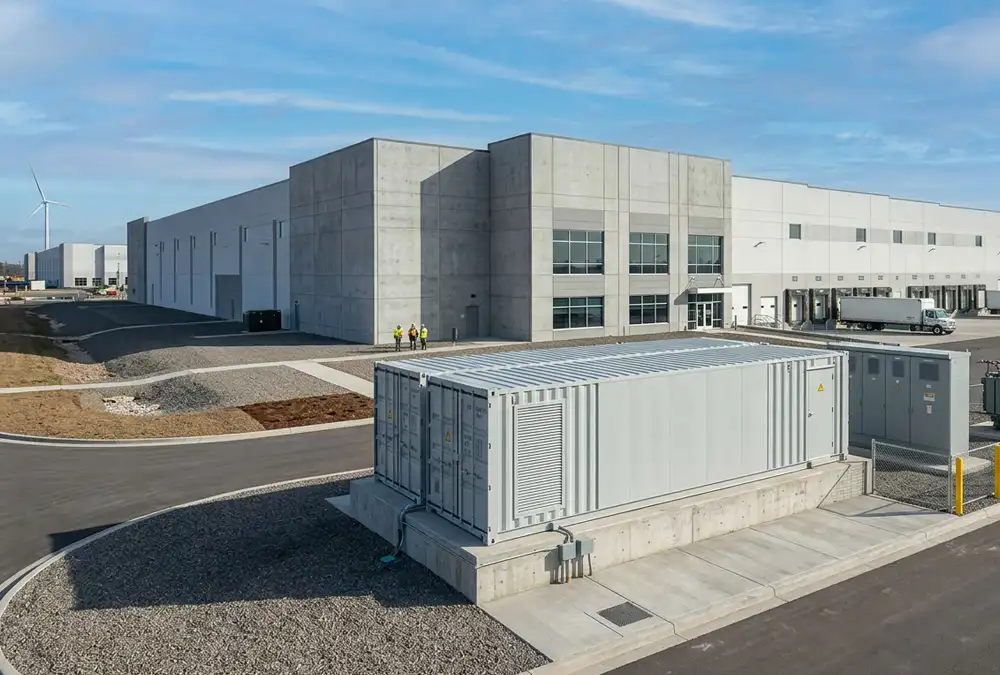
A containerized battery energy storage system is an all-in-one, factory-integrated energy solution housed inside a weatherproof maritime-style steel enclosure. This pre-wired configuration contains the battery racks, cooling systems, power inverters, and fire protection equipment in a single deployable asset.
Advantages of Containerized Energy Storage Solutions
Utilizing an outdoor containerized configuration saves valuable indoor floor space for production machinery, simplifies site planning, and keeps high-voltage electrical equipment outside the main factory building for enhanced safety.
Faster Deployment and Simplified Installation
Because containerized systems are pre-assembled and tested at the factory, site installation is exceptionally fast. Once the concrete pad foundation is ready, placing the container, completing the electrical wiring, and commissioning the system typically takes just a few weeks.
Scalability for Future Factory Expansion
Containerized systems feature modular modular architectures. If a factory expands its production capacity or adds new machinery later, engineers can easily connect additional battery containers in parallel to scale power and capacity as needed.
Indoor vs Outdoor Installation Considerations
While small indoor battery rooms require complex HVAC retrofits and strict building fire code compliance, outdoor containerized installations provide a safer, self-contained solution that simplifies ongoing maintenance and permitting.
—
How to Size a 1MW Battery Storage System for a Manufacturing Plant
Assessing Factory Load Profiles
Sizing begins by collecting detailed 15-minute interval utility data for the facility over a full year. This data allows engineers to map the plant’s daily load curves, identify peak consumption windows, and determine the exact battery capacity needed to optimize performance.
Understanding Peak Demand Requirements
Engineers analyze the shape, duration, and height of the factory’s highest power spikes. This dictates whether the project requires a high-power system for short-duration peaks or a larger capacity system to handle extended high-demand windows.
Calculating Required Battery Capacity
The total capacity requirement is calculated by multiplying the targeted load reduction (in kW) by the duration of the utility’s peak tariff window (in hours), ensuring the system has sufficient energy reserves to complete its daily cycling routines safely.
Choosing Between 1MWh, 2MWh, and 4MWh Systems
Factories with brief, intense load spikes from heavy motor starts typically deploy a 1MWh system. Facilities facing extended peak pricing windows usually select a standard 2MWh configuration, while plants prioritizing long-duration backup power choose a deep 4MWh system.
Planning for Future Production Growth
Sizing models should incorporate planned facility upgrades, new production lines, or the addition of fleet EV charging hubs, ensuring the baseline system is engineered to support future capacity scaling.
Common Sizing Mistakes Manufacturers Should Avoid
Avoid undersizing the energy duration, which can leave the battery depleted before a peak tariff window ends, or oversizing the system beyond the factory’s actual load profile, which increases upfront capital costs without delivering additional financial return.
—
1MW Battery Storage System Cost for Industrial Manufacturing
Average Cost of a 1MW Industrial Battery Storage Project
Capital expenditure for fully integrated industrial projects is heavily influenced by the system’s energy duration depth. Based on industry data from recent energy infrastructure reports, standard turnkey market pricing ranges fall within the following brackets:
- 1MW/1MWh System Setup: $350,000 to $450,000 (Optimized for short-duration peak load suppression)
- 1MW/2MWh System Setup: $550,000 to $730,000 (The preferred benchmark for most manufacturing facilities)
- 1MW/4MWh System Setup: $950,000 to $1,300,000 (Deep energy duration configuration)
Major Cost Components
A typical turnkey budget breakdown for a 1MW containerized battery energy storage system cost estimation includes several key segments:
| Component Segment | Percentage of Total Project Budget | Engineering Inclusions |
|---|---|---|
| Battery Cells and Battery Packs | 50% – 55% | High-density Lithium Iron Phosphate (LFP) prismatic cell packs, vertical racking, module sensors. |
| PCS Equipment | 14% – 17% | Bidirectional smart inverters, isolation transformers, protection switchgear panels. |
| EMS and Monitoring Systems | 8% – 11% | Multi-tier control software, touch-screen user interfaces, cloud tracking gateways. |
| Cooling Systems | 6% – 9% | Liquid chilling plates, coolant pump circuits, or integrated HVAC hardware. |
| Fire Suppression Systems | 5% – 7% | Gas aspiration sensors, clean-agent gas flooding, automatic isolation dampers. |
| Container and Structural Components | 4% – 6% | IP55/NEMA 3R outdoor insulated maritime enclosure, internal wiring harnesses. |
| Installation and Commissioning | 10% – 14% | Site foundation concrete pouring, utility permitting, safety verification, final hookup. |
Factors That Influence Total Project Cost
Battery Chemistry
Utilizing high-grade, stable chemistries ensures long cycle life and safety, affecting raw material costs but protecting the project’s long-term economics.
Storage Duration
Adding internal battery racks to scale duration from 1MWh to 4MWh increases the project’s hardware cost but expands the total energy available for load shifting.
Certification Requirements
Meeting strict safety testing and certification standards requires rigorous quality controls, which can influence initial system cost but ensures smooth local permitting.
Site Conditions
On-site factors—such as long cable runs to the main substation, complex trenching, or extensive concrete pad preparation—influence civil construction costs.
System Integration Complexity
Interfacing the battery system with existing facility SCADA networks, backup diesel generators, or large rooftop solar arrays can affect final software integration costs.
ROI Analysis of Industrial Battery Storage Systems
Main Sources of Financial Return
Demand Charge Savings
By discharging power to handle sudden consumption spikes locally, the system reduces monthly utility demand charges, providing a clear line-item reduction in facility energy costs.
Energy Arbitrage
Energy arbitrage leverages time-of-use utility tariffs by storing low-cost electricity overnight and deploying it to power facility loads during expensive daytime rate windows, capturing predictable savings on daily utility expenses.
Solar Self-Consumption Optimization
Storing excess on-site solar generation instead of exporting it under low feed-in credits allows businesses to use their own green energy during high-cost utility windows, significantly shortening the payback period of the solar installation.
Grid Upgrade Deferral
Meeting increased on-site electrical demand using existing utility connections allows factories to bypass the long regulatory wait times and heavy capital costs of transformer upgrades.
Demand Response Programs
Many regional grid operators offer financial incentives to commercial facilities that can reduce their grid consumption on demand during peak system strain. A containerized BESS allows businesses to reduce their grid draw instantly, earning steady revenue without interrupting operations.
Typical Payback Period for Manufacturing Facilities
High-utilization factories operating under intense peak demand tariffs typically achieve full capital payback within a 3.5 to 5.5-year window, entering net-positive profitability well within the system’s 15+ year operating life.
Factors That Influence ROI
Project returns are driven by local utility rate structures (specifically the spread between peak and off-peak tariffs), monthly peak demand charge savings, participation in grid demand-response programs, and the total volume of daily vehicle traffic or facility load shifted by the automated EMS control software.
Example ROI Calculation for a Factory Using a 1MW BESS
A typical automotive component factory deploying a 1MW/2MWh system to manage peak loads and shift energy use can achieve significant annual savings across multiple categories:
- Annual Peak Demand Charge Reductions: $95,000
- Annual Time-of-Use Load Shifting Savings: $42,000
- Annual Demand Response Incentives: $15,000
- Gross Annual Operational Savings: $152,000
Against a turnkey installation cost of $620,000, this project achieves full capital payback in approximately 4.0 years, delivering long-term, high-value energy cost reductions for the facility.
—
Liquid Cooling Energy Storage Systems for Industrial Manufacturing
How Liquid Cooling Improves Battery Performance
Instead of blowing large volumes of conditioned air across battery modules using traditional fans, a liquid cooling energy storage system pumps a water-glycol coolant through precision-engineered thermal plates embedded directly against the battery cells. This liquid loop quickly absorbs heat from the cells and dissipates it via a centralized external radiator circuit.
Benefits of Uniform Temperature Distribution
Air-cooling layouts often struggle with internal airflow dead zones, allowing center cells to run significantly hotter than outer cells. Liquid cooling systems eliminate these hot spots, maintaining temperature consistency across all cells within a very tight ±2°C window.
Enhanced Safety and Reduced Thermal Runaway Risk
Uneven heat distribution can cause localized cell degradation, increasing the risk of thermal runaway. Liquid-cooled plates provide direct, high-capacity heat dissipation, preventing heat buildup from spreading to adjacent cells and significantly improving overall system safety.
Longer Battery Lifespan and Lower Maintenance Costs
Operating cells outside of their optimal temperature window accelerates internal degradation. By maintaining consistent, ideal operating temperatures across the entire pack, liquid cooling technology can extend the service life of an LFP battery container by up to 20% to 30% over its operational lifespan.
Why Liquid Cooling Is Becoming the Preferred Industrial Solution
As industrial energy storage projects require higher energy densities and faster charge-discharge rates, traditional air cooling is rapidly becoming obsolete. Precision liquid cooling has become the modern industry standard, providing the reliable thermal management needed to handle high-demand duty cycles safely.
—
Industrial Battery Storage Safety and Compliance Standards
Why Safety Matters in Manufacturing Environments
Installing high-voltage, high-capacity battery systems in commercial environments requires strict adherence to international safety standards. Securing recognized product certifications is mandatory for smooth municipal permitting, grid connection approvals, and corporate insurance coverage.
UL 1973 Battery Safety Certification
This standard subjects individual battery cells and internal module packs to rigorous mechanical and electrical abuse testing—including intentional short circuits, overcharging, crushing, and high thermal exposure—to verify structural and electrical integrity. You can review safety guidelines and testing services directly via the UL Solutions Certification Service.
UL 9540A Thermal Runaway Testing
A critical, large-scale destructive fire test that evaluates whether an intentional thermal runaway event inside a single battery cell will propagate to neighboring cells, modules, or adjacent racks. Achieving a successful UL 9540A test result proves the container’s design can safely contain internal thermal events.
IEC and CE Compliance Requirements
These international standards verify that the containerized system’s power inverters, structural enclosures, and electronic components comply with all applicable safety, electromagnetic compatibility, and environmental directives required for smooth global deployment.
Fire Detection and Suppression Technologies
Modern safety designs feature multi-stage protection setups, combining sensitive gas sampling systems (which detect trace cell off-gassing early) with automated clean-agent gas flooding suppression to extinguish fires before they can spread.
Multi-Layer Protection Design in Modern BESS
Comprehensive safety architectures utilize physical fire barriers between battery compartments, automated structural deflagration venting panels, and emergency water curtains to provide robust, multi-layer protection for personnel and property.
—
Why Choose AnengJi Power for Industrial Battery Storage Solutions
Expertise in Industrial Manufacturing Energy Projects
AnengJi Power delivers specialized engineering experience across the industrial sector, developing high-performance energy storage solutions designed to optimize factory power profiles and lower operating costs.
Advanced Liquid-Cooled Battery Storage Technology
AnengJi’s container platforms utilize proprietary, high-efficiency liquid cooling plates to maintain uniform cell temperatures, ensuring maximum system safety, low parasitic power draw, and extended operational lifecycles under heavy industrial duty cycles.
Intelligent EMS for Factory Energy Optimization
Every AnengJi system features an advanced Energy Management System with built-in peak shaving and energy arbitrage algorithms, combining seamlessly with existing plant SCADA networks to maximize financial returns automatically.
Flexible Containerized BESS Designs
AnengJi engineers modular, turnkey container enclosures that pack exceptional energy capacity into standard maritime footprints, minimizing required on-site space and simplifying civil installation requirements.
Customized Solutions for Different Manufacturing Sectors
Whether managing heavy transient loads in steel fabrication, maintaining power quality in electronics cleanrooms, or supporting backup systems in chemical processing, AnengJi customizes enclosure features to match your exact sector requirements.
Global Certifications and Compliance Support
AnengJi Power prioritizes strict safety and quality compliance, ensuring all product architectures hold full international certifications—including CE compliance, UL 1973 safety listings, and comprehensive system-level UL 9540A destructive fire testing.
End-to-End Service from Design to Long-Term Maintenance
AnengJi provides comprehensive support throughout the asset lifecycle, delivering complete engineering integration, site commissioning, local utility permitting, and proactive long-term maintenance services to ensure reliable performance.
—
Future Trends in Industrial Manufacturing Energy Storage
AI-Driven Energy Optimization
Next-generation Energy Management Systems will increasingly utilize machine-learning algorithms to predict plant power draw patterns, analyze weather forecasts, and track utility spot pricing in real time, optimizing battery cycling to maximize project ROI.
Smart Factories and Digital Energy Management
As manufacturing facilities transition toward full digitization, stationary energy containers will function as integrated nodes within the factory’s digital energy management platform, coordinating power flow automatically alongside automated production lines.
Increased Solar + Storage Adoption
The combination of declining LFP cell costs and stricter corporate carbon reduction targets will make integrated solar-plus-storage microgrids a standard infrastructure requirement for new industrial facility developments worldwide.
Participation in Virtual Power Plants (VPPs)
Distributed industrial battery containers will increasingly be aggregated into regional Virtual Power Plants, allowing factories to collectively trade capacity back to regional utility networks during grid stress events to generate additional revenue.
Next-Generation High-Density Battery Technologies
While Lithium Iron Phosphate (LFP) remains the dominant chemistry for commercial energy storage due to its exceptional cycle life and thermal stability, the industry is closely tracking emerging alternatives:
- Sodium-ion Batteries: An emerging alternative that utilizes abundant sodium raw materials, offering excellent low-temperature performance and lower manufacturing costs, though with lower energy density than standard lithium packs. You can explore technical data on battery material properties via ScienceDirect Engineering Insights.
- Solid-State Technology: An advanced design that replaces volatile liquid electrolytes with solid components, promising significantly higher energy densities and enhanced safety profiles once large-scale manufacturing scales.
- Flow Batteries (e.g., Vanadium Redox): A stationary storage alternative that stores energy in external liquid chemical tanks, offering near-infinite cycle life and excellent duration scaling for large utility-scale storage applications.
—
FAQ About 1MW Battery Storage for Industrial Manufacturing
How much does a 1MW battery storage system cost for a factory?
Turnkey costs depend heavily on the system’s energy duration depth. A 1MW/1MWh configuration ranges from $350,000 to $450,000, a standard 1MW/2MWh system costs between $550,000 and $730,000, and a long-duration 1MW/4MWh installation ranges from $950,000 to $1,300,000.
What battery capacity is best for industrial manufacturing?
The ideal capacity matches your local utility’s tariff structure and load profile. Short demand spikes are typically handled by a 1MWh system, standard 2-hour peak pricing windows are best met by a 2MWh configuration, and extended backup requirements utilize a 4MWh asset.
How much can a factory save with battery storage?
Depending on local time-of-use tariffs and peak demand penalties, deploying a 1MW system to flatten consumption spikes and shift energy loads can reduce an industrial facility’s monthly electricity bill by 20% to 40%.
How long does a 1MW BESS last?
High-quality containerized systems utilizing Tier-1 LFP chemistry typically deliver an operational lifespan of 15 to 20 years, supporting between 6,000 and 8,000 full charge-discharge cycles before dropping to 80% of their original nameplate capacity.
Can battery storage replace a grid upgrade?
Yes. By discharging power locally to handle heavy machinery startup spikes, a 1MW system allows factories to expand production lines and add equipment using existing electrical connections, bypassing expensive utility substation upgrades.
Is solar plus battery storage suitable for manufacturing facilities?
Absolutely. Pairing rooftop solar arrays with stationary battery storage allows factories to capture excess daytime generation, maximizing solar self-consumption and ensuring green energy can be deployed overnight or during peak production hours.
What certifications should an industrial battery storage system have?
To ensure smooth local permitting, safety compliance, and insurance coverage, systems should carry recognized international certifications, including CE compliance, UL1973 for battery packs, and full system-level UL9540A thermal runaway fire safety testing.
Are liquid-cooled battery storage systems better than air-cooled systems?
Yes. Liquid cooling systems deliver vastly superior thermal conductivity, maintaining cell temperature consistency within a tight ±2°C window. This eliminates internal hot spots, lowers parasitic power draw, and extends battery lifespan by up to 20% to 30% compared to traditional air-cooled configurations.
What is the ROI of a 1MW battery storage project?
For high-utilization commercial facilities operating under aggressive peak demand tariffs, a well-configured 1MW asset typically achieves full capital payback within a 3.5 to 5.5-year payback window, entering net-positive profitability well within its operational lifecycle.
How long does it take to install an industrial battery storage system?
Because containerized systems are factory-assembled and pre-tested, on-site installation is exceptionally fast. Once pre-poured concrete pad foundations are ready, physical dropping, electrical wiring integration, and final utility commissioning typically take between 2 to 4 weeks.
 https://anengjipower.com/wp-content/uploads/2026/10/AnengjiPower-Load-Shifting-Energy-Storage-at-a-CI-Site.webp
675
1000
Charging Station Engineer
https://anengjipower.com/wp-content/uploads/2025/09/anengji-dc-fast-charging-station-manufacturer-and-supplier-logo-white-1.png
Charging Station Engineer2026-10-19 03:47:032026-10-19 03:47:31Load Shifting Energy Storage: C&I Sizing & Cost Guide
https://anengjipower.com/wp-content/uploads/2026/10/AnengjiPower-Load-Shifting-Energy-Storage-at-a-CI-Site.webp
675
1000
Charging Station Engineer
https://anengjipower.com/wp-content/uploads/2025/09/anengji-dc-fast-charging-station-manufacturer-and-supplier-logo-white-1.png
Charging Station Engineer2026-10-19 03:47:032026-10-19 03:47:31Load Shifting Energy Storage: C&I Sizing & Cost Guide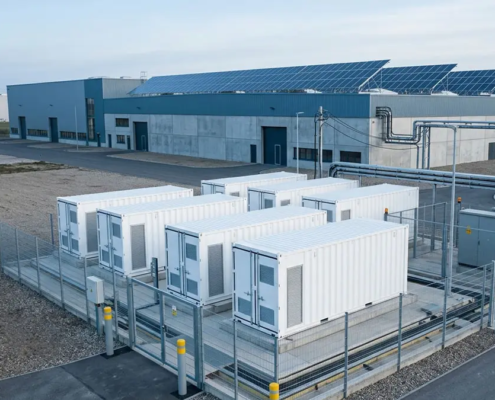 https://anengjipower.com/wp-content/uploads/2026/10/AnengjiPowr-AC-Coupled-Battery-Storage-at-a-CI-Solar-Site.webp
675
1000
Charging Station Engineer
https://anengjipower.com/wp-content/uploads/2025/09/anengji-dc-fast-charging-station-manufacturer-and-supplier-logo-white-1.png
Charging Station Engineer2026-10-16 03:03:192026-10-16 03:03:49What Is AC-Coupled Battery Storage? C&I BESS Guide
https://anengjipower.com/wp-content/uploads/2026/10/AnengjiPowr-AC-Coupled-Battery-Storage-at-a-CI-Solar-Site.webp
675
1000
Charging Station Engineer
https://anengjipower.com/wp-content/uploads/2025/09/anengji-dc-fast-charging-station-manufacturer-and-supplier-logo-white-1.png
Charging Station Engineer2026-10-16 03:03:192026-10-16 03:03:49What Is AC-Coupled Battery Storage? C&I BESS Guide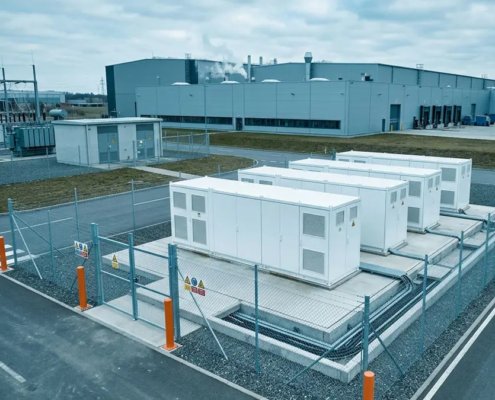 https://anengjipower.com/wp-content/uploads/2026/10/AnengjiPower-What-Is-Peak-Shaving-at-an-Industrial-Site.webp
675
1000
Charging Station Engineer
https://anengjipower.com/wp-content/uploads/2025/09/anengji-dc-fast-charging-station-manufacturer-and-supplier-logo-white-1.png
Charging Station Engineer2026-10-15 06:49:012026-10-15 06:50:23What Is Peak Shaving? How Battery Energy Storage Reduces C&I Peaks
https://anengjipower.com/wp-content/uploads/2026/10/AnengjiPower-What-Is-Peak-Shaving-at-an-Industrial-Site.webp
675
1000
Charging Station Engineer
https://anengjipower.com/wp-content/uploads/2025/09/anengji-dc-fast-charging-station-manufacturer-and-supplier-logo-white-1.png
Charging Station Engineer2026-10-15 06:49:012026-10-15 06:50:23What Is Peak Shaving? How Battery Energy Storage Reduces C&I Peaks


Leave a Reply
Want to join the discussion?Feel free to contribute!